Mold from an earlier flood
Paneling and drywall closed up after a past flood often hide growth years later.
The Passaic River has shaped this county's basements for more than a century. Flood cleanup and the mold that follows a slow dry-out make up most of our work here.
Answering 24/7 from our Johnson St office in Newark
In Passaic County, NJ our work follows the Passaic River: basement flooding when the river crests, river-water cleanup, and mold in finished basements that were dried too slowly or closed up too soon. We come from our Newark office, map the moisture, and remove, dry and test to the standard the water calls for.
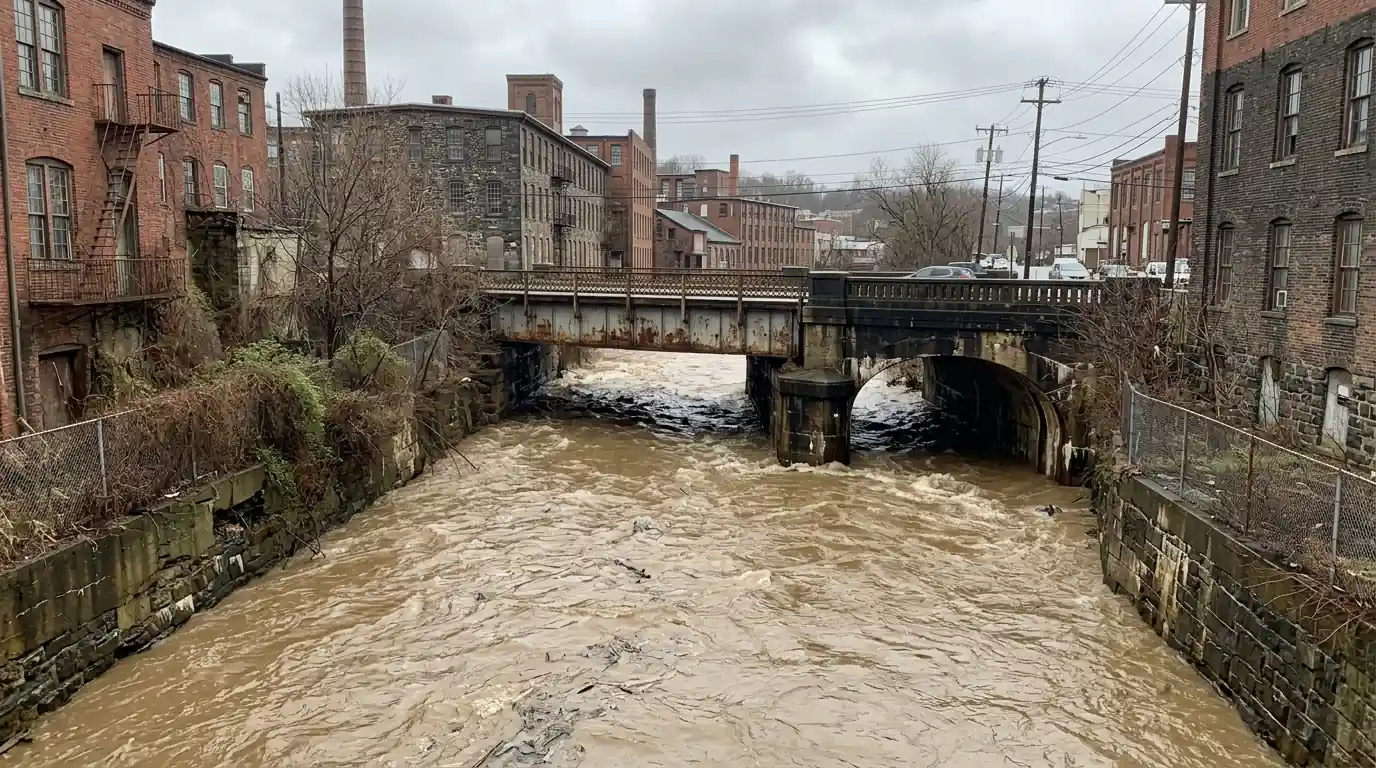
The NWS flood gauge on the Passaic River at Little Falls has a flood stage of 7 feet and has recorded 63 floods since 1903. In a December 2023 storm, the river crested over 10 feet at Paterson, which the mayor called the highest in recent history, with water in basements and streets and emergencies declared in Paterson and Wayne.
During Ida in 2021, Clifton streets turned into rivers and basements flooded there too. For homes in the river towns, flooding is not a one-time event, and the mold we find often dates from an earlier flood that was never fully dried.
Paneling and drywall closed up after a past flood often hide growth years later.
River water leaves a mark that tells us how high to read and cut.
Boxes and furniture on the basement floor wick water and grow mold fast.
River and stormwater cleanup, with porous materials removed.
See the jobReadings and a scope right after the river goes down.
See the jobFinished basements that flooded once and never fully dried.
See the jobIdentifying the dark growth that follows long-wet drywall.
See the jobCutting out wall sections above the waterline.
See the jobKeeping a dried basement dry between storms.
See the jobWe start by asking when the property last flooded and how the cleanup went, because an old flood often explains new mold. Then we read the basement walls above the old waterline, check behind paneling and under carpet, and look at anything stored against the foundation.
River water is treated as contaminated, so the scope removes porous materials it reached rather than trying to dry them in place.
Yes. Readings behind paneling and at the old waterline show whether it was dried properly.
It is treated as contaminated. Keep people out of it and let the cleanup follow that standard.
Within 24 to 48 hours of water exposure, which is why drying starts first.
Downriver is Essex County and our Newark office. To the east we cover Bergen County, and to the west Morris County. The areas we serve page explains the whole area.
Tell us how high the water got and whether it is still coming in. We will tell you what to do before we arrive.
Map of our Newark service office on Johnson St