Updated September 2026
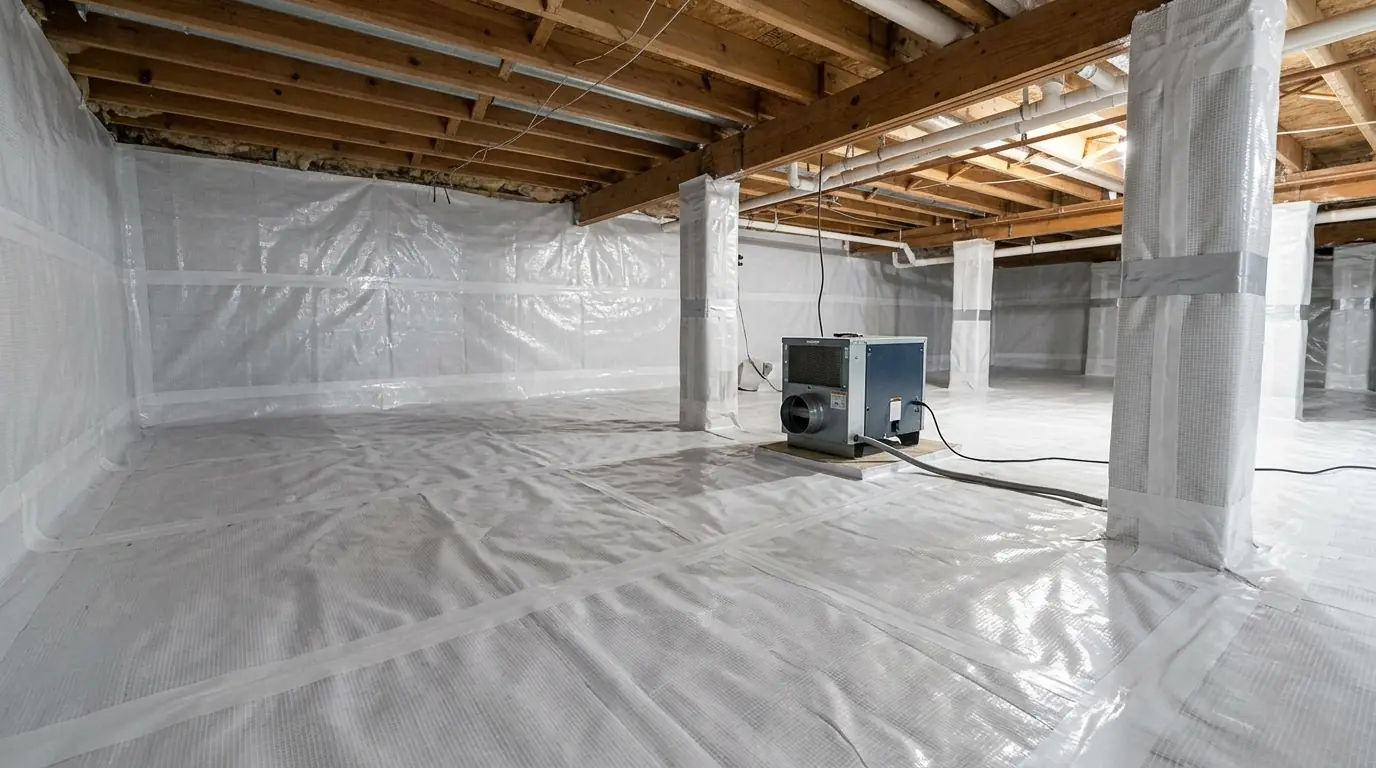
Crawl space encapsulation in Newark, NJ means covering the ground and lower walls with a heavy sealed liner, closing the foundation vents, sealing the rim, and running a crawl space dehumidifier that drains on its own. HomeGuide puts encapsulation at about $3,000 to $15,000, or $3 to $10 per square foot, depending on size and repairs.
Why a vented crawl space stays damp
Old building practice vented crawl spaces to dry them out. In a humid summer, those vents let in warm, damp air that condenses on the cooler joists and ductwork, and bare soil adds moisture from below. The result is the musty floor and moldy framing we clean out.
Encapsulation closes that loop. If the framing already has growth, crawl space mold removal comes first; the liner goes over clean, dry wood and ground.
What decides the cost of encapsulation
HomeGuide puts encapsulation at about $3,000 to $15,000, or $3 to $10 per square foot, and a crawl space dehumidifier at $1,000 to $3,000 installed. What moves your total:
- Square footageLiner and labor scale with size.
- Clearance heightLow spaces take longer to work in.
- DrainageStanding water must be solved first.
- Liner gradeHeavier liners cost more and last longer.
- Mold cleanup firstGrowth on framing is removed before sealing.
- Dehumidifier and drainUnit size and drain route.
Planning ranges, not a quote. Sources: homeguide.com, homeguide.com, homeguide.com.
Vented, lined or fully encapsulated
The more you close the space, the drier it stays.
| Vented, bare ground | Liner only | Full encapsulation | |
|---|---|---|---|
| Ground moisture | Uncontrolled | Mostly blocked | Blocked and sealed |
| Summer humidity | Enters through vents | Enters through vents | Kept out, removed |
| Mold risk | High | Moderate | Low |
| Cost | None | Vapor barrier $1,200 to $4,000 | $3,000 to $15,000 |
Ground liner and seams
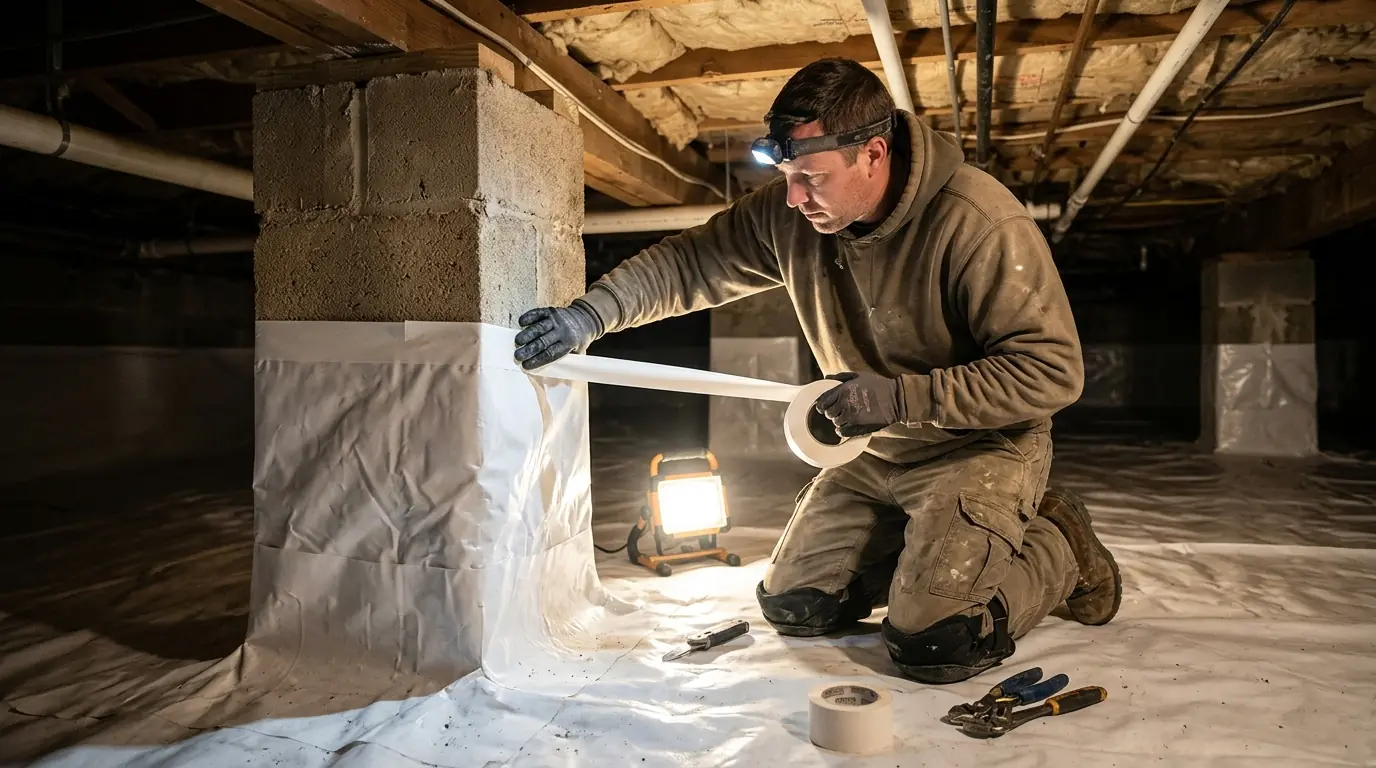
We lay a heavy reinforced liner across the ground, overlap and tape every seam, and run it up the foundation walls where it is fastened and sealed. Piers are wrapped rather than cut around. The liner stops ground moisture from reaching the air and gives a clean surface that you or a technician can crawl across. Standing water or a wet spot after rain is fixed first with drainage, because a liner laid over a puddle traps the water under it.
Vent sealing
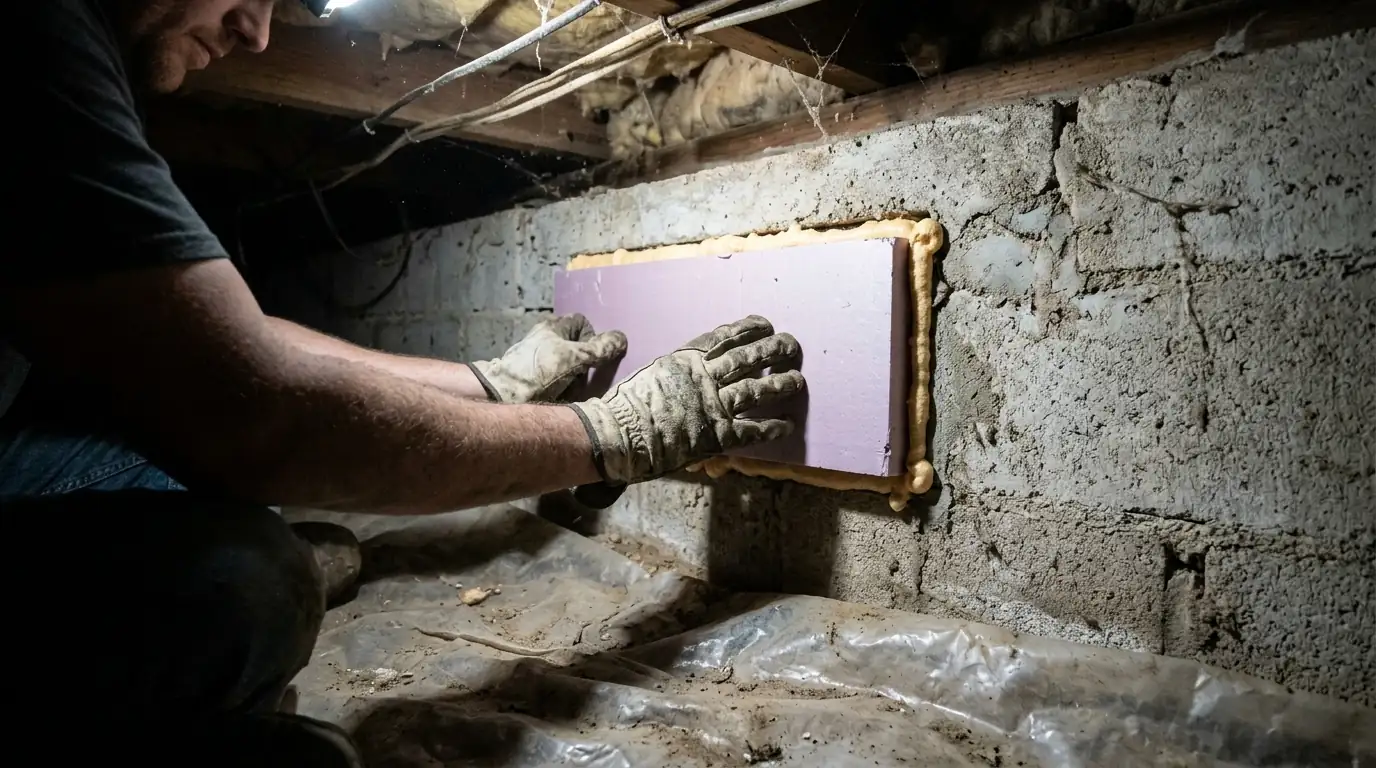
Foundation vents are closed and sealed from the inside with rigid foam or fitted covers, and gaps at the rim joist are air-sealed. Once the space is closed, outside humidity can no longer pour in on summer days. The crawl space then behaves like a conditioned basement, just a short one. We check for combustion appliances in the space before closing vents, because a gas water heater or furnace there needs its own air supply handled properly before the space is closed.
Crawl space dehumidifier
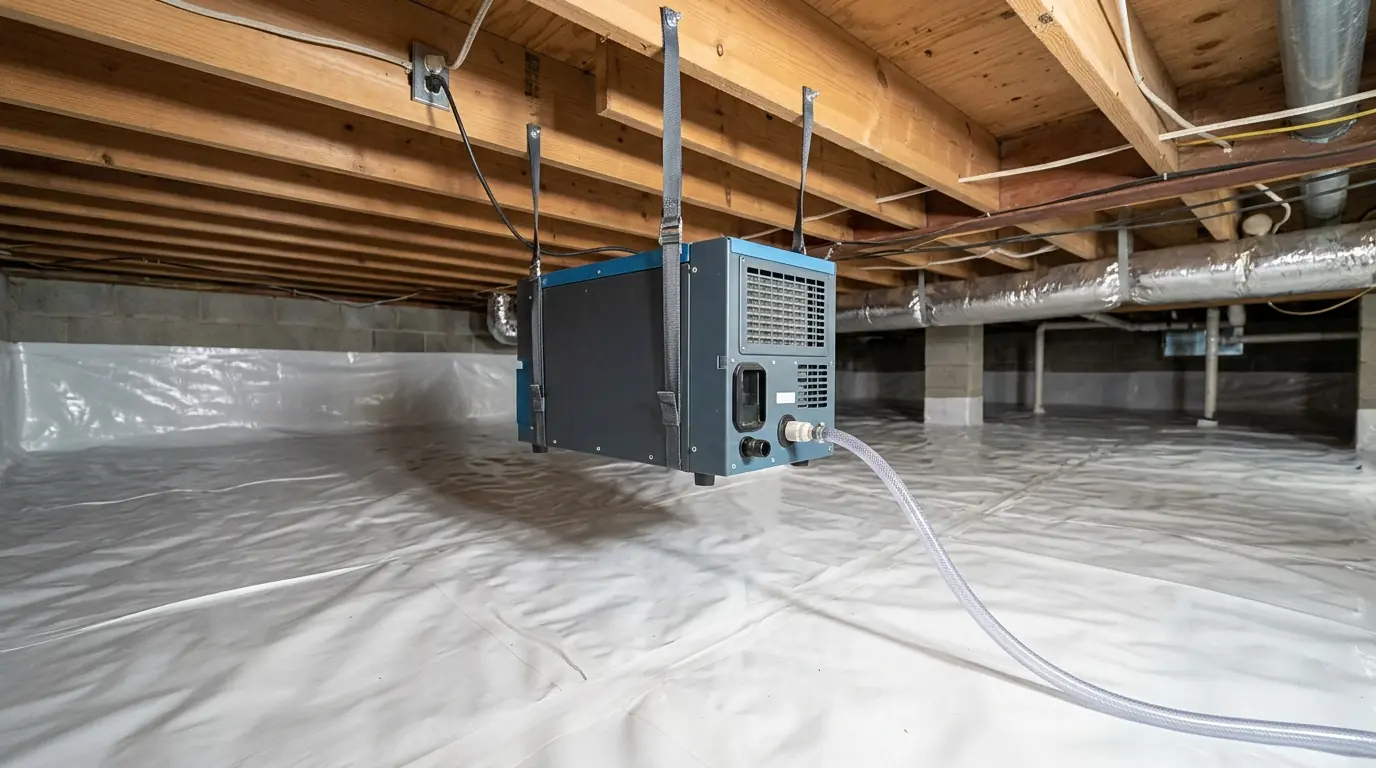
A sealed crawl space still picks up moisture from the house and the foundation, so a compact dehumidifier keeps the air dry. We size it to the space, set it on the liner or hang it from the joists, and drain it to daylight or a condensate pump. Many units can be read from a display inside the house, so you can check the humidity without crawling under. The unit's filter needs cleaning a few times a year, and we show you how.
How an encapsulation job runs
Inspect underneath
Moisture, growth, drainage and access.
Clean and clear
Old barrier and debris out, framing cleaned.
Fix drainage
Where water pools after rain.
Lay and seal the liner
Ground, walls, piers and seams.
Close vents
Sealed from inside, rim air-sealed.
Install dehumidifier
Sized, placed and drained.
Check the readings
Humidity confirmed after it runs.
What an encapsulation includes
- Debris and old barrier removed
- Drainage fixed where water pools
- Reinforced liner on the ground and up the walls
- Every seam and pier taped and sealed
- Vents closed and the rim air-sealed
- Dehumidifier sized, installed and drained
- Humidity checked after the first days of running
Crawl spaces on the barrier islands
Sandy damaged oceanfront properties on southern Absecon Island, and Margate City itself covers only about 1.4 square miles of it. Many Margate City shore homes sit on crawl spaces close to tidal water, where summer humidity and flooding reach the ground under the house. For crawl spaces there, we pay extra attention to drainage and pier wraps, and we fasten the liner higher on the walls than we would inland.
Encapsulation questions
In a damp crawl space with musty floors or recurring mold, it is the fix that lasts. A dry crawl space with no smell may not need it.
In most homes near Newark and the shore, yes. The liner blocks ground moisture; the unit handles the rest.
No. Growth on the framing is cleaned first so it is not sealed in.
A sealed crawl space can make floors warmer and ducts more efficient, but savings vary by house.
Most crawl spaces take one to a few days, depending on size, cleanup and drainage work.