Updated September 2026
Indoor air quality testing in Newark, NJ measures relative humidity and dew point, carbon dioxide as a ventilation check, volatile organic compounds and fine particles, room by room and against outdoor air. Angi puts mold spore testing within an air quality assessment at about $300 to $1,000 nationally; other readings depend on the pollutants checked.
What air quality testing measures
Mold is one cause of poor indoor air, not the only one. High humidity makes rooms feel clammy and feeds growth; high carbon dioxide means a room is not getting enough fresh air; VOCs come from new furniture, paint, cleaners and stored fuel; particles come from cooking, smoke and construction dust.
We measure first and sample second. If humidity is high and a musty smell is present, mold sampling makes sense. If the problem is ventilation, a mold test would only add cost.
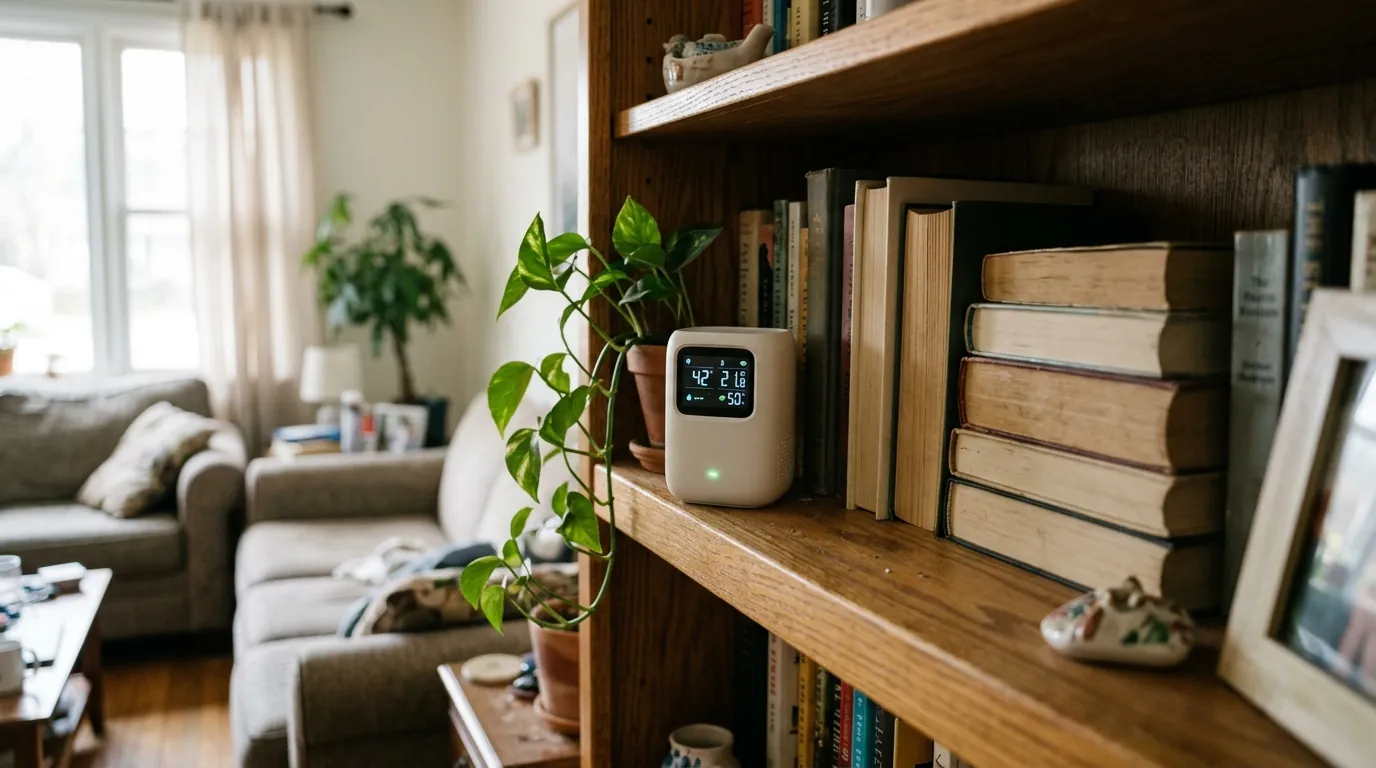
How an air quality visit runs
Describe the complaint
Which rooms, when and what it feels like.
Outdoor baseline
Readings taken outside first.
Room by room
Humidity, CO2, VOCs and particles.
Find the pattern
Where readings spike and why.
Sample if needed
Mold or VOC lab samples.
Monitor if useful
Loggers left overnight.
Ranked report
Fixes ordered by impact and cost.
Humidity and dew point
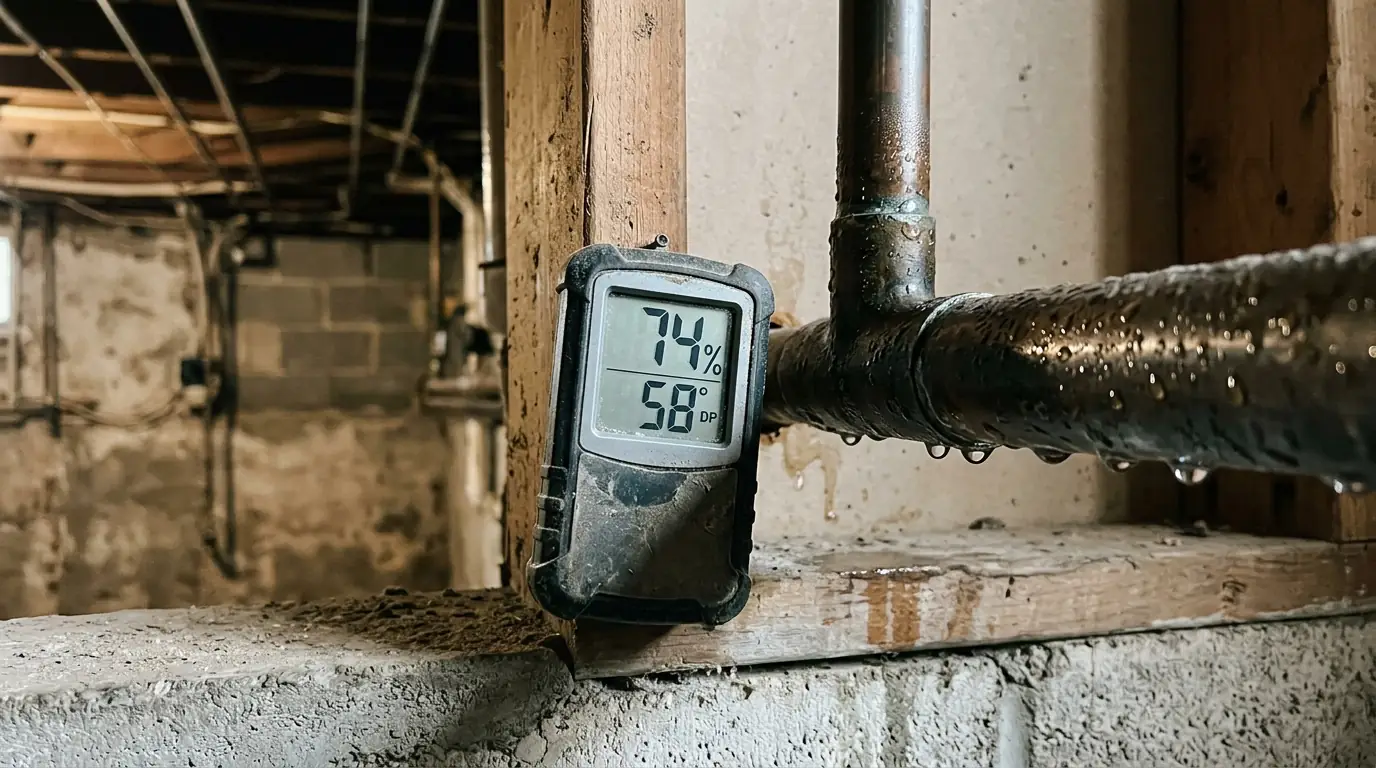
Relative humidity tells you how damp the air feels; dew point tells you where it will condense. A basement at a moderate humidity can still sweat on a cold water pipe if the surface is below the dew point. We log humidity and temperature in each room and at the surfaces where condensation shows up, which usually points straight to the fix: a dehumidifier, a bath fan, better air circulation or insulation on a cold wall or a cold water pipe.
Carbon dioxide and ventilation
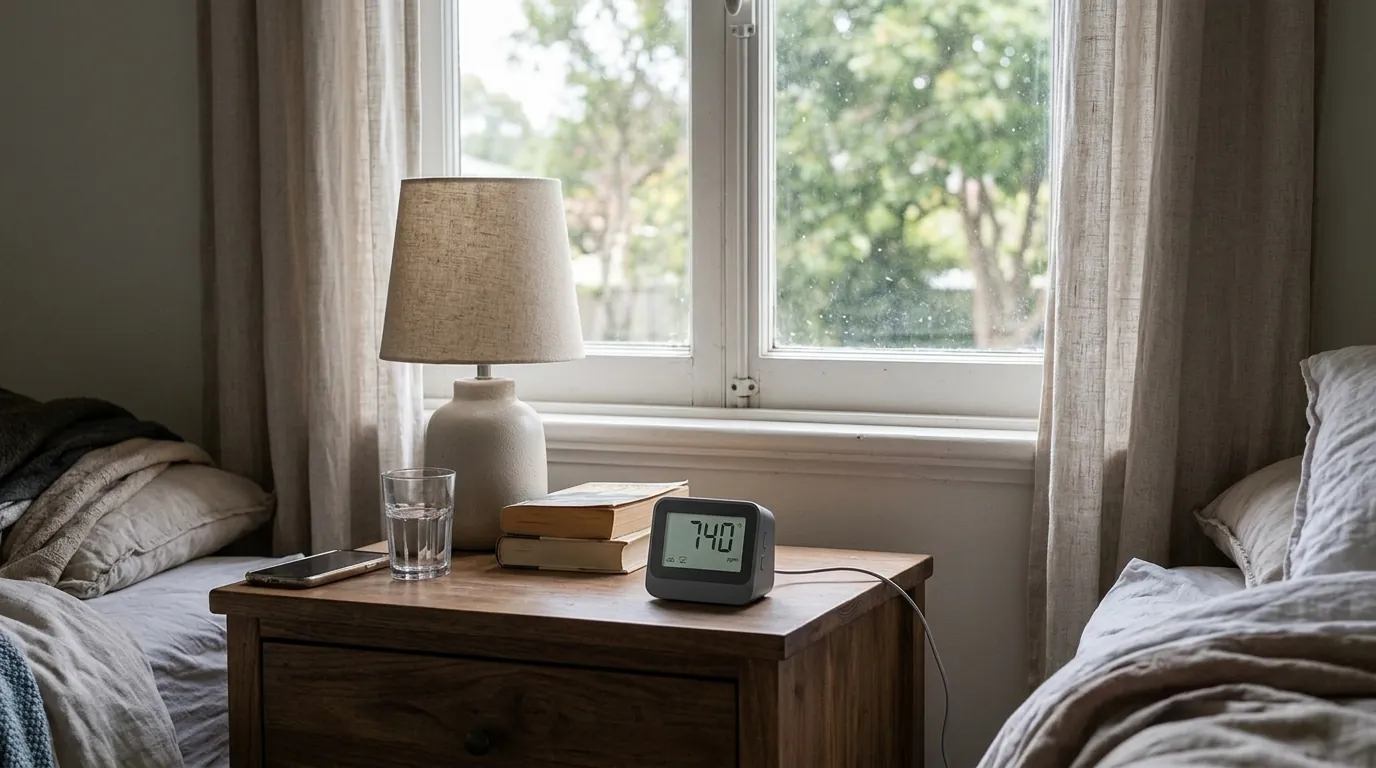
Carbon dioxide builds up when people are in a room without enough fresh air. High readings in bedrooms overnight or in a closed office by afternoon mean the ventilation is not keeping up. It is not a mold problem, but it makes a space feel stuffy and often goes with high humidity. We measure over time where we can, because a single reading in an empty room says very little, and we explain what an HVAC contractor could change to bring in more fresh air.
VOCs and formaldehyde
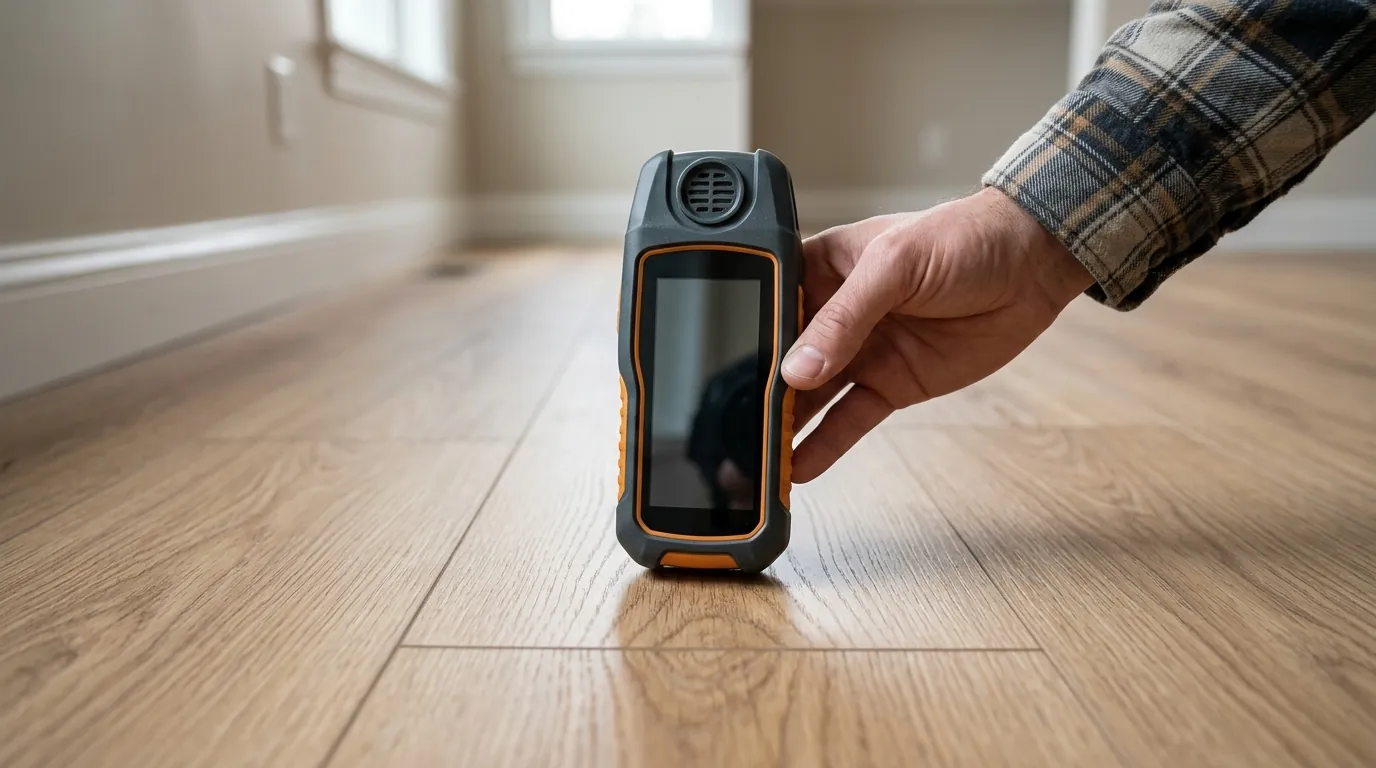
Volatile organic compounds come off new flooring, furniture, paint, adhesives, cleaners and anything stored in a basement or attached garage. Some mold also releases VOCs, which is part of that musty smell. A handheld meter gives a total reading that helps us find the source room; where you need specific compounds identified, lab sampling can be added. The usual fix is removing or sealing the source and adding ventilation, not buying an air purifier and hoping it keeps up with the source.
Particulate levels
Particle counters measure fine dust in the air: cooking smoke, candles, outdoor pollution, construction dust and debris from a dirty HVAC system. We compare indoor readings with outdoor air and track where they spike. Consistently high indoor levels with low outdoor levels point to a source inside, often a filter that lets air bypass it or ductwork carrying dust from a dirty basement around the house. The report ranks what to fix first, starting with the cheapest change that should make the biggest difference.
What decides the cost of air quality testing
Angi puts mold spore testing within an air quality assessment at about $300 to $1,000 nationally. What decides your total:
- Pollutants checkedMore readings, more equipment and time.
- Lab samplesMold or VOC lab tests add fees.
- Number of roomsEach room is logged separately.
- Monitoring timeOvernight logging takes a return visit.
- Outdoor comparisonAlways included for mold and particles.
- Report detailRecommendations ranked by cost and impact.
Planning ranges, not a quote. Sources: angi.com.
Air in homes that have flooded
On September 1, 2021 the remnants of Ida put 8.41 inches of rain on Newark, and the storm dropped 8 to 11 inches across a corridor of northern and central New Jersey. Homes that took water then, and dried slowly, are some of the ones where we still find high basement humidity and musty air years later. When a New Jersey home has a flood history, we log humidity in the basement first and work upward.
Which reading answers which complaint
Different complaints call for different readings. We start with the one that matches yours.
| Main reading | Common fix | |
|---|---|---|
| Clammy, musty rooms | Humidity, dew point, mold sampling | Dehumidifier, ventilation, removal |
| Stuffy, tired air | Carbon dioxide | More fresh air |
| Chemical smell | VOCs | Remove source, ventilate |
| Dusty air | Particles | Filter fit, duct cleaning |
Humidity and airflow depend on equipment. We read around dehumidifiers and air handlers from Aprilaire, Santa Fe, Honeywell, Carrier and Lennox, among others.
Aprilaire, Santa Fe, AlorAir, Honeywell, Carrier, Trane, Lennox, Rheem, Goodman, Mitsubishi Electric, Daikin, Broan-NuTone, Panasonic
Air quality questions
No. Mold is one part of it. Air quality testing also covers humidity, ventilation, chemicals and particles.
It helps with particles. It does not fix humidity, ventilation or the source of a smell.
Low enough that windows and cold pipes do not sweat and basements do not smell. We measure yours and tell you where it stands.
Yes. Renters and landlords both call us, often about humidity and musty bedrooms.
A few hours for a typical home. Overnight monitoring needs a second visit to collect the loggers.