Updated September 2026
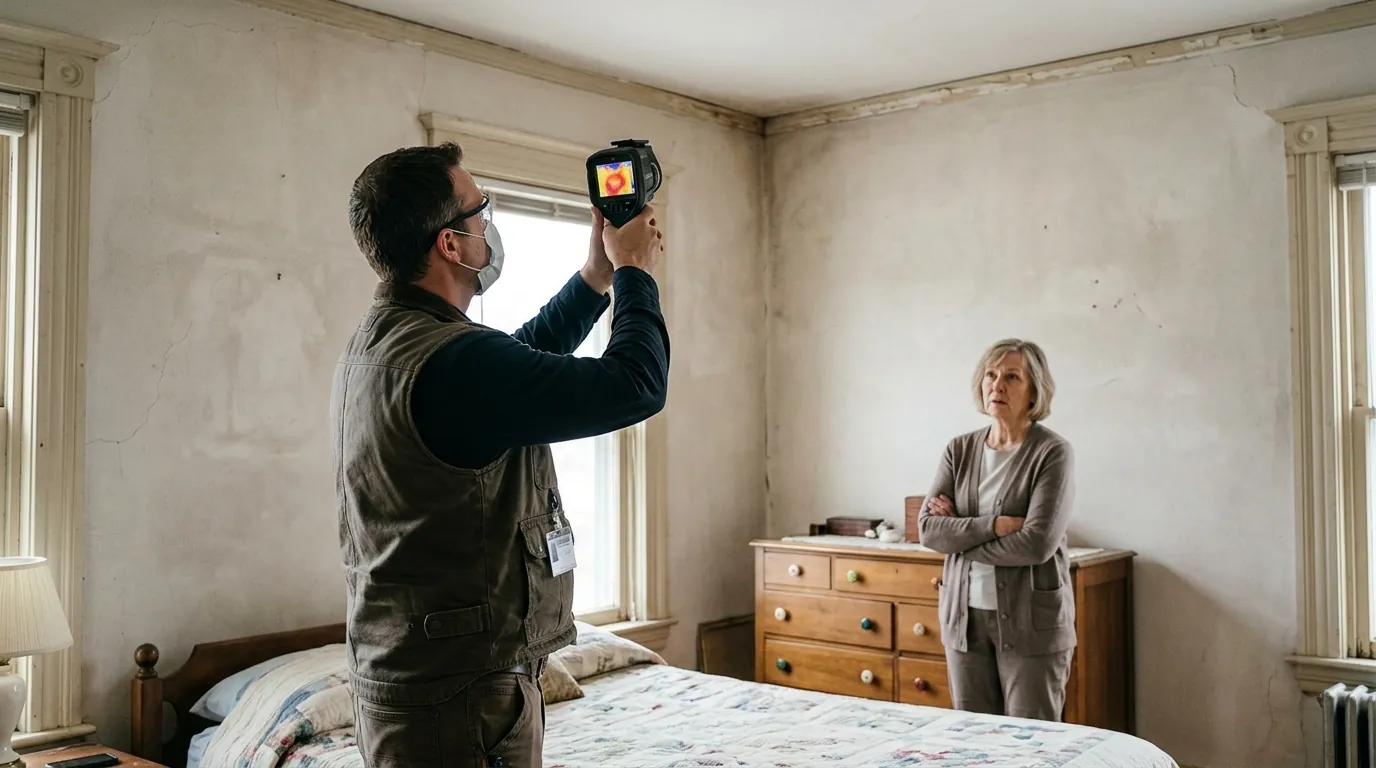
A mold inspection in Newark, NJ usually takes 2 to 5 hours and covers every level of the house with moisture meters, thermal imaging and a visual check of framing, drywall and ductwork. Samples are added only where a lab result would change the plan, and the report names each wet area and its source.
What a Newark mold inspection actually covers
Most homes that call us have one visible problem and two hidden ones. A ceiling stain is often a roof leak that has already reached the attic sheathing.
So we inspect the whole building, not just the spot you noticed. Meters confirm which materials are wet, the thermal camera shows cool patches, and a borescope looks inside a wall through a small hole. If the growth is visible and the cause is obvious, we say so and skip the lab.
What your inspection report includes
- Photos of every wet or affected area, labeled by room
- Moisture readings with the material and location noted
- Thermal images where they show something worth checking
- Lab results and what they mean, when samples were taken
- The likely water source for each problem area
- A scope separating removal, cleaning and repairs
- Moisture fixes ranked by what matters most
How the inspection visit runs, start to finish
Book the visit
Tell us what you noticed and where.
Walk the outside
Grading, gutters, window wells and the roofline come first.
Read every level
Meters and thermal imaging, basement to attic.
Look inside cavities
A borescope instead of opening walls.
Decide on samples
Only where a lab result would change what happens next.
Explain on site
We show you what we found before leaving.
Send the report
Photos, readings, lab results when taken and a written scope.
Basement and foundation check
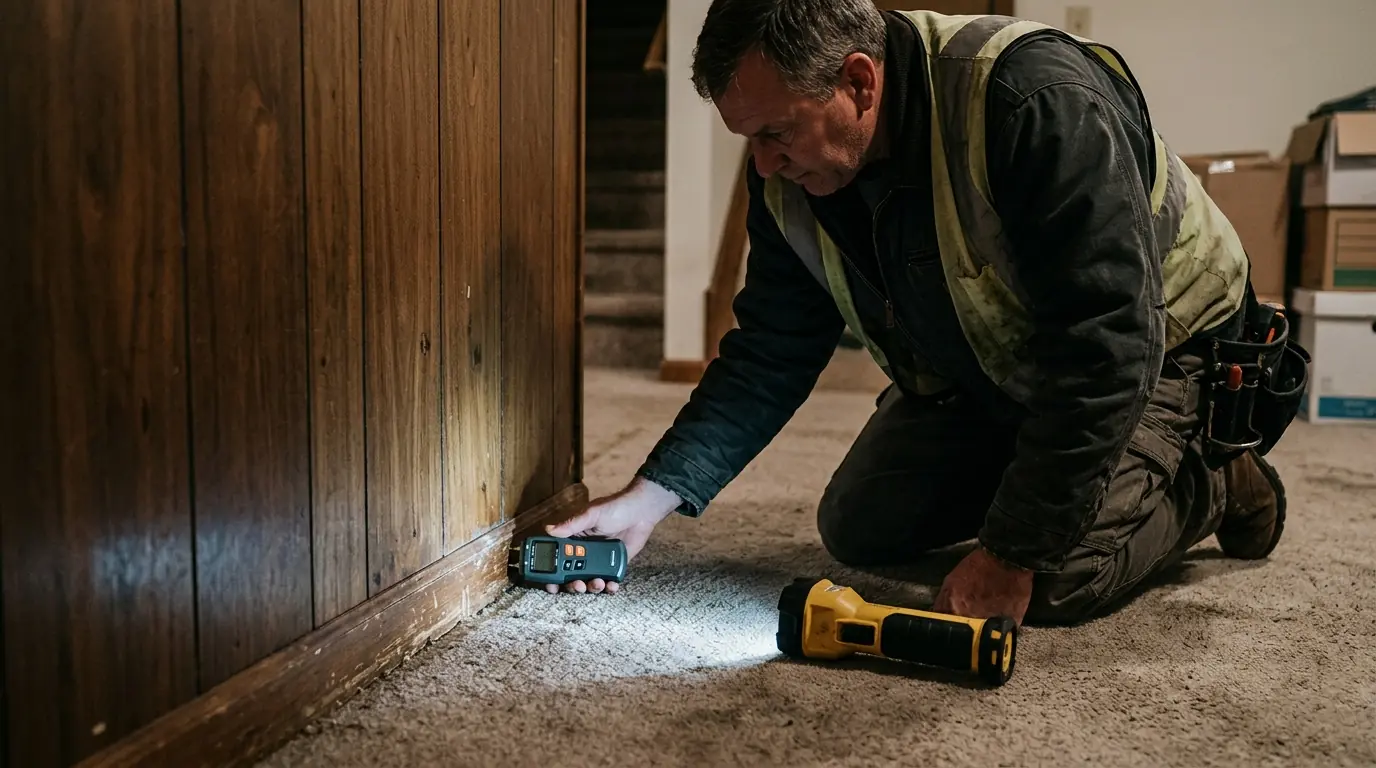
Basements are where most Newark inspections find the problem. We read the foundation walls at several heights, check the sill plate and the first floor joists, and look behind finished paneling where the backing often grows mold before the face shows anything. Efflorescence, a tide line on block and damp carpet tack strip all point to water coming through the wall. We also note the floor drain, sump and any backwater valve, because a basement mold problem rarely stays fixed without them.
Attic and roof deck check
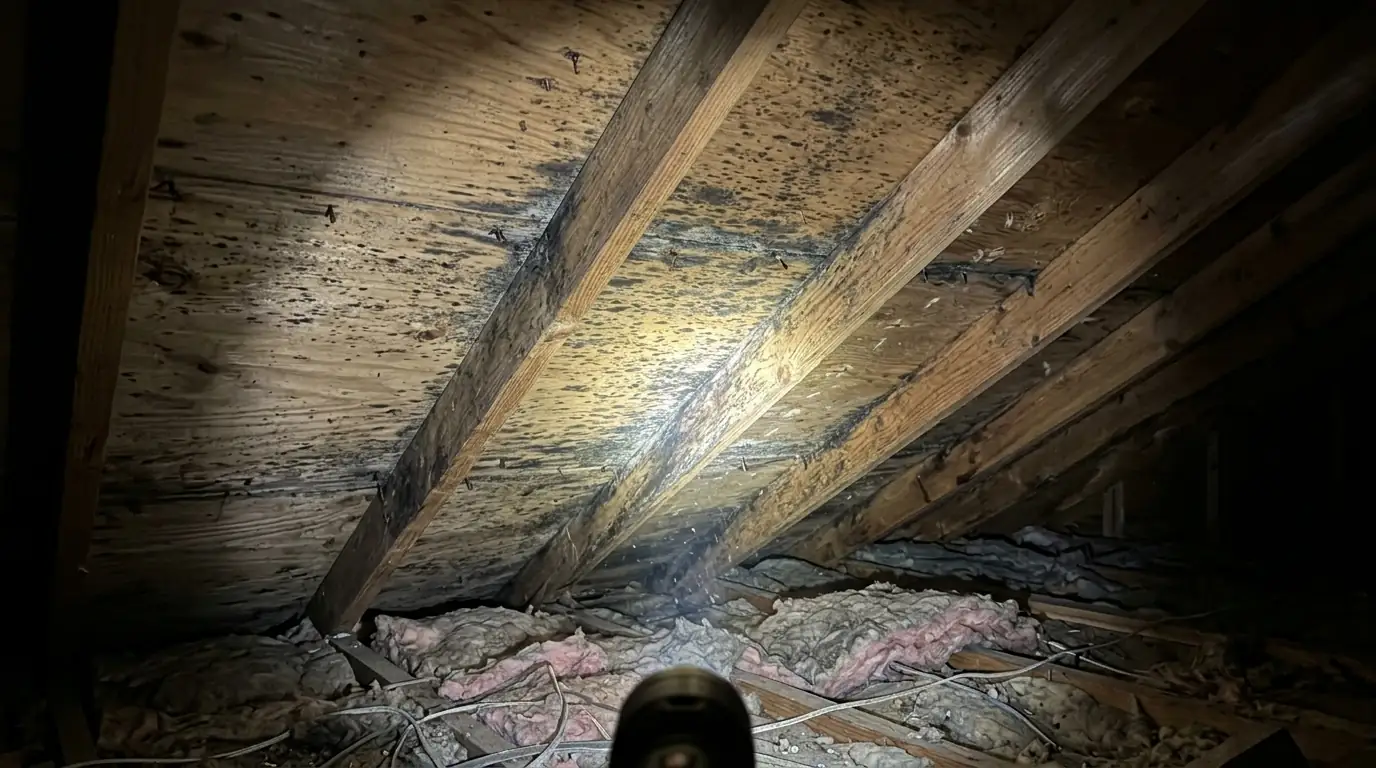
In winter, warm air from the living space leaks into the attic and condenses on the underside of the roof deck. The result is gray or black spotting on the sheathing, often worst on the north slope and around bath fan ducts that end in the attic instead of outside. We check the sheathing, nail tips, insulation and ventilation, and photograph any duct dumping moist air there. If the attic needs work, the report separates the cleaning job from the ventilation fix that stops it returning.
Bathroom and kitchen check
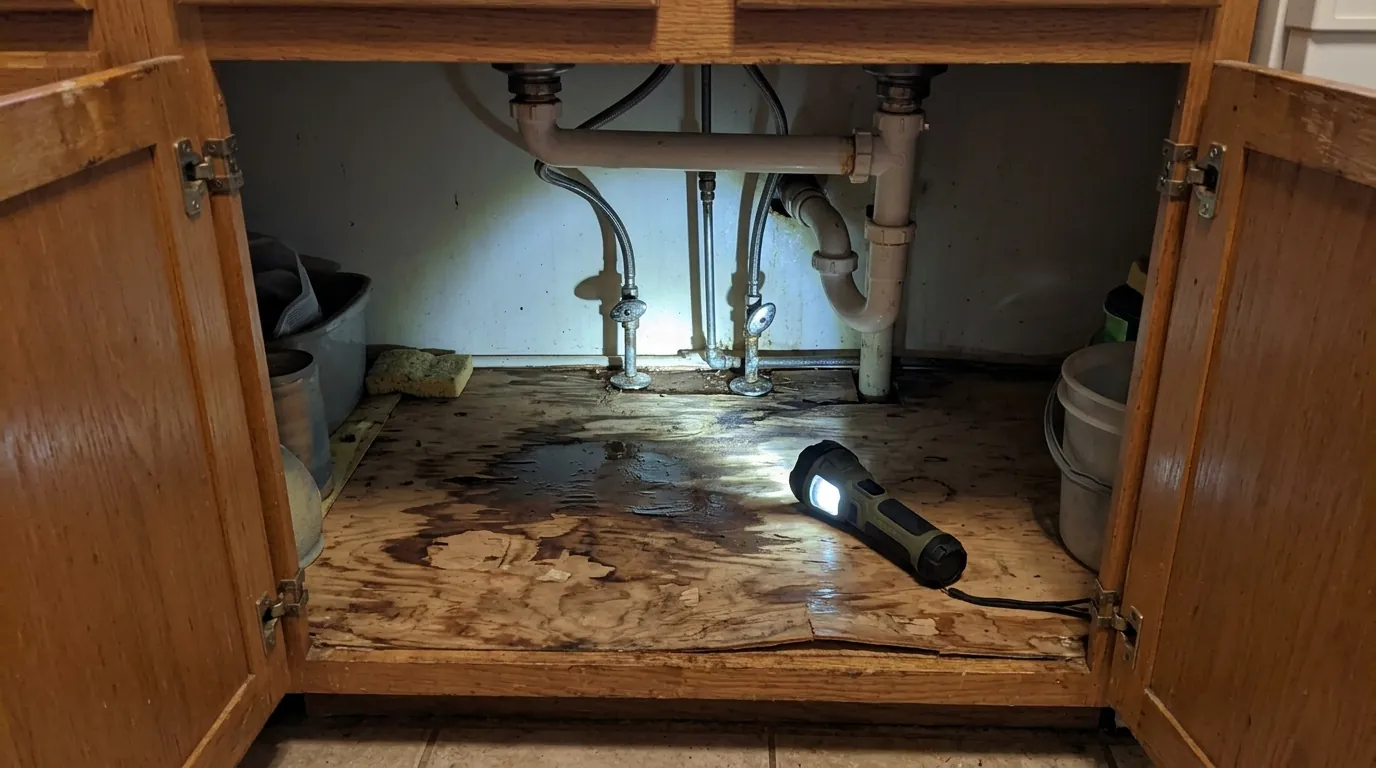
Wet rooms fail slowly. We read the wall behind the shower valve, the floor around the toilet and the subfloor under the vanity, then move to the kitchen and check the sink base, the dishwasher side panel and the wall behind the refrigerator ice line. Soft drywall and swollen cabinet bottoms are the usual clues. Small leaks here grow mold inside cabinets long before anything shows in the room, so we open doors, pull toe kicks where we can and look.
Exterior envelope and grading
Much of the water we find indoors starts outside. We walk the perimeter and note downspouts that empty against the foundation, soil sloping toward the house, window wells without drains, and gaps where siding or brick meets the foundation. On two and three family homes, a rear addition often meets the main roof at a valley that leaks into the wall below. None of this is mold work, but leaving it out of the report would send you back to square one after the cleanup.
What changes the price of a mold inspection
HomeGuide puts a mold inspection at about $300 to $650 for an average home and up to $1,000 for a large one, with lab samples at $50 to $350 each. What moves your number:
- Size and levelsMore floors and rooms mean more readings.
- AccessCrawl spaces and packed attics slow the survey.
- SamplesEach sample adds a lab fee; many visits need none.
- Finished basementsPaneling hides the framing we need to read.
- Multi-unit buildingsTwo and three family homes are inspected unit by unit.
- Report detailPurchase and dispute reports take longer to write.
Planning ranges, not a quote. Sources: homeguide.com, homeguide.com, homeguide.com.
Why older Newark houses hide mold in the same places
About 22.6 percent of Newark homes were built before 1939 and roughly another 32 percent went up between the 1940s and the 1960s. That age shows up as stone foundations that wick water and basements finished decades later with no vapor barrier behind the paneling. A Newark house of that era gets our closest look at the foundation and the first floor framing, because that is where water and cold meet.
Visual inspection or inspection with sampling?
Most homes need the first column. The second earns its cost when the growth is hidden or someone needs proof.
| Visual and moisture inspection | Inspection with sampling | |
|---|---|---|
| Suits | Visible growth with an obvious cause | Odor with nothing visible, sales, disputes |
| What you get | Readings, photos, sources, scope | All of that plus lab results |
| Extra cost | None | About $50 to $350 per sample |
| Turnaround | Findings the same day | Report after the lab returns results |
Mold inspection questions we get asked
Most homes take 2 to 5 hours. Finished basements and packed attics take longest.
Rarely. A borescope through a small hole usually shows what is inside a cavity, and we ask before making any hole at all.
No. If the growth is visible and the cause is clear, a sample adds cost without changing the plan. We explain when a test is worth it.
Yes, and it helps. You know where the leaks were.
You get a written scope. We can do the removal, or you can hand the scope to any crew you choose.