Updated September 2026
Mold clearance testing in Newark, NJ is done after remediation and before containment is removed: a visual check for dust and residue, moisture readings to confirm materials are dry, and air or surface samples compared with an outdoor control. A market range for clearance testing runs about $200 to $400, depending on how many samples the area needs.
What clearance proves, and what it does not
Clearance answers one question: is the work area clean enough to rebuild? It does not grade the whole house, and it cannot say the mold will never return; that depends on whether the moisture source was fixed.
We test before containment comes down because a failed clearance means more cleaning inside the same plastic. Once the barrier is removed, any spores left behind can spread into the rest of the house, and the work has to be redone on a larger area.
What clearance testing costs
A market range for post-remediation clearance runs about $200 to $400, based on verified remediation guides. These factors decide your number:
- Number of work areasEach contained area is tested.
- Samples neededAir, surface or both, per area.
- Protocol requirementsWritten protocols may specify more samples.
- RetestsA failed area is retested after recleaning.
- Lab turnaroundFaster results cost more.
- Report useInsurance or sale paperwork adds detail.
Planning ranges, not a quote. Sources: verifiedremediation.com.
Visual verification
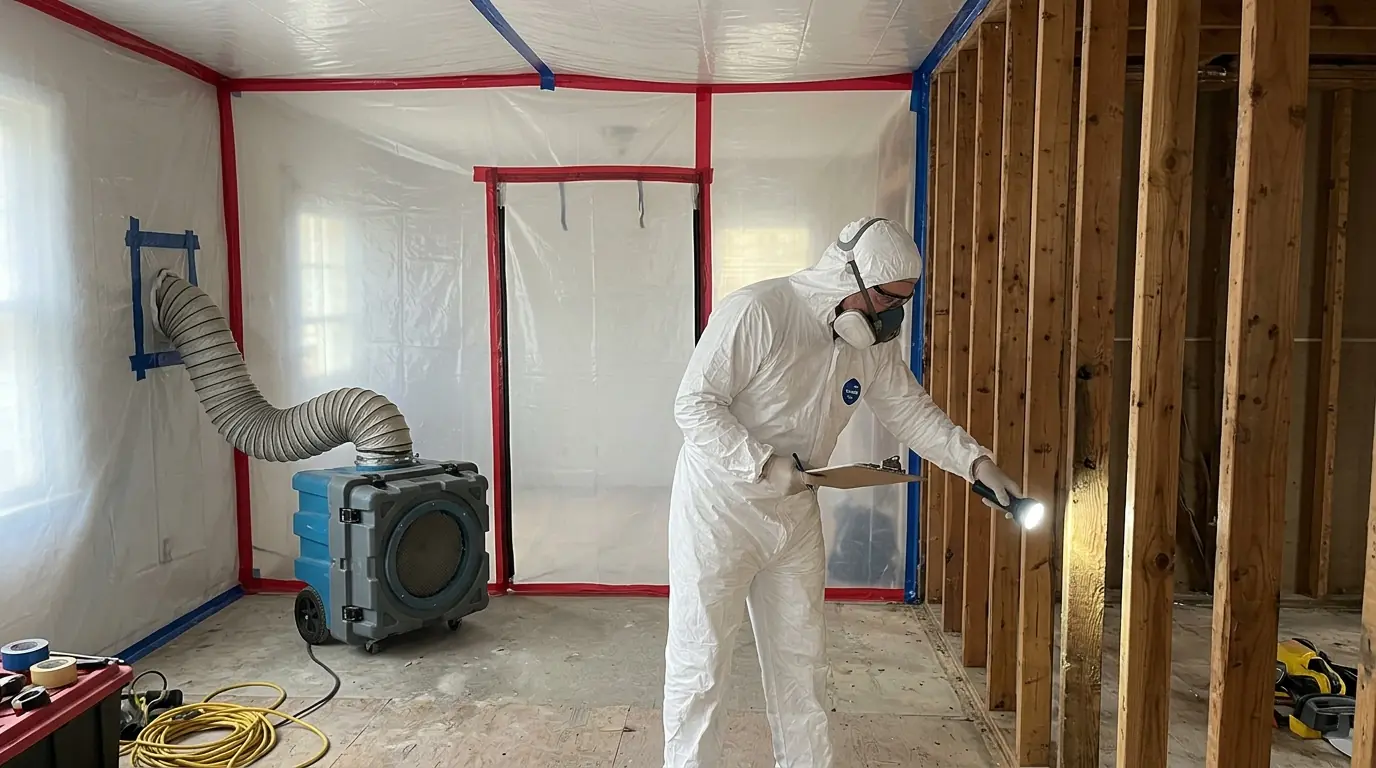
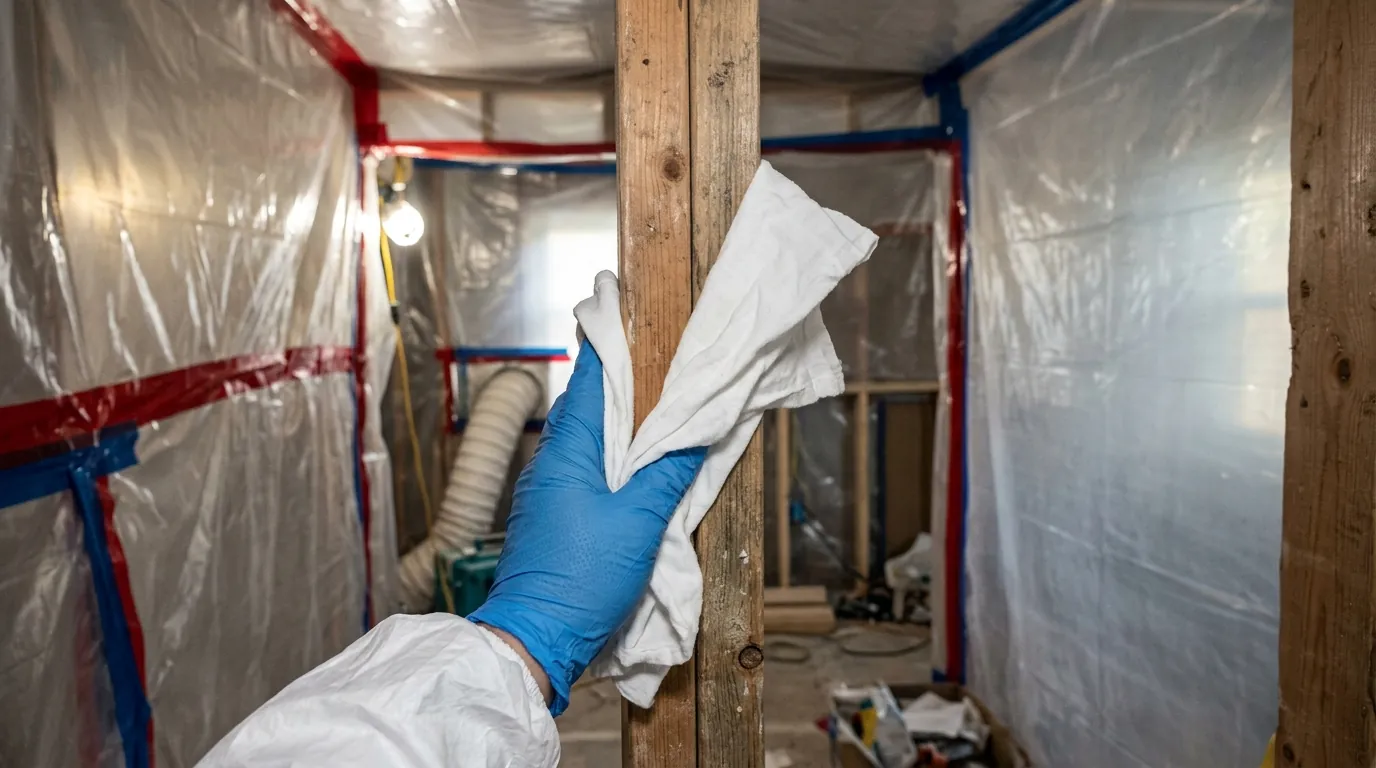
The first check is simple and strict: no visible mold, no visible dust or debris, and no damaged material left that the scope said should come out. We look at framing, subfloor and the floor of the containment itself, run a white cloth over surfaces and check the corners that are easy to miss. If the area fails visually, sampling waits, because testing a dusty room only confirms what anyone can see. We list exactly what needs recleaning, room by room.
Air clearance samples
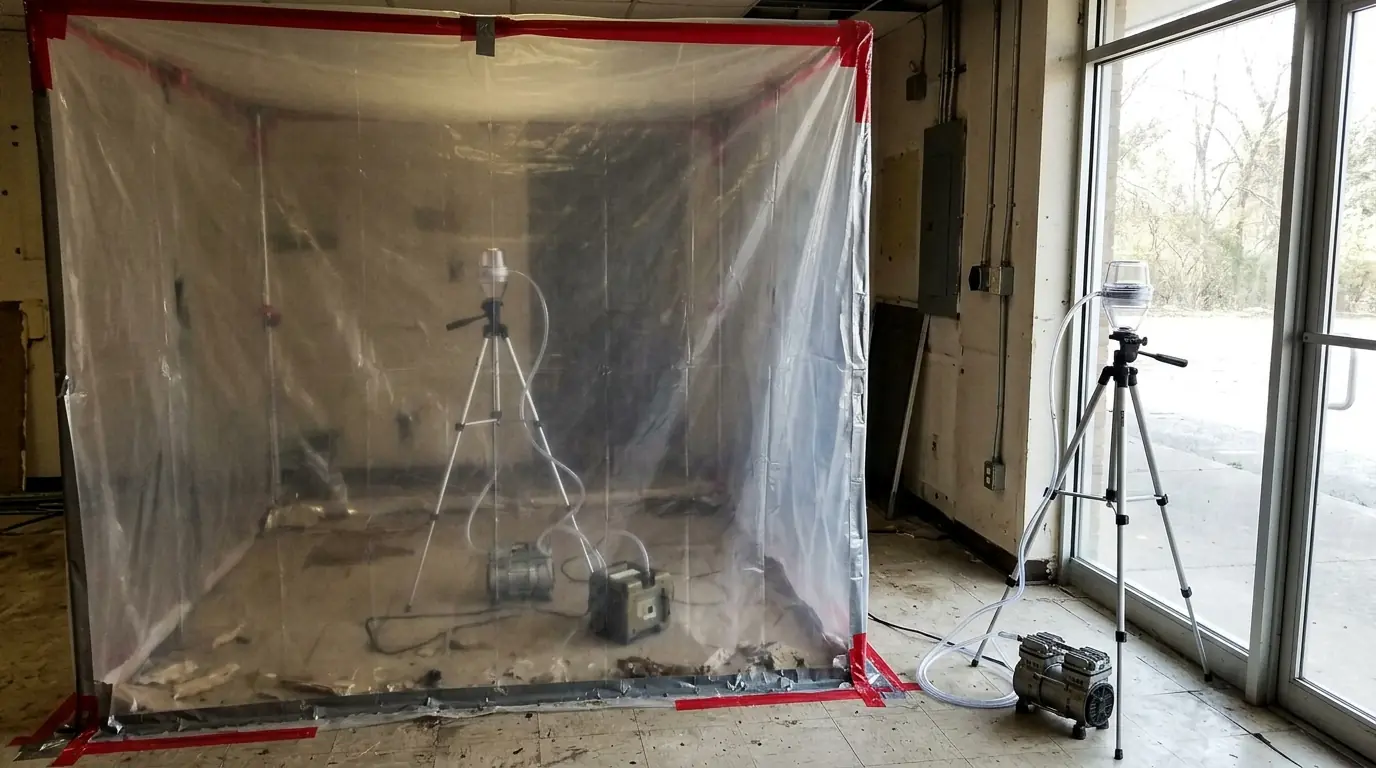
Air samples inside the containment are compared with an outdoor sample taken the same day, and sometimes with air in an unaffected room. Results close to or below the outdoor sample, with no unusual types, are what a clean area looks like. We run the air scrubbers until shortly before sampling as the protocol calls for, so the air reflects the cleaned space rather than the equipment. Results go to you and to the remediator on the same written report.
Surface clearance samples
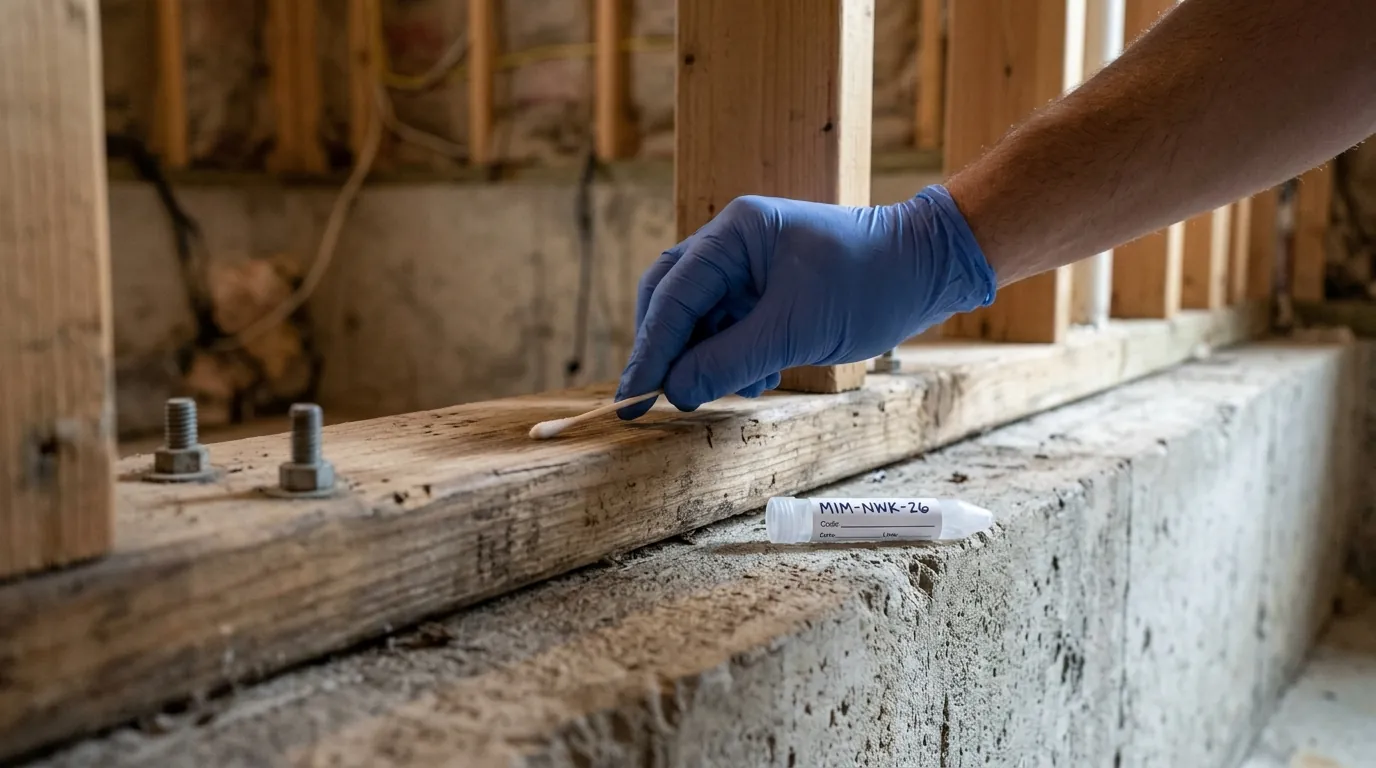
Surface samples, tape lifts or swabs from cleaned framing and subfloor, show whether residue is left on the materials that will be closed in. They are useful where the growth was heavy or where a protocol calls for them. We take them from the places most likely to fail: the tops of plates, the backs of studs next to the old growth, and corners where cleaning is awkward. A clean surface result plus a clean air result gives a solid pass.
Retest after a failed clearance
A failed clearance is not unusual after heavy growth. The area stays contained, the remediator recleans the spots we identified, and we retest only what failed plus the air. Because the containment is still up, the fix is contained to the same space. The report records both rounds, which is what an insurer, buyer or tenant will want to see. If the second test also fails, we look for a moisture source that is still active behind or under the work area.
How a clearance visit runs
Confirm removal is done
The remediator says the area is ready.
Visual check
Dust, debris and missed material.
Moisture readings
Framing and subfloor must read dry.
Outdoor control
Air sample outside the same day.
Indoor samples
Air and surface where needed.
Lab analysis
Outside lab, logged chain of custody.
Pass or retest
Written result for everyone involved.
What a clearance pass looks like
- No visible mold, dust or debris in the work area
- Scoped materials removed as planned
- Framing and subfloor read dry on the meter
- Air results comparable to the outdoor control
- No unusual spore types indoors
- Surface samples clean where they were taken
- Moisture source fixed or documented
Cleanup after the Rahway River floods
The 82 square mile Rahway River basin covers much of Union County, and after Ida, Cranford residents along the river were dealing with muck, mud and sewage, including sewers backing up into basements. Cleanups on that scale are exactly where clearance earns its cost: a basement in Cranford or anywhere along the basin that took floodwater and sewage should read dry and test clean before new drywall goes up.
Timing clearance around the rebuild
The visit itself takes an hour or two for a typical room. Lab results follow, and the rebuild starts only after the results pass.
Plan for that gap when scheduling drywall or flooring, so the crew does not arrive before the area is cleared.
Clearance testing questions
Ideally someone other than the crew that did the removal, so the check is independent.
It can, but a failure then means a larger area to reclean. Testing inside containment is better.
The remediator recleans the problem areas and we retest them while the area is still contained.
It means the area is clean now. Keeping it dry is what stops regrowth.
Yes. We can test any remediation job, whoever did the removal.