Updated September 2026
Mold testing in Newark, NJ means collecting air, surface or bulk samples and sending them to an outside lab for identification and counts. HomeGuide puts individual tests at about $50 to $350 each; a test earns its cost when growth is hidden, when someone needs proof, or to confirm an area is clean after removal.
When a test helps and when it does not
Testing does not replace an inspection. If you can see mold and know why it is there, a lab result rarely changes what happens next. Testing is worth it when the source is hidden, when a buyer, landlord or insurer needs documentation, when you want to know whether the air is affected, or when removal is finished and you want proof.
Every air sample is compared with an outdoor control taken the same day, because indoor numbers mean little on their own.
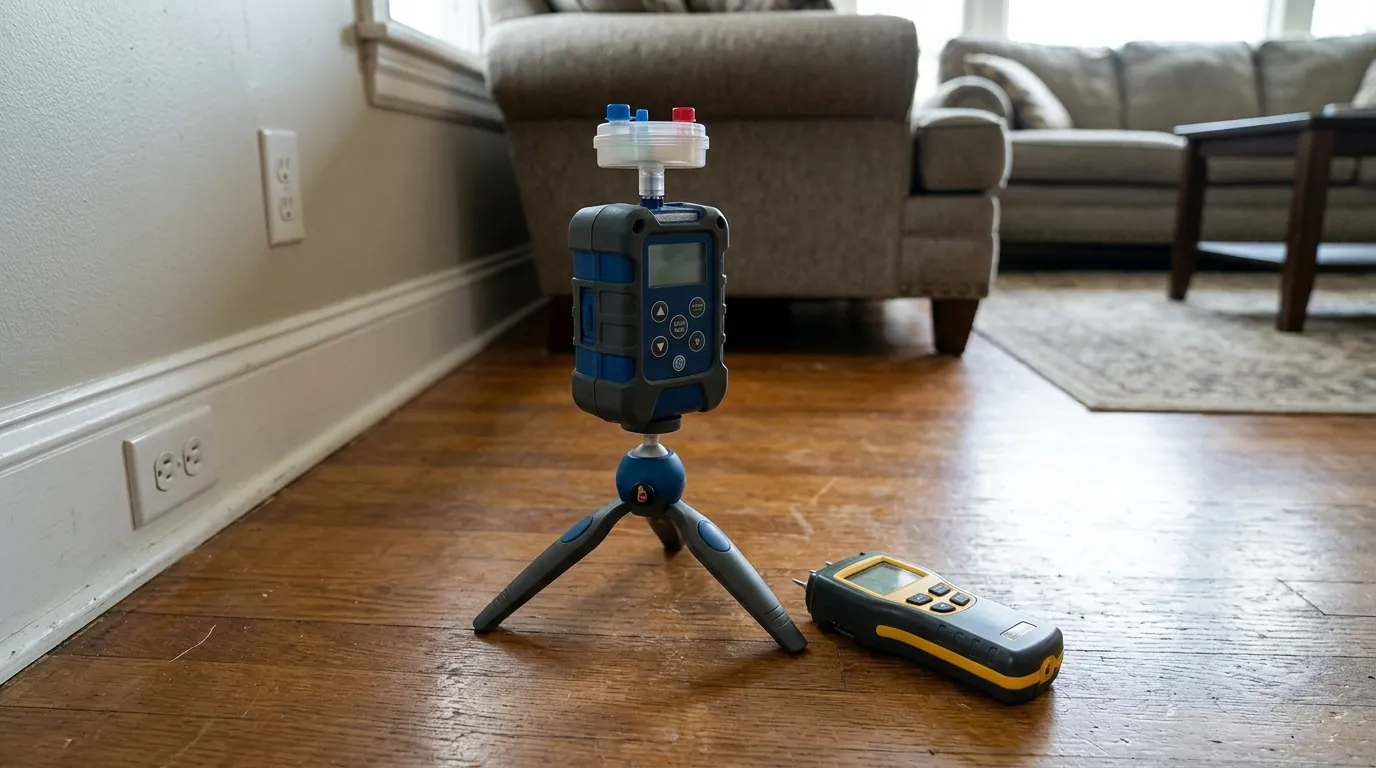
Home test kits versus professional sampling
Petri dish kits from a store almost always grow something, because mold spores are everywhere outdoors and in.
A home kit can tell you
- That spores are present, which is true of every house
- Roughly what grew on the dish
Professional sampling adds
- A measured air volume and an outdoor comparison
- A lab report you can hand to someone else
- Sampling chosen to answer your actual question
What mold testing costs
HomeGuide puts individual mold tests at about $50 to $350 each, with bulk samples at $100 to $350. Angi puts a typical mold test visit at $250 to $500. What moves yours:
- Number of samplesEach sample carries its own lab fee.
- Sample typeAir and bulk cost more than tape lifts.
- Outdoor controlAlways included with air samples.
- Lab turnaroundRush results cost more.
- Report detailDocumentation for disputes takes longer.
- Paired inspectionTesting with an inspection is one visit.
Planning ranges, not a quote. Sources: homeguide.com, homeguide.com, angi.com.
Which sample type answers which question
Each sample answers a different question. We match the test to yours.
| Answers | Common use | |
|---|---|---|
| Air sample | Is the air affected, compared to outside? | Musty smell, clearance, disputes |
| Tape lift or swab | What is this growth? | Visible spots |
| Bulk sample | Is the material itself contaminated? | Clean or remove decisions |
| Wall cavity sample | Is there growth inside this wall? | Hidden growth suspected |
Spore trap air sampling
A pump pulls a measured volume of air through a cassette that traps spores. The lab counts and identifies them, and we compare indoor results against the outdoor sample. Indoor counts well above outdoor, or types indoors that are absent outside, point to a source inside. Air sampling is the usual choice for a musty smell with nothing visible, and for clearance after removal. Results reflect a moment in time, so we note the weather and conditions when samples were taken.
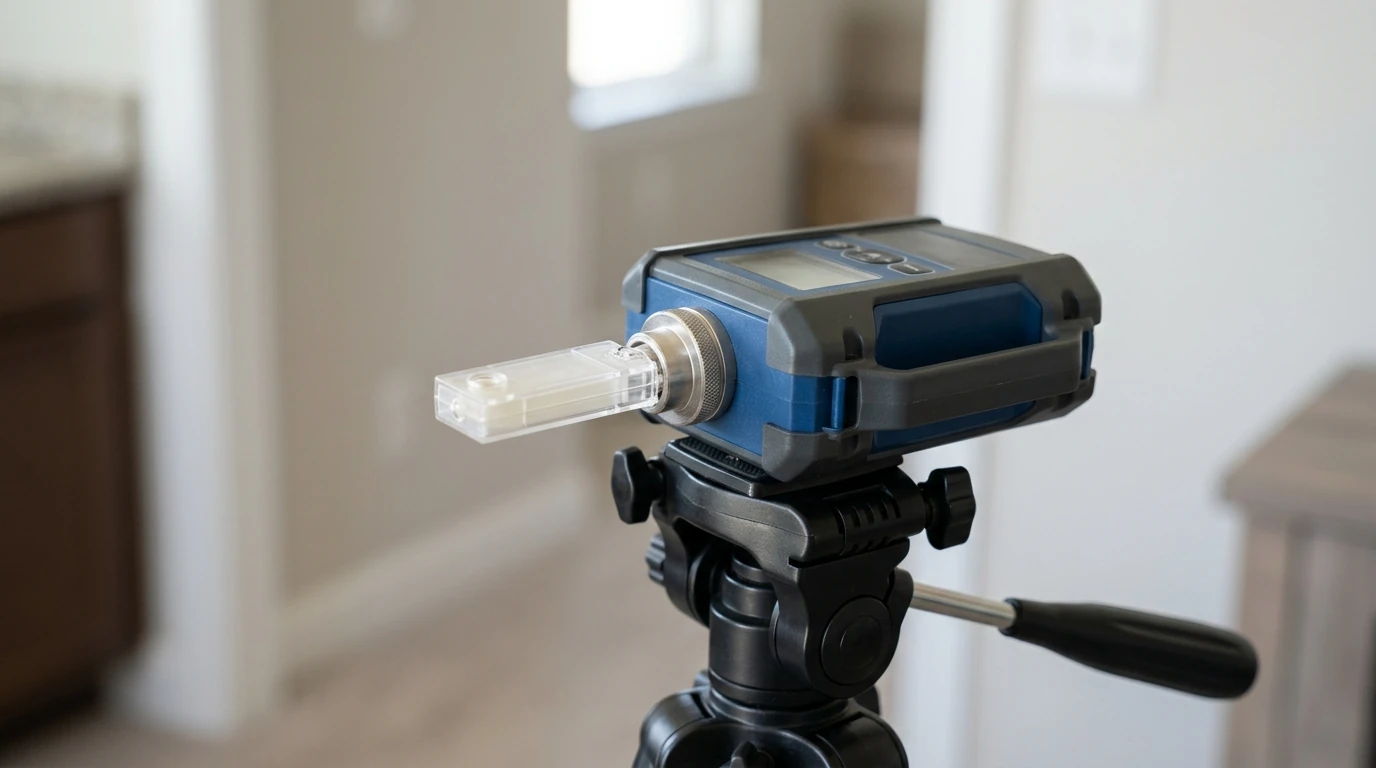
Tape lift and swab samples
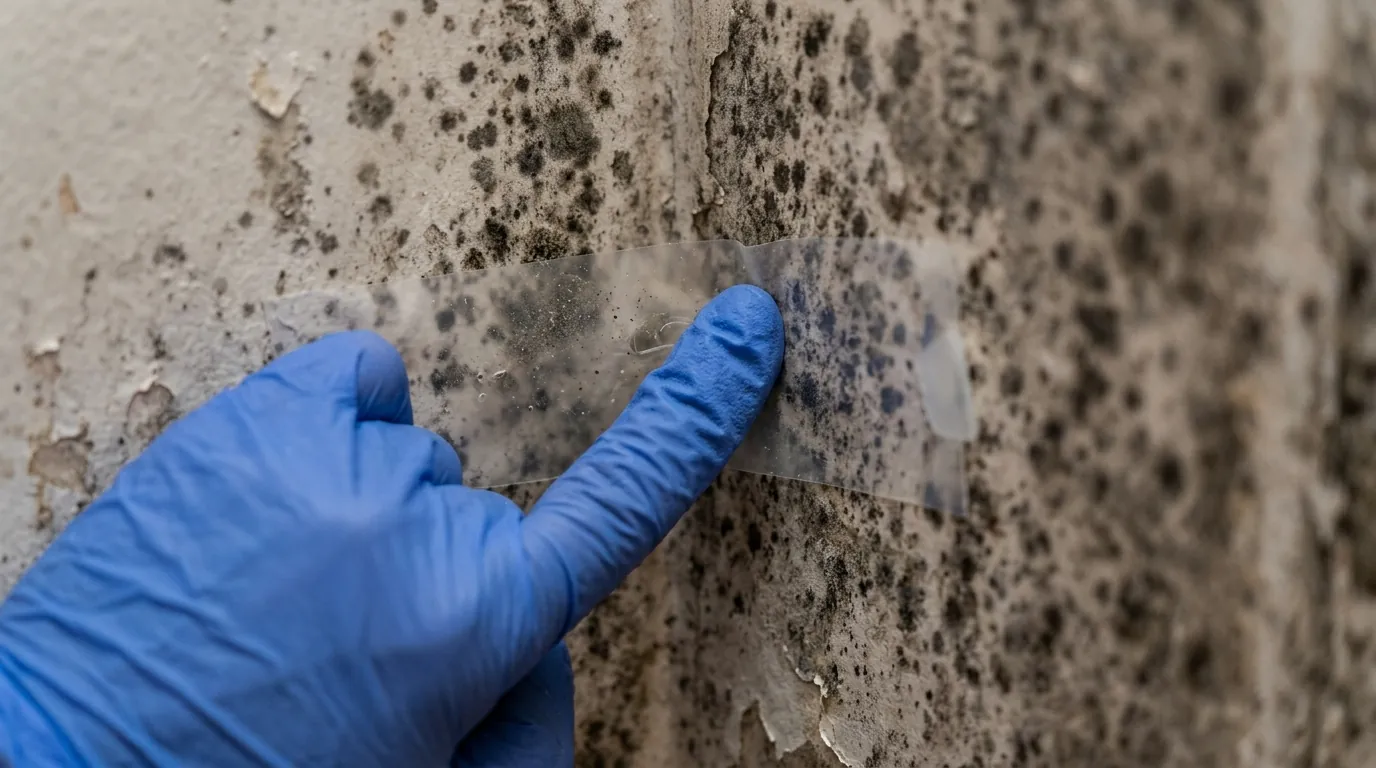
For visible growth, a piece of clear tape pressed onto the surface, or a swab, tells the lab what is growing there. It answers the question people ask most: is this mold, and what kind? Tape lifts are quick, inexpensive and do not damage the surface. They do not measure how much is in the air, so they are paired with air sampling when that matters, such as a dispute with a landlord or a health concern raised by a doctor.
Bulk material samples
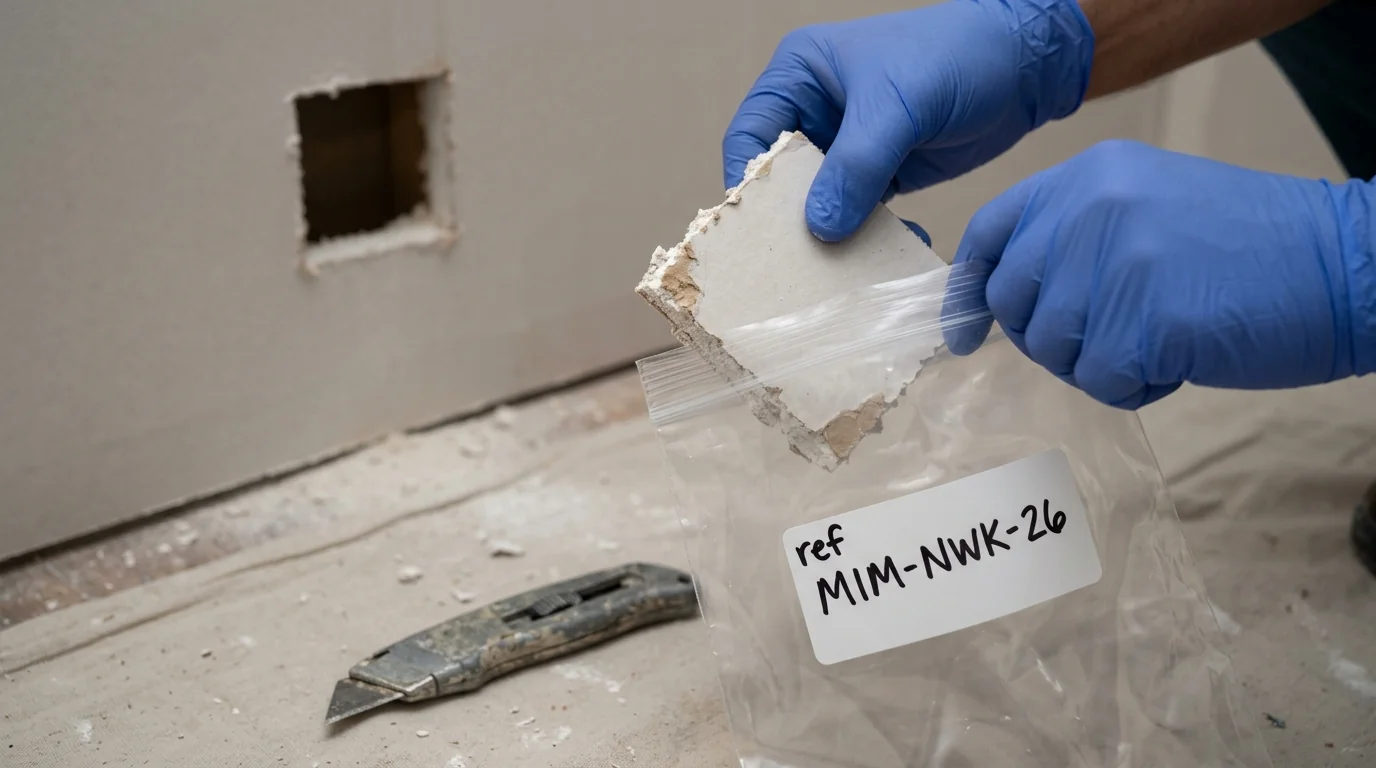
A bulk sample is a small piece of the material itself: a square of drywall, a bit of carpet pad or insulation. The lab examines it for growth inside the material, not just on the surface. Bulk samples help decide whether a material can be cleaned or must be removed, and they are useful when a surface looks clean but smells musty. We cut small, bag and label each piece, and patch the sampling point where it is visible in a finished room.
Wall cavity sampling
When we suspect growth inside a wall but the surface looks fine, a small hole lets us sample the air inside the cavity. The result is compared with room air. A cavity count far above the room points to hidden growth behind the drywall and helps decide whether the wall needs opening. It is a targeted test, used after meters and thermal imaging have already pointed to a specific section of wall, not a way to search the whole house.
How sampling works
Decide the question
What do you need to know?
Choose the samples
Only the ones that answer it.
Collect outdoor control
For every air sampling visit.
Collect indoor samples
Labeled with room and time.
Chain of custody
Samples logged and sent to the lab.
Read the results
Counts, types and comparison.
Explain them to you
What it means and what to do.
Who is allowed to test mold in New Jersey
Bills to create a New Jersey certification for mold inspectors through the Department of Community Affairs have been introduced in several sessions, including S1030 in January 2024. Whatever happens with them, the method matters more than the title on a business card when you hire anyone for mold testing in New Jersey. Ask how samples are collected, whether an outdoor control is taken the same day, and which outside lab analyzes them.
Mold testing questions
Usually not. A tape lift can confirm it is mold, but visible growth is removed either way.
It depends on the lab and the test. We give you the expected date when samples are sent.
There is no single safe number. Indoor results are judged against the outdoor sample taken the same day.
No. Testing shows what is in the house. Health questions belong with your doctor.
Yes. Our black mold testing page covers species identification.