Updated September 2026
A bathroom exhaust fan installation in Newark, NJ replaces a weak or missing fan with one sized to the room and ducts it to a roof or wall cap outside. Most swaps take part of a day; a new duct run through the attic takes longer, and we check the attic for existing mold while we are up there.
Why bathroom mold keeps coming back
Mold on a bathroom ceiling is a ventilation problem more often than a cleaning problem. If the fan is too small, too loud to run, or ducted into the attic, shower steam stays in the room and condenses on the coldest surface.
We start by testing the old fan and tracing where its duct actually ends. Then we fit a fan matched to the room and route the duct outside. If there is growth on the drywall, bathroom mold removal comes first.
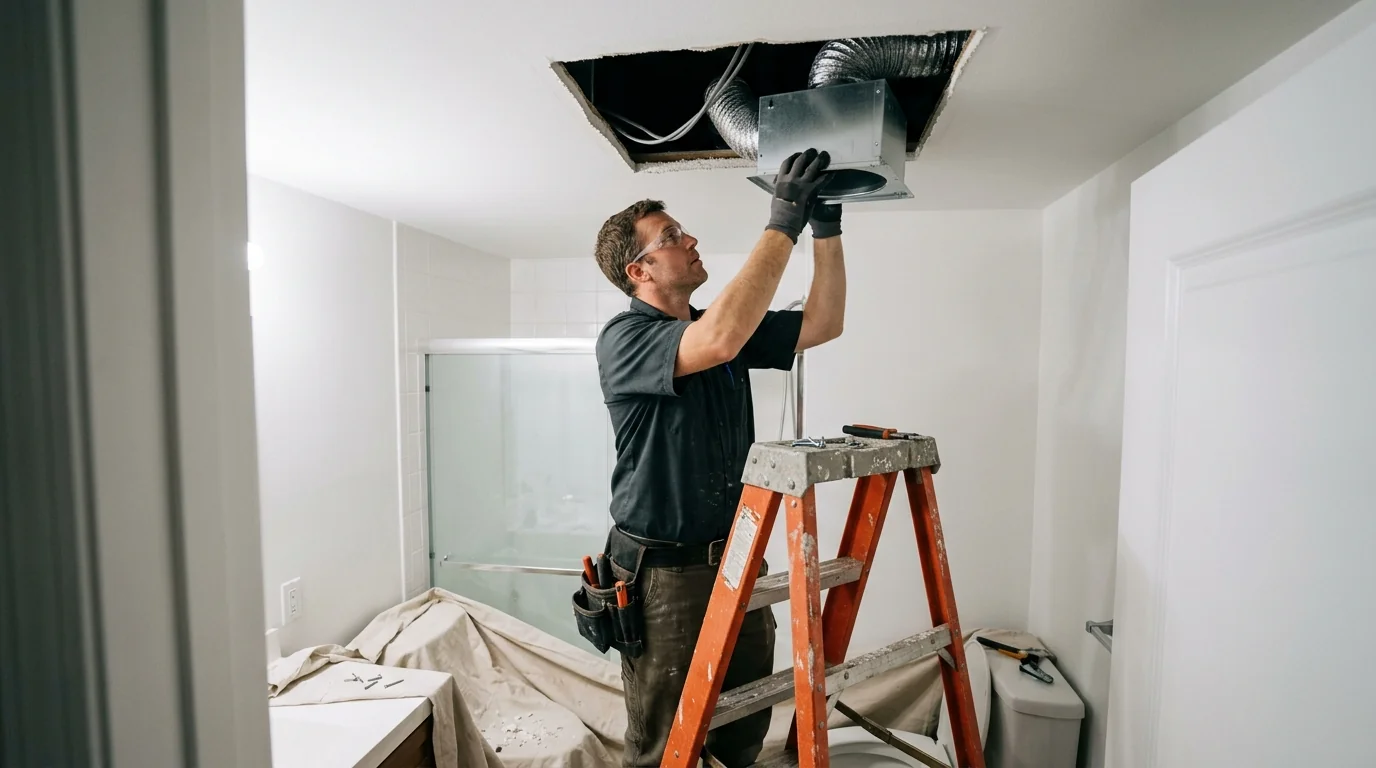
Swapping a fan yourself versus having us do it
A like-for-like fan swap is a reasonable weekend job. The duct and the attic are where it goes wrong.
Reasonable to do yourself
- Cleaning a fan grille and motor
- Swapping a fan into the same opening and duct
- Adding a timer switch on existing wiring
Worth calling us for
- A duct that ends in the attic or soffit
- Mold already on the ceiling or sheathing
- New duct runs through a tight attic
What decides the cost of a bath fan job
We do not quote from the phone because the duct route decides the job. These are the things that move the price:
- Fan swap or new installReusing an opening is quicker than cutting a new one.
- Duct routeShort runs to a wall cap cost less than long attic runs.
- Roof or wall exitRoof penetrations need flashing; wall caps need siding work.
- WiringAdding a sensor, timer or separate switch adds time.
- Attic accessTight or floored attics slow the duct work.
- Existing moldGrowth on drywall or sheathing is removed first.
Replacing a weak fan
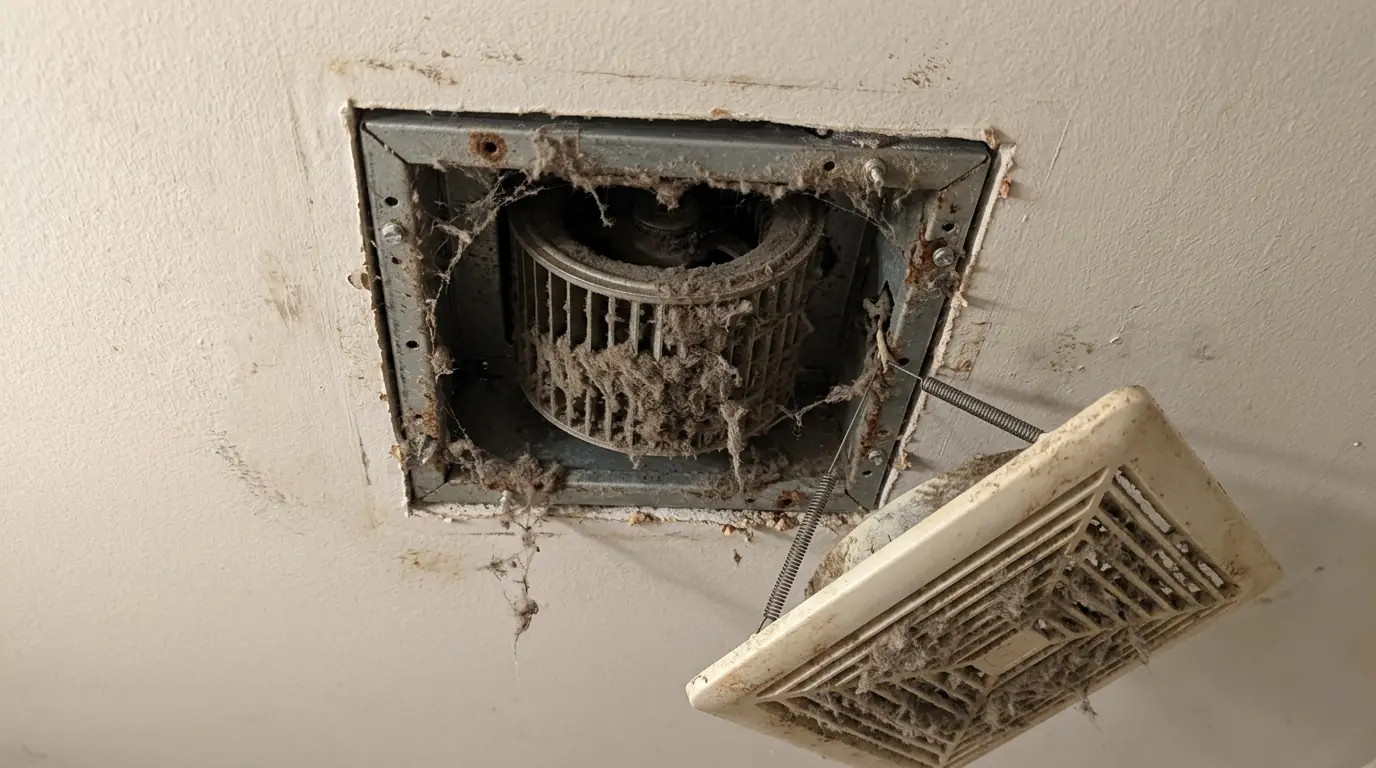
Many older fans move far less air than their label says, especially after years of lint and a crushed duct. We measure the room, check how the old unit performs, and replace it with a fan sized for the space. Where the ceiling opening allows, we use a quieter unit, because a fan nobody can stand running does not get run. The housing gets sealed to the drywall so attic air stays out, and the damper is checked so cold air cannot drop back in.
Humidity sensing fans
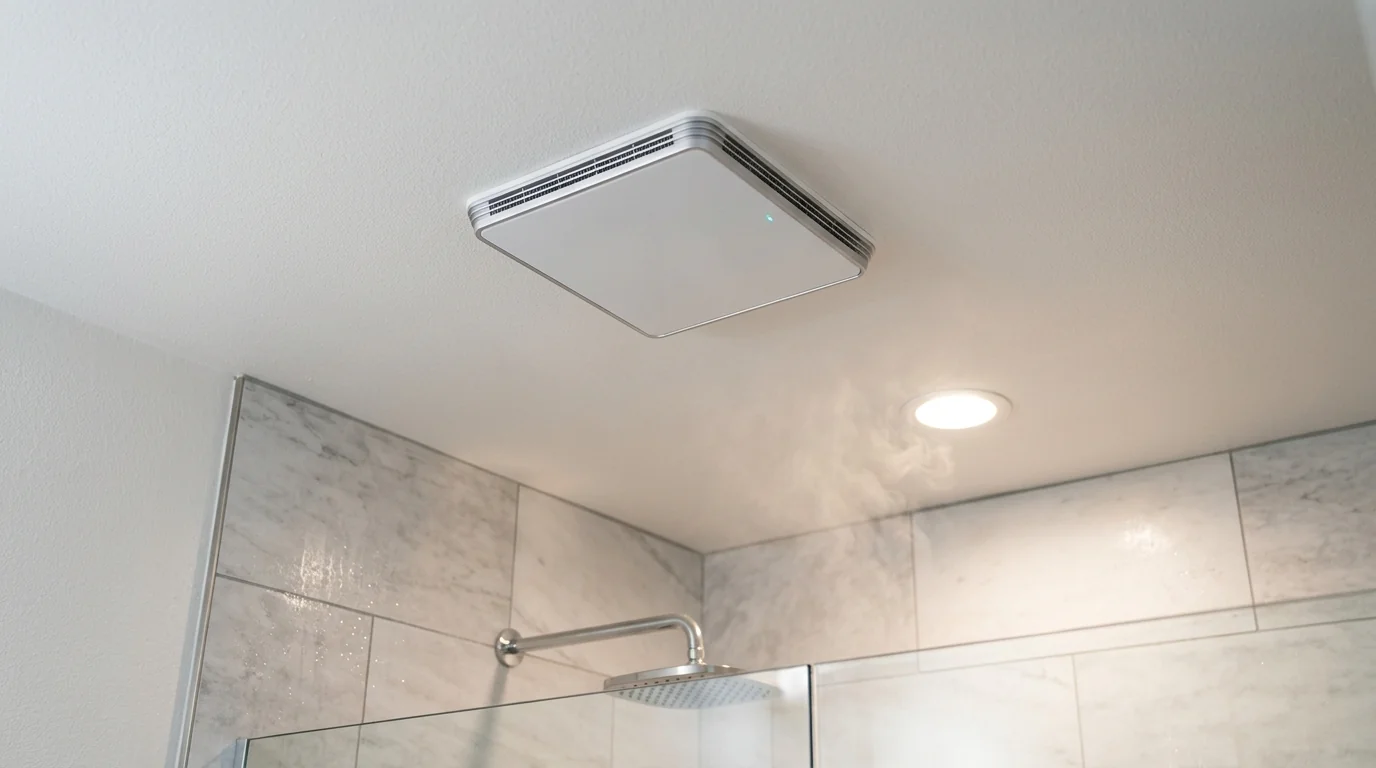
A humidity sensing fan switches itself on when the room gets damp and runs until the moisture clears. It solves the most common failure we see: the fan gets turned off with the light, while the mirror is still fogged. For kids' bathrooms, rentals and any room where the switch gets forgotten, it is the simplest fix. We set the sensitivity so it does not run all day, and we can add a timer where a sensor is not practical.
Ducting to the exterior
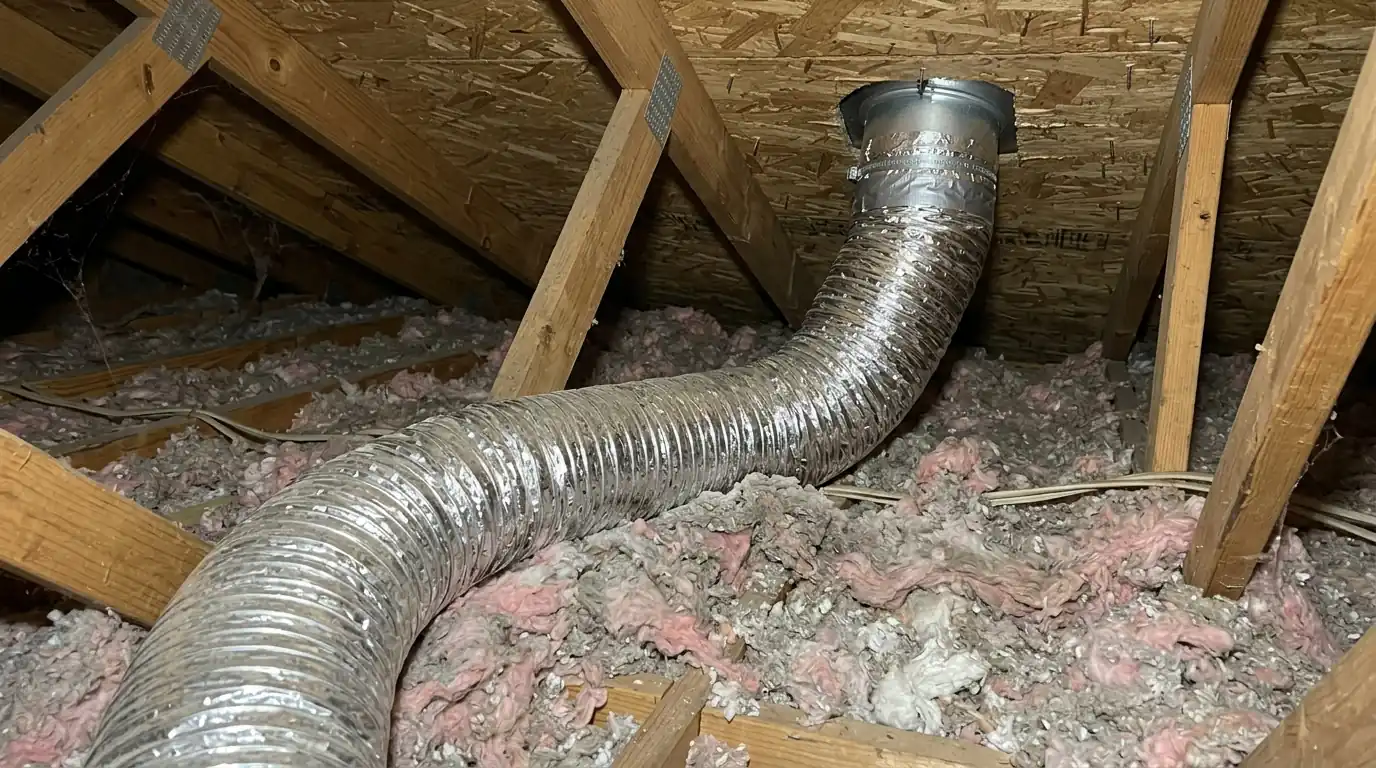
The duct is where most installs go wrong. We run insulated duct on the shortest path we can, pitch it so condensation drains out rather than back, and end it at a roof or wall cap with a damper. A duct that ends under the roof deck or at a soffit vent sends the moisture right back into the attic, which is how an attic mold job often starts. If we find that setup, we photograph it and tell you before we change anything.
How a fan installation runs
Check the old fan
We test airflow and find the duct end.
Size the new fan
Matched to the room and ceiling.
Protect the room
Drop cloths down, power off.
Fit and seal
Housing sealed to the ceiling drywall.
Run the duct
Insulated, pitched and as short as possible.
Cap outside
Roof or wall cap with a working damper.
Test with you
Tissue test and control check before we leave.
Newark winters and bath fan ducts
Newark's early December nights average lows of 33 to 35 F, and that is when a bath fan duct ending in the attic does its damage. Warm shower air hits cold roof sheathing and condenses, night after night, until the wood darkens. In the Newark attics we inspect, the worst spotting usually sits directly above an old fan outlet, which is why we check where the duct ends before quoting a new fan.
Bath fans we install and replace include Broan-NuTone and Panasonic units, and we check the dehumidifiers and air handlers nearby from makers such as Aprilaire and Honeywell.
Aprilaire, Santa Fe, AlorAir, Honeywell, Carrier, Trane, Lennox, Rheem, Goodman, Mitsubishi Electric, Daikin, Broan-NuTone, Panasonic
Bathroom fan questions
No. That puts the shower moisture on the roof sheathing, which is one of the most common causes of attic mold we see.
Until the mirror clears and then a bit longer. A humidity sensing fan or a timer takes the guessing out of it.
It stops new growth. Existing mold on drywall or grout still needs cleaning or removal.
Yes. Humidity sensing fans are popular with landlords because tenants cannot forget to turn them on.
A swap into an existing duct is usually part of a day. A new duct run through the attic takes longer.