Updated September 2026
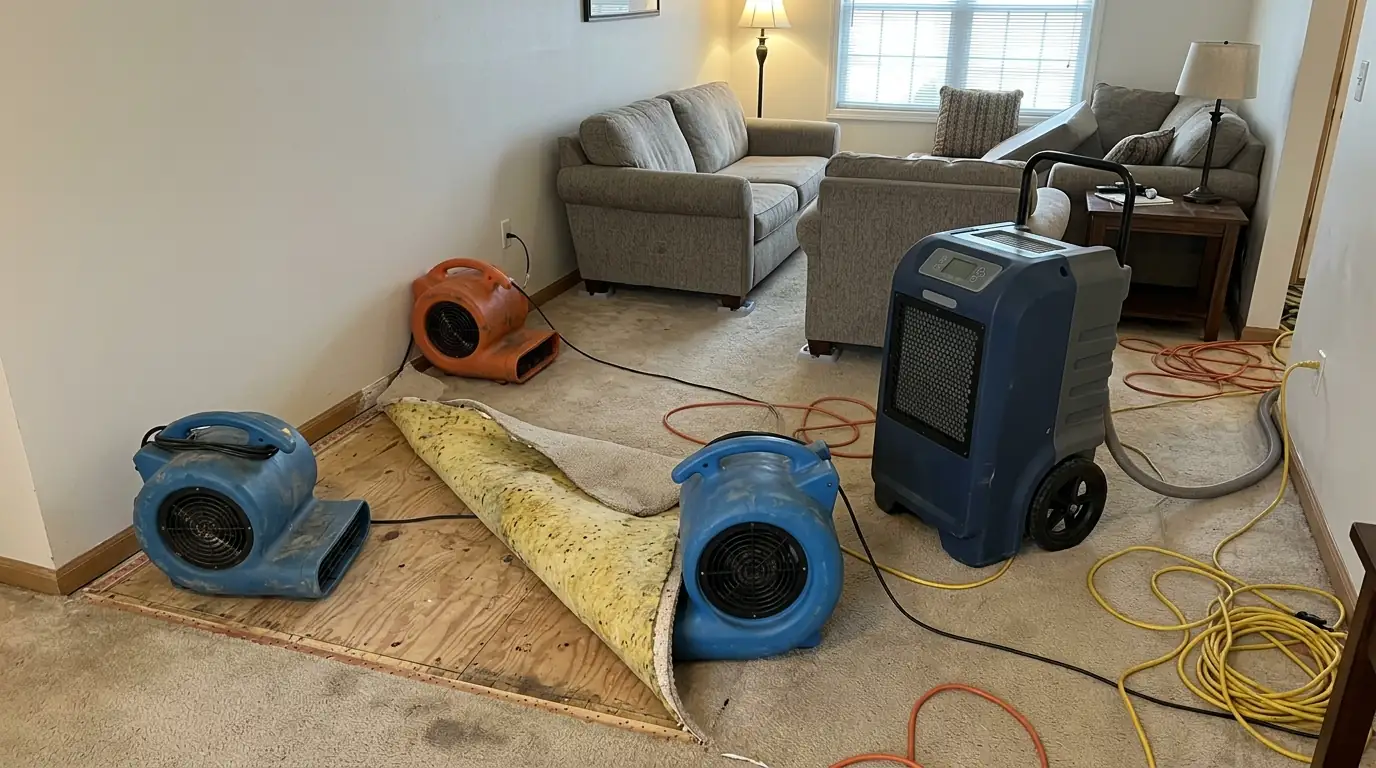
Water damage drying in Newark, NJ extracts standing water after a burst pipe, appliance leak or leak from the unit above, then dries floors, walls and ceilings in place with air movers and dehumidifiers, checked with daily meter readings. HomeGuide puts extraction and drying at about $4 to $6 per square foot for clean water, rising for dirtier water.
Why fast drying saves materials
Water from a supply line starts clean, and if drying starts quickly, drywall, framing, subfloor and even some flooring can stay. The longer it sits, the dirtier it becomes and the more has to come out. That is why the first hours matter more than anything else on the job.
We extract, lift or open only where readings say water is trapped, and set equipment sized to the room. If drying started late or growth has begun, the job becomes a mold assessment and removal.
Signs water went further than you think
Baseboards swelling
Water wicked into the wall bottom.
Floors cupping or soft
Water is trapped under flooring.
Paint bubbling on walls
The cavity behind is wet.
Ceiling sagging below
Water pooled on the drywall above.
Musty smell after a day
Drying is falling behind.
How a drying job runs
Call any hour
Tell us the source and where it spread.
Stop the source
We tell you which valve to close.
Extract
Standing water out first.
Map the moisture
Meters and thermal imaging.
Open where needed
Only where water is trapped.
Dry and monitor
Daily readings logged.
Confirm dry
Readings match dry areas.
Burst pipes
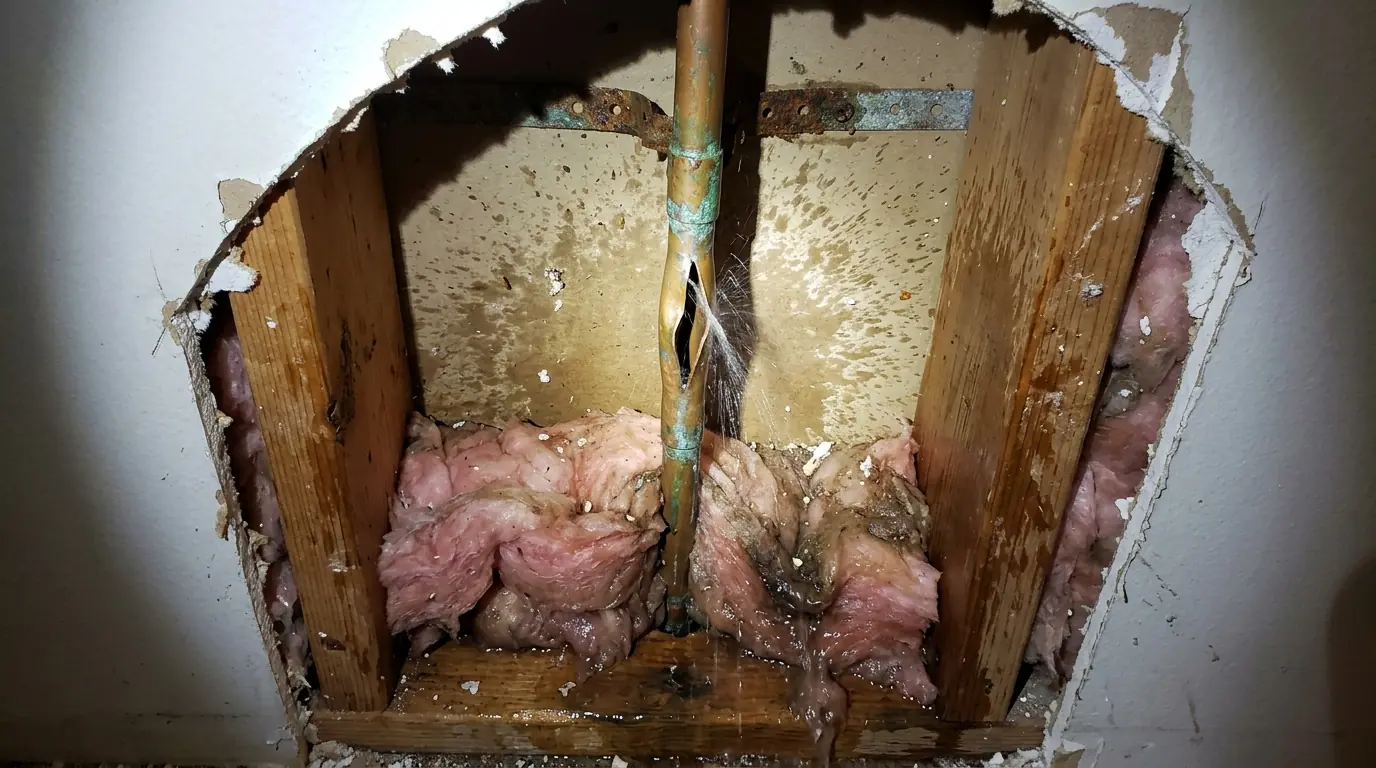
Burst pipes release a lot of water fast, usually in winter or after a fitting fails. Once the water is off, we extract standing water, check how far it traveled under flooring and inside walls, and open small holes at the base of walls to let air into the cavity where needed. Drying runs until readings match unaffected areas of the house. We document the break location and the damage for your claim and for the plumber who repairs it.
Appliance leaks
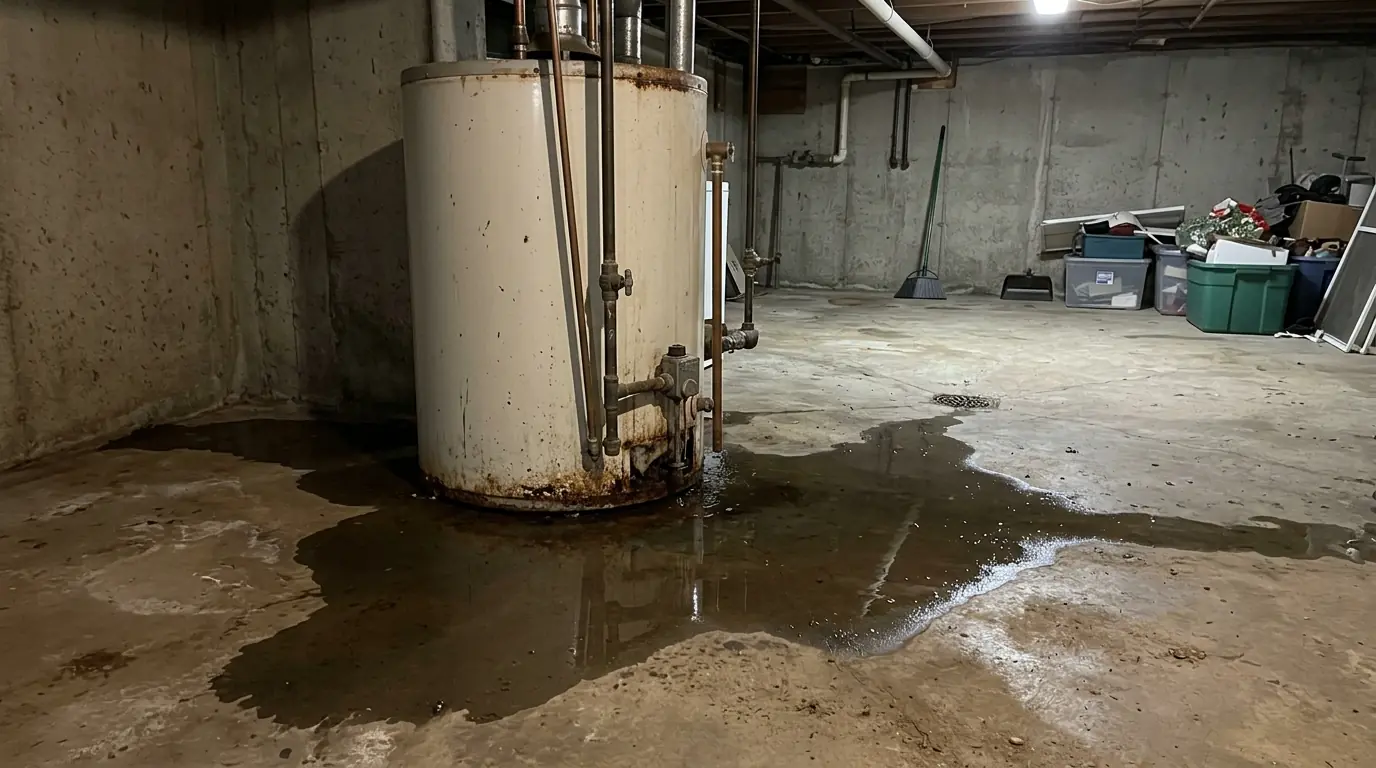
Washing machines, water heaters, dishwashers and refrigerators leak slowly or all at once. Water spreads under floors and into the room beside or below. We pull the appliance if needed, extract, and read the floor and walls around it. Laminate and vinyl plank often trap water underneath and need lifting; tile and sealed wood may dry in place. The appliance leak is noted for repair before it goes back into service, so the same failure does not flood the room again.
Ceiling leaks from the unit above
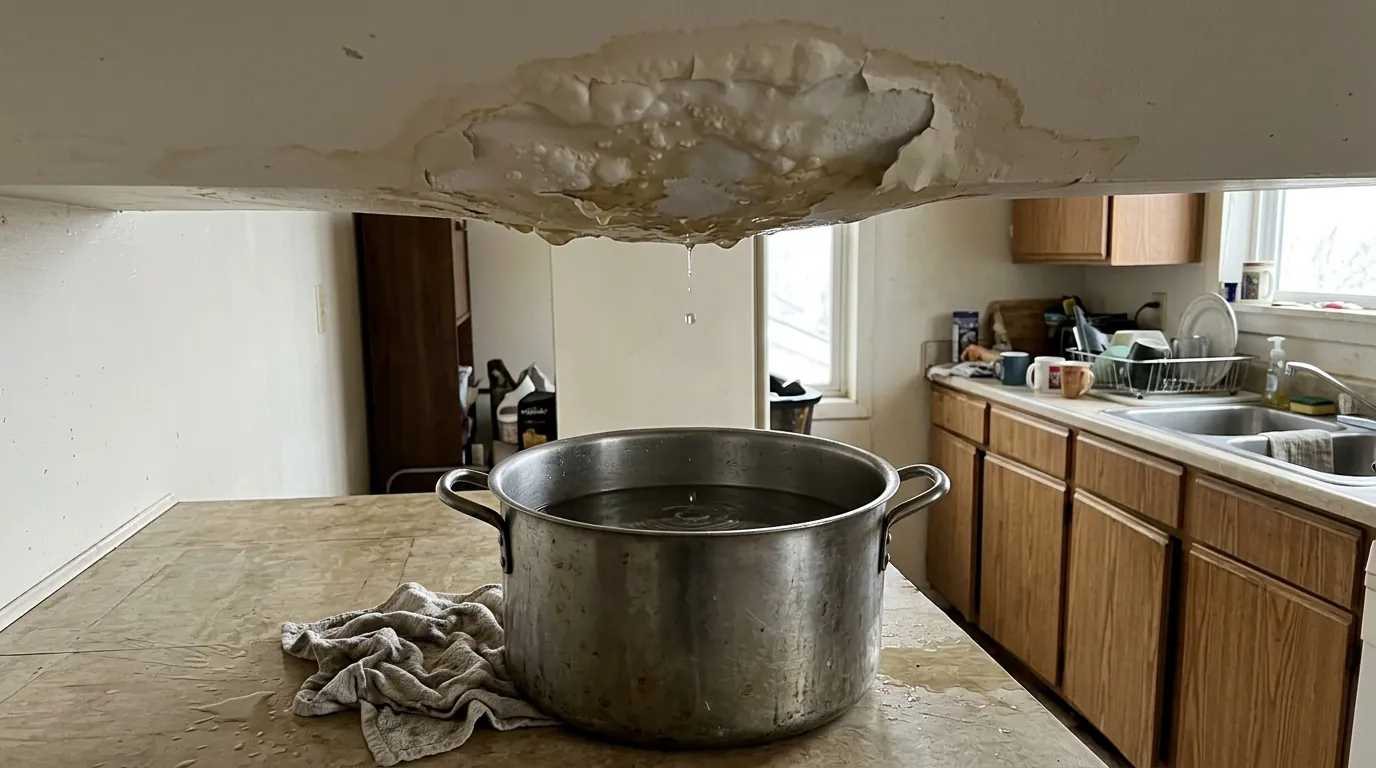
In apartments and two families, water from the unit above comes through the ceiling, runs down walls and pools on the floor. We read the ceiling and walls, drill small vent holes or remove sagging drywall, and dry the cavity above. Wet ceiling insulation comes out. With access to the unit above, we note the source so the owners and the association know where it came from, which is often the harder part of the job in a shared building.
Floor drains in Jersey City and Newark
Most of Jersey City is on a combined sewer, with its wastewater piped under the Hackensack River to Newark for treatment. That matters for drying jobs in Jersey City: water that came up a floor drain is sewage, not clean water, and cannot be dried in place like a pipe leak. When the source is a drain rather than a pipe, we switch to our Category 3 cleanup standard before any drying starts.
What a drying job includes
- Extraction of standing water
- Moisture map of every affected room
- Lifting or opening only where water is trapped
- Air movers and dehumidifiers sized to the space
- Daily readings until materials are dry
- Removal of wet insulation and pad
- Photos and drying records for your claim
What decides the cost of drying
HomeGuide puts extraction and drying at about $4 to $6 per square foot for clean water, $6 to $9 for gray water and $9 to $12 for black water. What decides yours:
- Affected areaSquare footage drives equipment count.
- Water categoryDirtier water means more removal.
- Time since the leakLonger waits mean more damage.
- MaterialsHardwood and plaster dry slowly.
- Ceilings and cavitiesOpening and venting adds labor.
- Drying daysEquipment runs until readings say dry.
Planning ranges, not a quote. Sources: homeguide.com.
Water damage drying questions
It depends on the materials and how long water sat. We go by meter readings, not a set number of days.
Sometimes, if drying starts quickly. Cupping that does not settle may need refinishing or replacement.
Often only small vent holes at the base. Full removal is for walls that took dirty water or stayed wet too long.
We document the source, extent and drying readings, which is what adjusters need.
Then affected materials come out under containment as part of mold remediation.