Updated September 2026
Basement mold removal in Newark, NJ means sealing the work area under negative air, removing moldy drywall, paneling, insulation and carpet, HEPA vacuuming and cleaning the framing and foundation, and drying everything before rebuild. HomeGuide puts remediation at about $15 to $30 per square foot, with an entire basement running up to $15,000.
What removal involves below grade
Below grade, mold grows where water and cool surfaces meet: the back of paneling, the bottom of drywall, the sill plate and joist ends, and anything stored against the foundation. Surface cleaning a finished wall does nothing for the growth behind it.
We build containment with plastic and negative air so spores stay in the basement, remove porous materials that are contaminated, and clean what stays. Drying and the moisture source come next, because removal on its own only resets the clock.
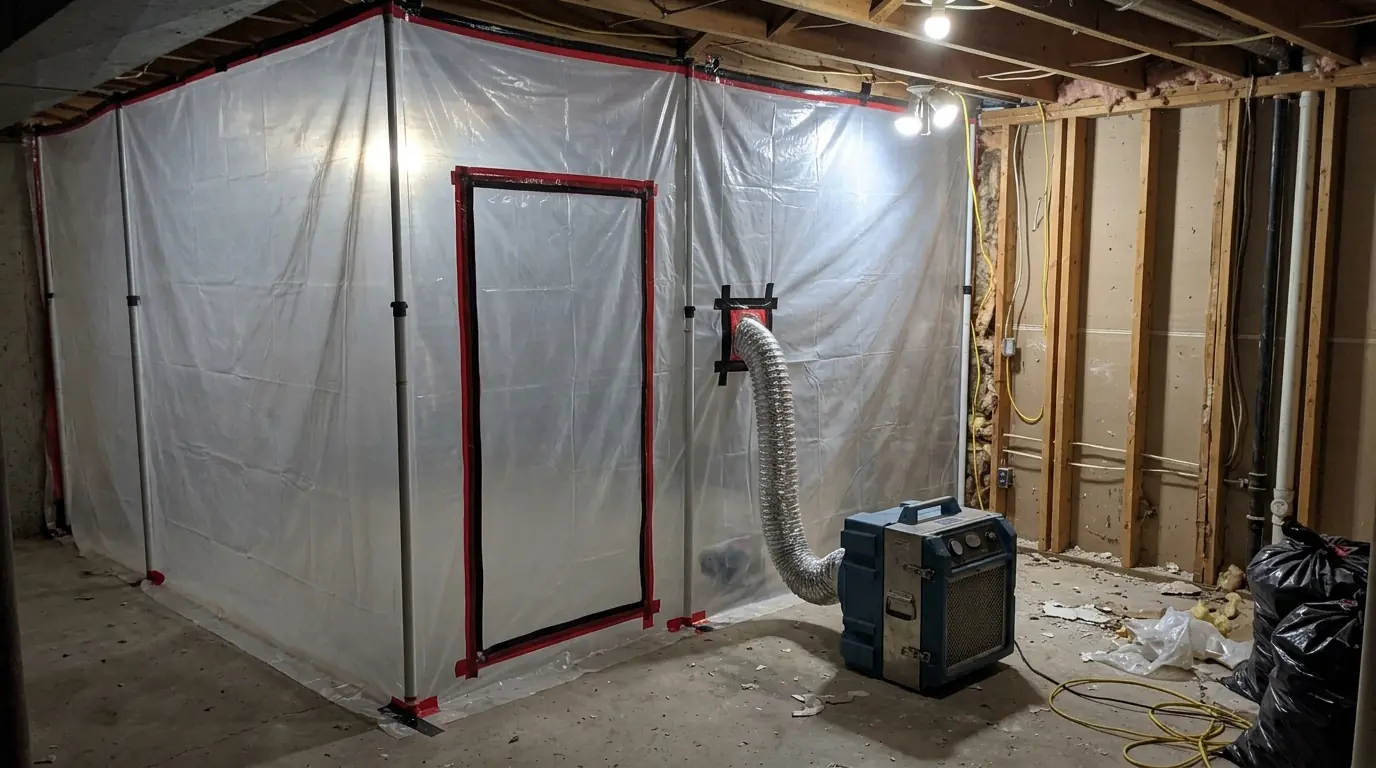
Cleaning it yourself versus a contained removal
Small surface spots on concrete can be cleaned by a careful homeowner. Anything behind a wall or in carpet is a different job.
Reasonable to do yourself
- Wiping small surface spots on bare concrete
- Discarding moldy cardboard and stored items
- Running a dehumidifier and fixing downspouts
Where containment matters
- Growth behind paneling or drywall
- Moldy carpet and pad
- Anything larger than a small patch, or after flooding
What decides the price of basement removal
HomeGuide puts mold remediation at about $15 to $30 per square foot and removal from an entire basement at up to $15,000. What moves your number:
- Affected areaSquare footage drives labor and disposal.
- Finished or unfinishedWalls and flooring to remove add work.
- Containment sizeLarger work zones need more negative air.
- Structural cleaningSanding stained joists takes time.
- Contamination sourceSewer water raises the cleaning standard.
- Clearance testingPost-removal samples add a lab fee.
Planning ranges, not a quote. Sources: homeguide.com, homeguide.com.
Finished walls and paneling
Finished basements hide the problem well. Paneling and drywall on furring strips trap moisture against the foundation, and the back face grows mold long before the front shows it. We open the wall, remove the contaminated board and the insulation behind it, and check the furring and the foundation behind it. When the wall goes back, it goes back with a gap or a moisture-tolerant assembly, not the same sealed sandwich of paneling and foam that grew mold the first time around.
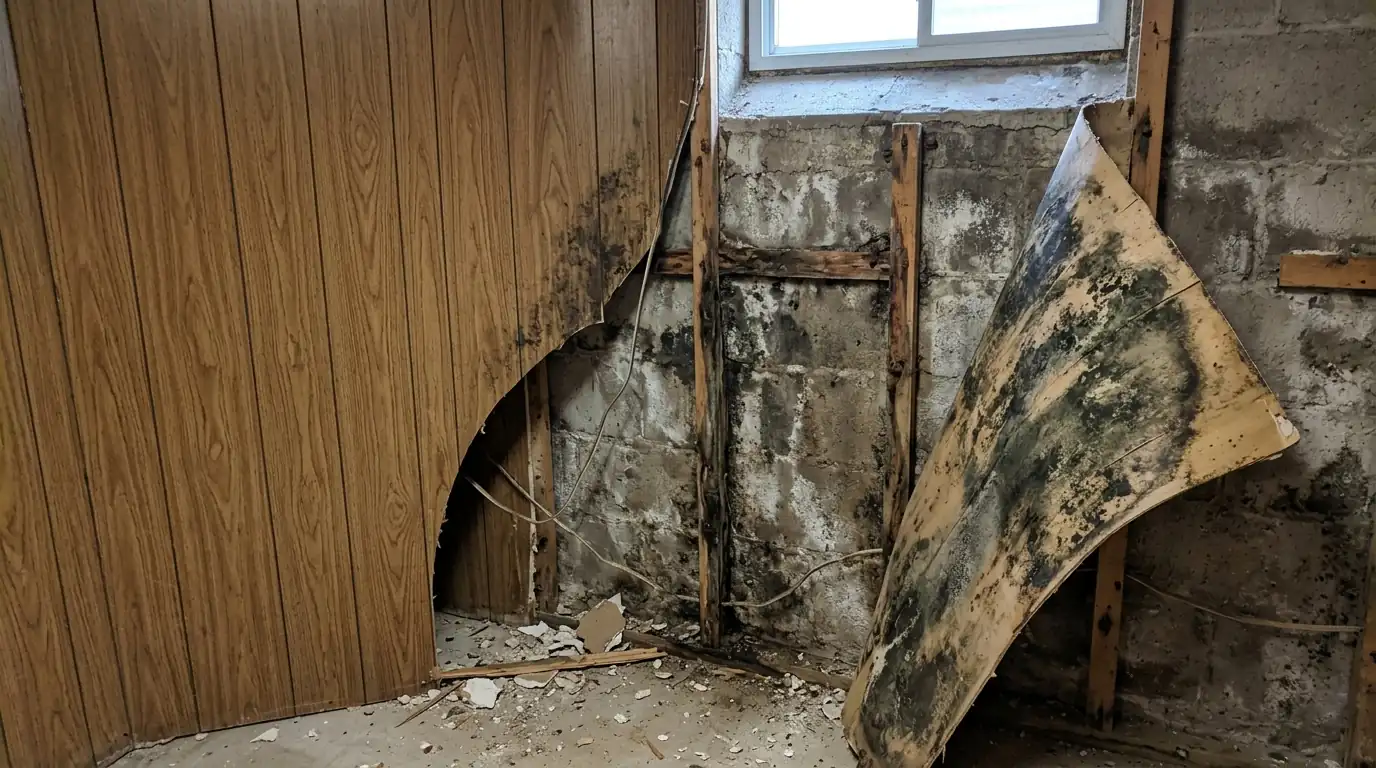
Foundation walls
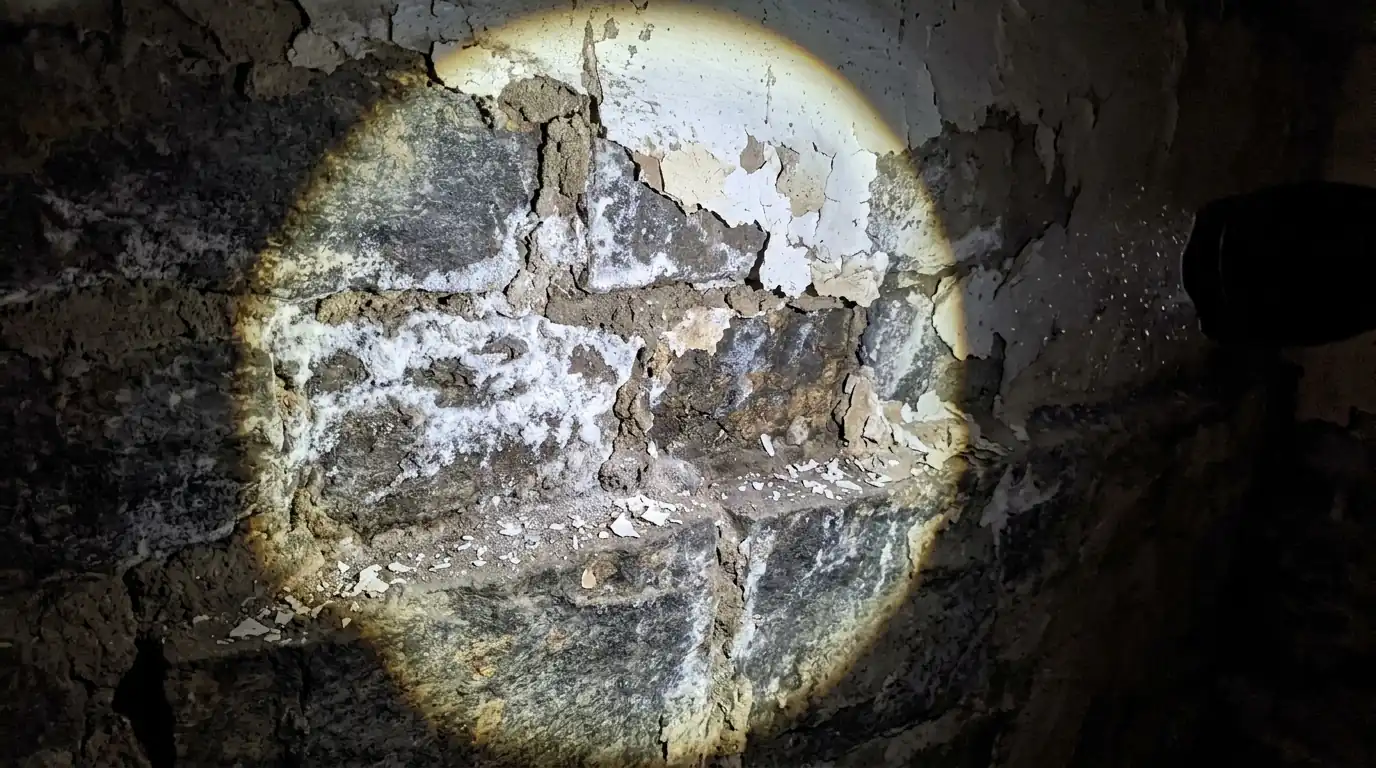
Mold on bare block or stone usually grows on dust and paint rather than the masonry itself. We HEPA vacuum and clean the surface, then look at why the wall is wet. Efflorescence and flaking paint point to water moving through the wall, which is a grading, gutter or waterproofing issue. Painting over it with a mold-resistant coating is a finishing step, never the fix, and we only apply one once the wall has dried out and the source has been dealt with.
Joists and sill plates
The sill plate sits right on the foundation and is often the first wood to get wet. We check the sill and the joist ends above it, clean surface growth with HEPA vacuums and wiping, and sand where growth has stained deeper. Wood that is soft or rotted needs a carpenter, and we mark it clearly in the report. The rim joist area is also where cold air leaks in, so we note any gaps in the rim that are feeding condensation.
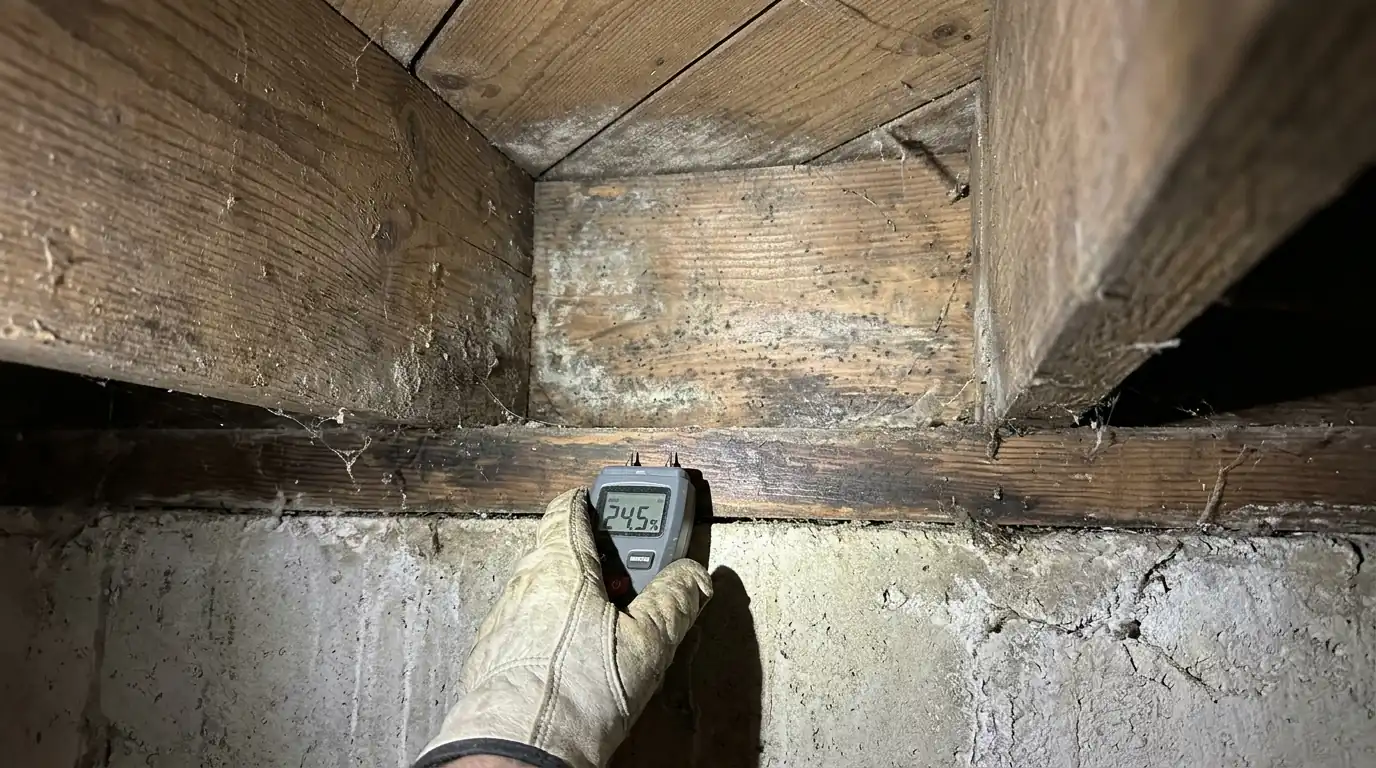
Basement carpet and pad
Carpet and pad on a basement slab are the most common thing we remove. Pad holds water against the concrete, and once mold grows in it, cleaning the carpet surface only spreads spores. We bag and remove the carpet and pad inside containment, clean and dry the slab, and read it before any new flooring goes down. If you plan to refinish, we suggest flooring that tolerates the occasional damp day better than carpet, such as vinyl plank or sealed tile on a dry slab.
How a basement removal runs
Inspect and scope
Find the extent and the water source.
Contain
Plastic walls, zipper door, negative air.
Remove
Contaminated drywall, insulation and carpet out.
Clean
HEPA vacuum and wipe framing and walls.
Dry
Dehumidifiers until materials read dry.
Verify
Visual check and clearance testing if wanted.
Fix the cause
Source repair or drainage noted before rebuild.
Old foundations and a combined sewer
About 22.6 percent of Newark housing predates 1939, and roughly 11 square miles of the city run on a combined sewer that carries stormwater and sewage together. In Newark basements, that means old stone and block walls that wick water and floor drains that can back up during hard storms. When a basement job here turns up growth near the floor drain, we treat it as a possible backup and plan cleaning to that standard.
Signs the basement problem is bigger than a spot
A smell that returns after cleaning
Growth is behind or under something.
Paneling that feels cool and soft
Moisture is sitting behind it.
Efflorescence on the walls
Water is moving through the foundation.
Rusted nails or tack strip
The floor edge has been wet repeatedly.
Stored boxes with spots
Cardboard grows mold fast in damp air.
Basement mold questions
Bleach does little on porous materials and adds moisture. Growth behind walls or in carpet needs removal.
Usually not. Containment keeps the work area sealed from the rest of the house.
Not if the moisture source is fixed and the space stays dry, which is why we address both.
We handle removal, cleaning and drying. Rebuild is done after clearance, by us or your contractor.
A clearance test confirms the area is clean before walls close up.