A musty smell with nothing visible
Odor with no visible growth usually means mold inside a wall cavity, under flooring or in the air handler. We trace it with moisture readings before opening anything.
See the jobMost mold in Newark starts as a moisture problem. We find the water feeding it, test what needs testing and remove what has to go, from basements and attics to apartments after a leak from upstairs.
Answering 24/7 from our Johnson St office in Newark
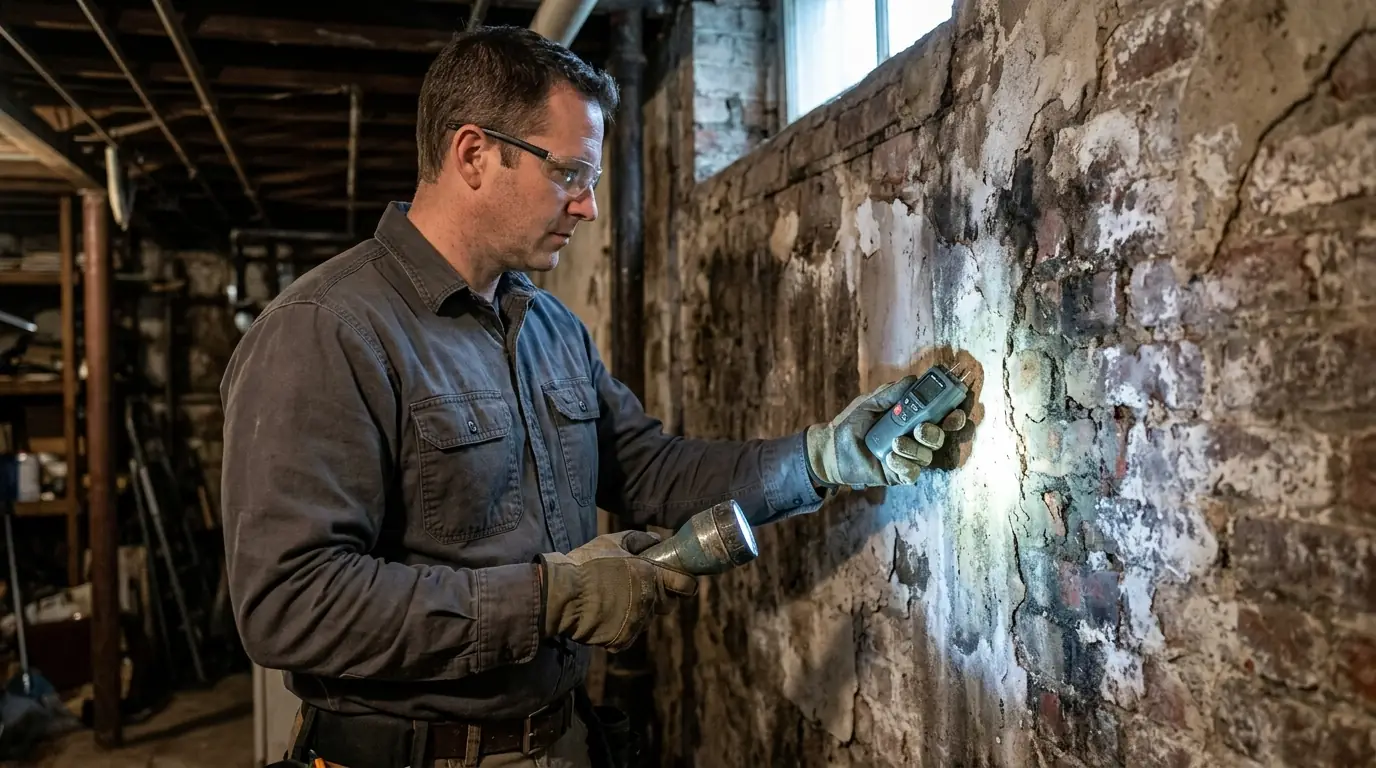 What the inspector looks for
A mold inspection in Newark, NJ takes about 2 to 5 hours and pairs a moisture survey with air or surface samples only where the result would change the plan. Market pricing runs about $300 to $650 for an average home, and we explain what each sample is for before we take it.
Pick the closest match to open the page for that job.
Odor with no visible growth usually means mold inside a wall cavity, under flooring or in the air handler. We trace it with moisture readings before opening anything.
See the jobA stain that returns through fresh paint is an active leak or condensation, not a cleaning problem. We find out which one.
See the jobWet drywall, carpet and boxes have about two days before mold starts. Extraction and drying come first.
See the jobSewer water is Category 3. Porous materials it touched come out; the rest gets disinfected and dried.
See the jobA written report with photos and readings holds up in a purchase contingency, a lease turnover or a dispute.
See the jobHumidity, carbon dioxide and particle readings explain a stuffy room faster than guessing.
See the jobThirty-three jobs in five groups. Not sure which fits? Call and describe it. Typical prices are in the cost guide.
Visual and moisture inspections that find where mold is growing and why.
8 servicesLab sampling, air quality checks and the paperwork that proves a job is done.
7 servicesContained removal, cleaning and drying, room by room.
10 servicesThe first days after water gets in, when mold is still preventable.
3 servicesThe fixes that stop mold coming back once it is gone.
5 servicesAir handlers, dehumidifiers and bath fans are where hidden moisture often starts. We open up and check equipment from brands such as Aprilaire, Santa Fe, Carrier, Trane and Broan-NuTone.
Aprilaire, Santa Fe, AlorAir, Honeywell, Carrier, Trane, Lennox, Rheem, Goodman, Mitsubishi Electric, Daikin, Broan-NuTone, Panasonic
Newark's housing is old and mostly rented. About one home in five was built before 1939, and roughly another third went up between the 1940s and the 1960s, so we work around stone foundations, plaster walls and basements never meant to be finished. About 77 percent of the city's dwellings are rentals, which is why so much of the mold we document sits between two people: the tenant who noticed it and the owner who has to fix it.
Water is the other half of it. On September 1, 2021 the remnants of Ida put 8.41 inches of rain on Newark, the wettest day on record, with 3.24 inches falling in one hour. About 11 square miles of the city also run on a combined sewer that carries stormwater and sewage in the same pipe, so a hard storm can push water up through a floor drain instead of in through a wall. Summer adds its own load: early July averages highs near 87 F with overnight lows near 69 F, and that damp air condenses on cool foundation walls and cold water lines.
That is why our inspections here start with the moisture source. Mold after a sewer backup and mold behind a bedroom dresser look alike in a photo, but they come from different water and need different fixes.
From the first call to a dry, cleared space. An inspection alone stops at step four.
Tell us what you are seeing or smelling and where. We ask about past leaks and floods, then book a time.
Pin and pinless meters, a thermal camera where it helps, and a close look at foundation walls, sill plates, attic sheathing and sink bases.
Air, surface or dust samples go to an outside lab when the answer would change the plan. You hear what each sample is for before we take it.
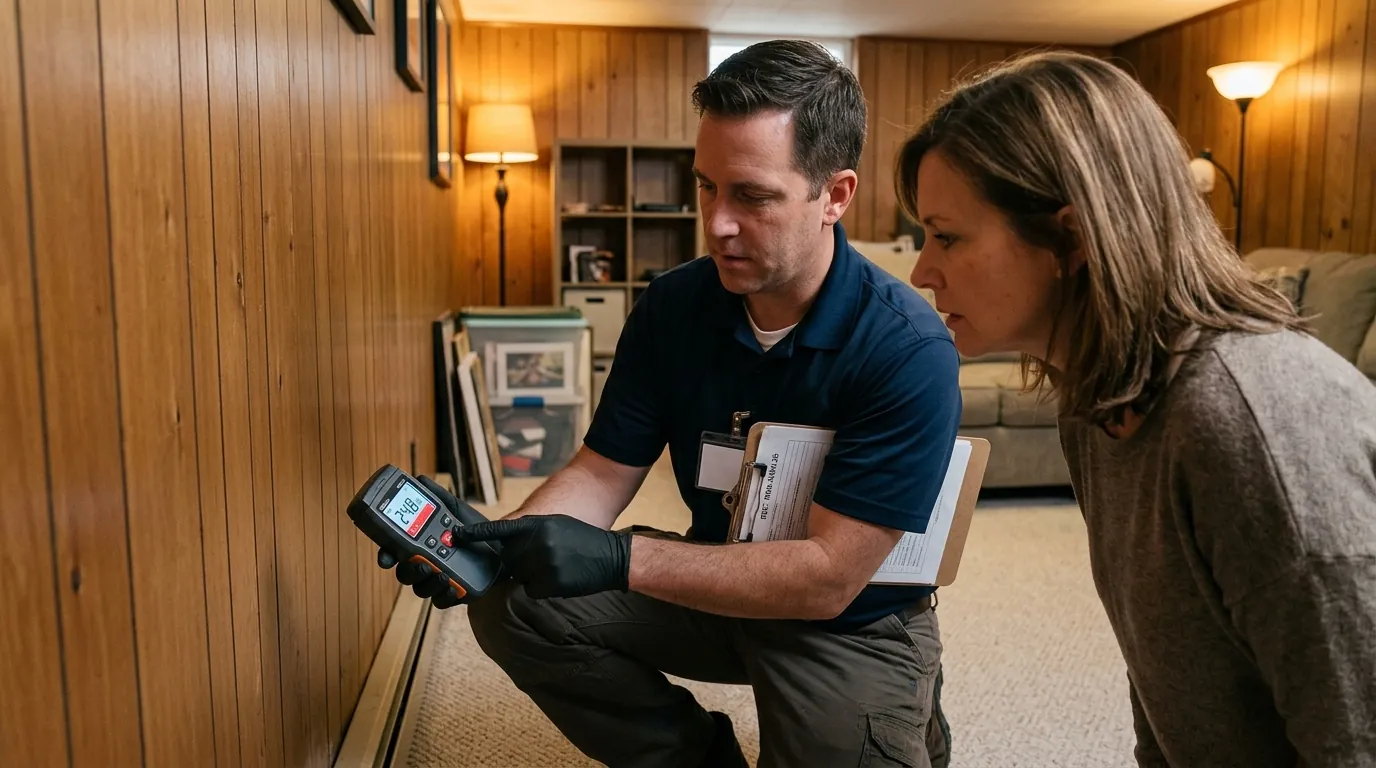
Photos, moisture readings, lab results when taken, and a plain scope of what should be removed, what should be cleaned and what caused it.
Plastic sheeting, negative air and HEPA filtration keep spores in the work area while moldy material comes out.
The leak or condensation gets fixed, the space gets dried to normal readings, and clearance testing checks the area before walls close up.
Where the house needs it, we add a dehumidifier, a properly vented bath fan or an attic ventilation fix so the same spot does not grow again.
Three questions sort most calls. First, can you see it? Visible growth with an obvious cause, like a slow leak under a sink, usually goes straight to removal and a leak fix.
Second, can you smell it but not find it? That calls for a musty smell investigation or a full mold inspection with moisture mapping, because the growth is somewhere you cannot see. Air samples compared against an outdoor control can confirm a hidden source.
Third, does someone else need proof? Buyers, tenants, landlords and insurers need documentation. A home buyer inspection or an apartment and condo inspection gives them photos, readings and lab results tied to locations.
Most of our work runs out of the Newark service office on Johnson St, across Essex County and into the counties next door, including Hudson County and Union County and cities such as Jersey City and Paterson. Our head office in Margate City covers Atlantic County, where shore homes on crawl spaces and tidal flooding set a different agenda.
Mold Inspection Margate keeps one phone line for both offices, answered around the clock. The areas we serve page shows where our coverage ends.
121 Johnson St, Newark, NJ 07105
1287 Atlantic Avenue, Margate City, New Jersey
Market pricing for a mold inspection runs about $300 to $650 for an average home and up to $1,000 for a large one, according to HomeGuide, and lab samples add roughly $50 to $350 each. We explain the scope and any samples before we start, so the number is never a surprise.
Often you do not. Visible growth with a known cause gets removed either way, so a test adds cost without changing the plan. Testing earns its place when the source is hidden, when someone needs documentation, or after removal.
Mold and mildew can begin to develop within 24 to 48 hours of water exposure. That is why basement flood cleanup and drying come before anything else after water gets in.
Yes. We document what we find with photos, readings and locations so both sides are looking at the same facts. A bill introduced in Trenton in January 2026, the Mold Safe Housing Act, would require rental units to be inspected for mold at a change of occupancy if it passes.
Yes. The inspector line is answered 24 hours a day, 7 days a week, and we tell you on that call what to do before we arrive.
Both. We inspect and test, and we also handle removal, drying and the moisture fixes that keep it from coming back. If you want an inspection kept separate from the removal work, tell us and we will write a remediation protocol any crew can follow.
Tell us what you are seeing and we will tell you whether it needs an inspection, a test, drying or removal, and what to do before we arrive.
Map of our Newark service office on Johnson St