Updated September 2026
An HVAC mold inspection in Newark, NJ opens the air handler to check the evaporator coil, drain pan, blower and insulation lining, then looks inside the supply and return ducts with a camera. Findings separate a clogged drain or dirty coil, which is a quick fix, from growth inside ducts or lined panels, which needs cleaning or replacement.
Why air conditioners grow mold
Cooling pulls water out of the air across the coil, and that water should drain away through the pan and condensate line. When the drain clogs, the pan overflows, or the unit is oversized and never runs long enough to dry, the coil, the pan and the insulated lining stay wet between cycles.
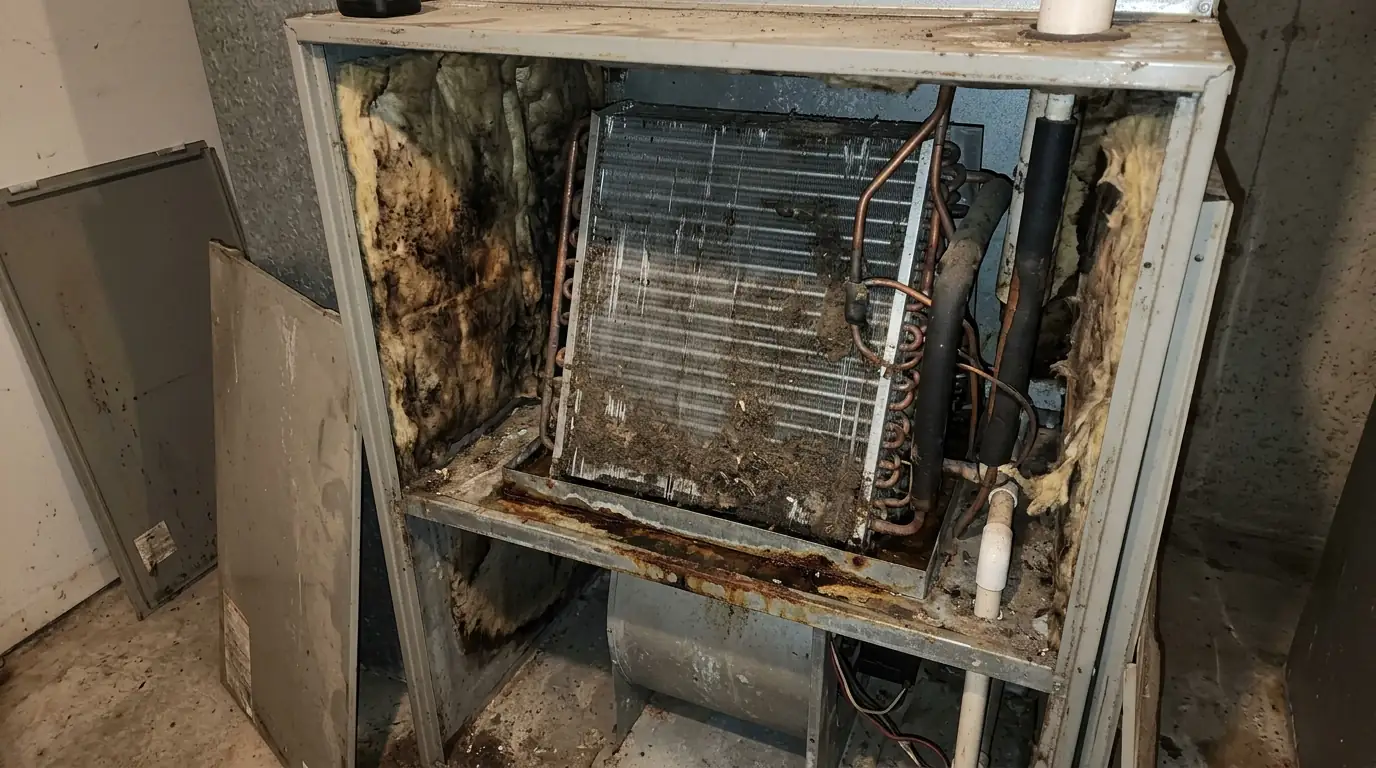
Growth there spreads spores every time the blower runs. We check the equipment first because most HVAC mold starts inside the unit, not deep in the ductwork.
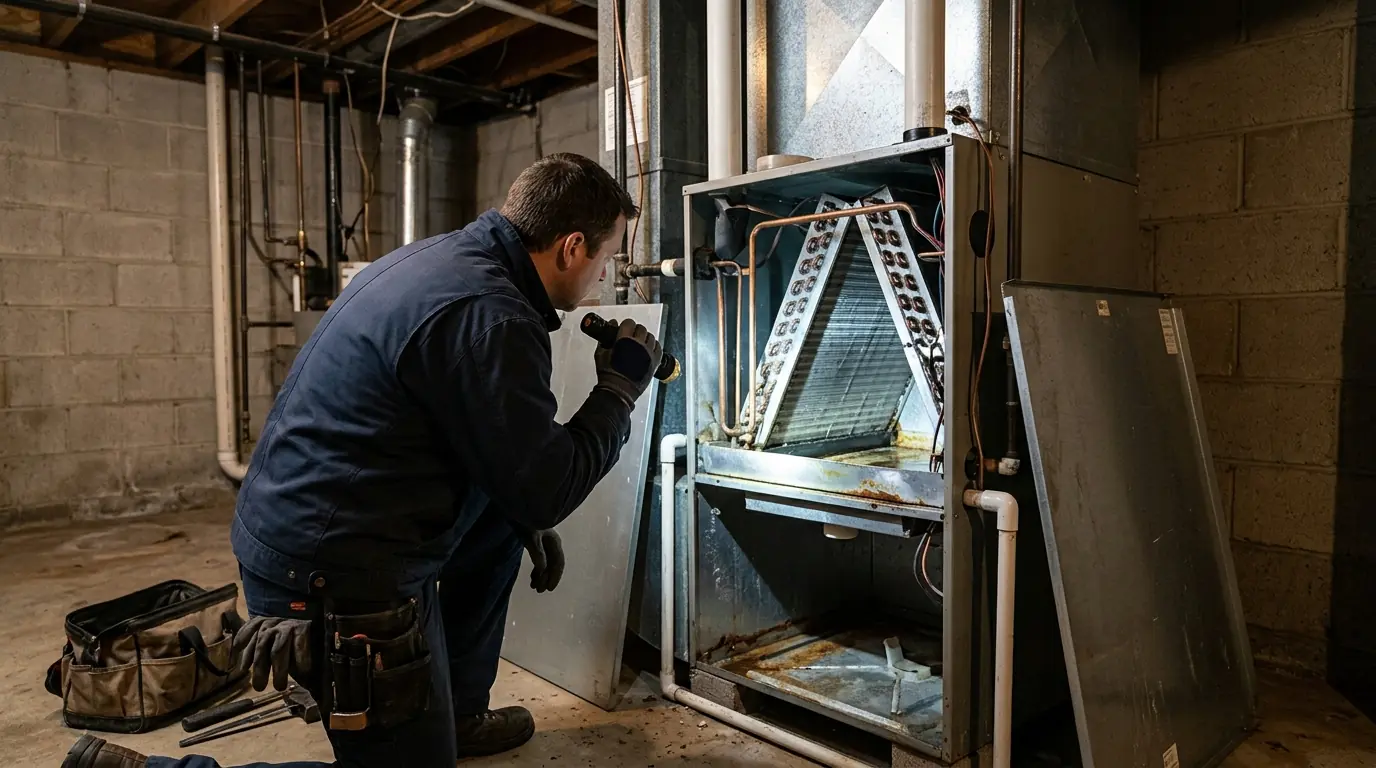
What the HVAC inspection covers
- Evaporator coil condition and any visible growth
- Blower wheel and cabinet lining
- Drain pan, condensate line and float switch
- First sections of supply and return duct
- Filter fit and bypass gaps
- Photos of every finding for the HVAC contractor
- Clean, repair or replace recommendation per part
How the HVAC inspection runs
System off
Power down before opening panels.
Open the unit
Access panels off, coil and blower checked.
Check drainage
Pan, line and float switch.
Look in the ducts
Camera through registers and ports.
Check the filter
Fit, rating and bypass gaps.
Close and restart
System back on and running.
Report
Clean, repair or replace, part by part.
Air handler and coil
We shut the system down, open the access panels and look at the evaporator coil, the blower wheel and the fiberglass lining inside the cabinet. A coil caked with dust and growth restricts airflow and holds water. Lined cabinets are a common problem: once the fiberglass liner is wet and moldy, it cannot be cleaned properly and has to be replaced or sealed. We photograph everything so a technician can plan the cleaning without a second trip to open the unit again.
Duct interiors
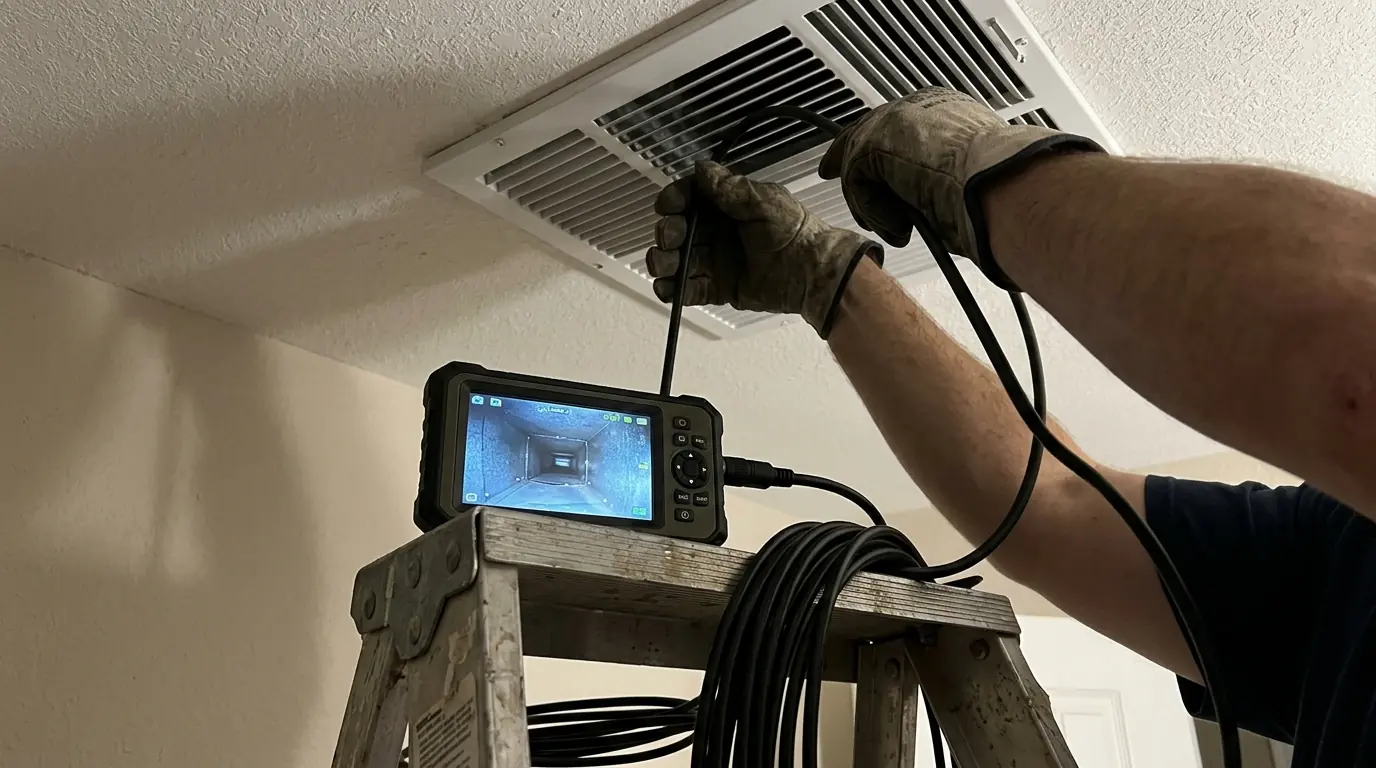
A small camera through a register or an access port shows the inside of supply and return ducts. Sheet metal ducts with a film of dust usually need cleaning, not replacement. Flex duct and duct board with growth on the inner surface usually need replacing, because their materials cannot be cleaned without damaging them. We check the returns closest to the unit and any duct running through a damp basement or attic first, since those are where condensation and growth show up most often.
Condensate drain pan
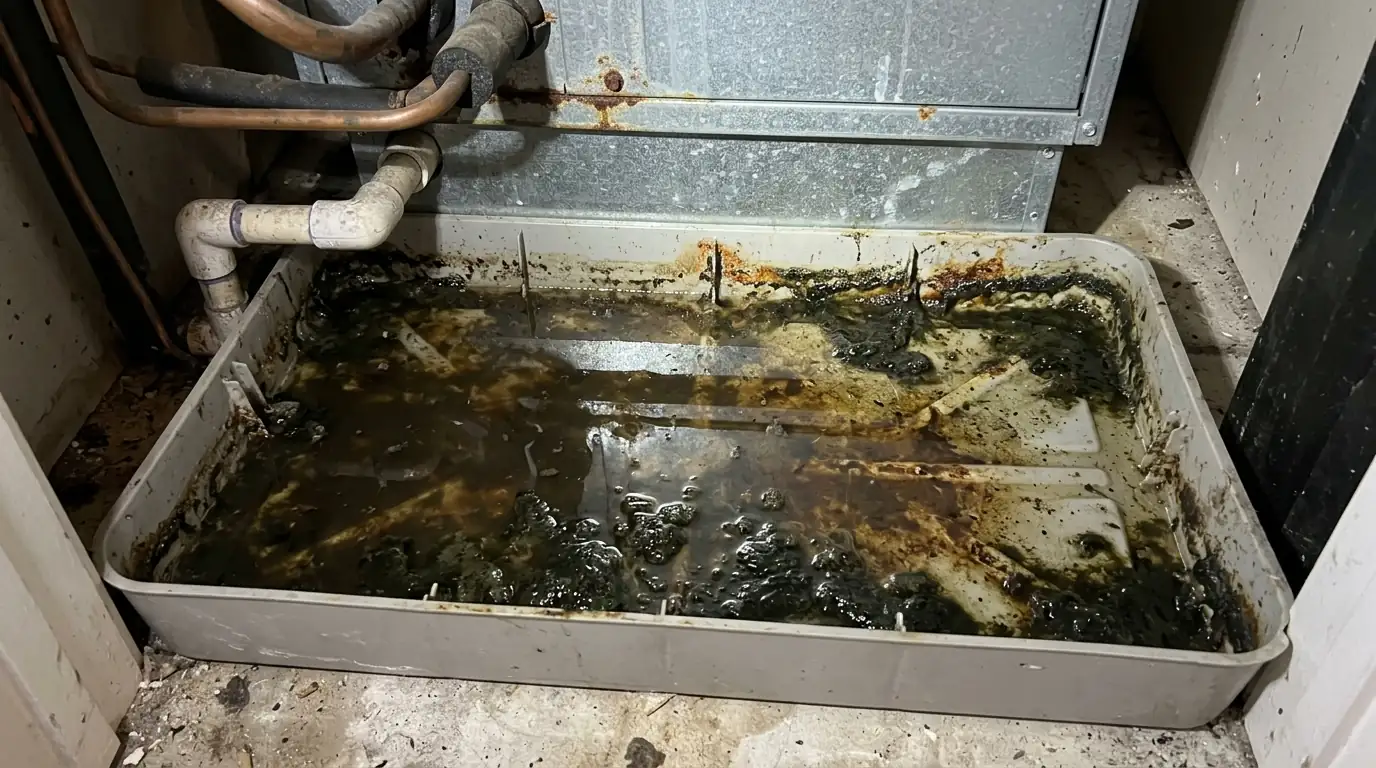
The drain pan catches water from the coil. If the drain line clogs with slime or the pan is cracked or rusted, water stands and grows mold and bacteria. We check whether the pan drains, whether the line is clear, whether the float switch works and whether the pan has overflowed into the cabinet or the floor. A clogged drain is often the whole story behind a summer musty smell, and it is one of the cheapest fixes on the list.
Mini split and window units
Ductless mini splits and window units grow mold on the blower wheel and inside the cabinet, and the air blows straight into the room. You often see black specks on the louvers or smell it when the unit starts. We open the head unit's front panel, check the blower and the coil, and note whether it needs a deep clean. Wall-mounted units in bedrooms and apartments are the ones we find most often, usually because they run all summer without a filter wash.
What an HVAC mold inspection costs
HomeGuide puts a mold inspection at about $300 to $650 for an average home, and removing mold from an HVAC system at $2,000 to $10,000 if it has spread into ductwork. What affects the inspection itself:
- Number of systemsEach air handler or zone is opened.
- Unit accessAttic or crawl space units take longer.
- Duct camera workMore registers checked, more time.
- Ductless headsEach mini split head is opened.
- SamplesSurface or air samples add lab fees.
- Report detailPhotos for the HVAC contractor.
Planning ranges, not a quote. Sources: homeguide.com, homeguide.com.
Newark summers and wet coils
NWS normals for Newark put early July highs near 86 to 87 F with overnight lows around 68 to 69 F. A Newark air conditioner running through those humid summer nights pulls a lot of water across its coil, and any drain problem shows up fast. On summer HVAC calls in Newark, we check the condensate line before anything else, because a clogged line explains most of the musty smells we find.
Air handlers and ductless systems we open and check include units from Carrier, Trane, Lennox, Rheem, Goodman, Daikin and Mitsubishi Electric.
Aprilaire, Santa Fe, AlorAir, Honeywell, Carrier, Trane, Lennox, Rheem, Goodman, Mitsubishi Electric, Daikin, Broan-NuTone, Panasonic
HVAC mold questions
Usually a wet coil, a clogged drain or growth on the cabinet lining. Air carries the smell into every room.
Only if the camera shows growth or heavy debris. Many musty systems need coil and drain work, not duct cleaning.
Not well. Flex duct with growth inside is usually replaced.
We inspect and handle mold cleaning. Repairs to the equipment itself go to your HVAC contractor.
At least once a year, and any time a musty smell appears when it starts.