Updated September 2026
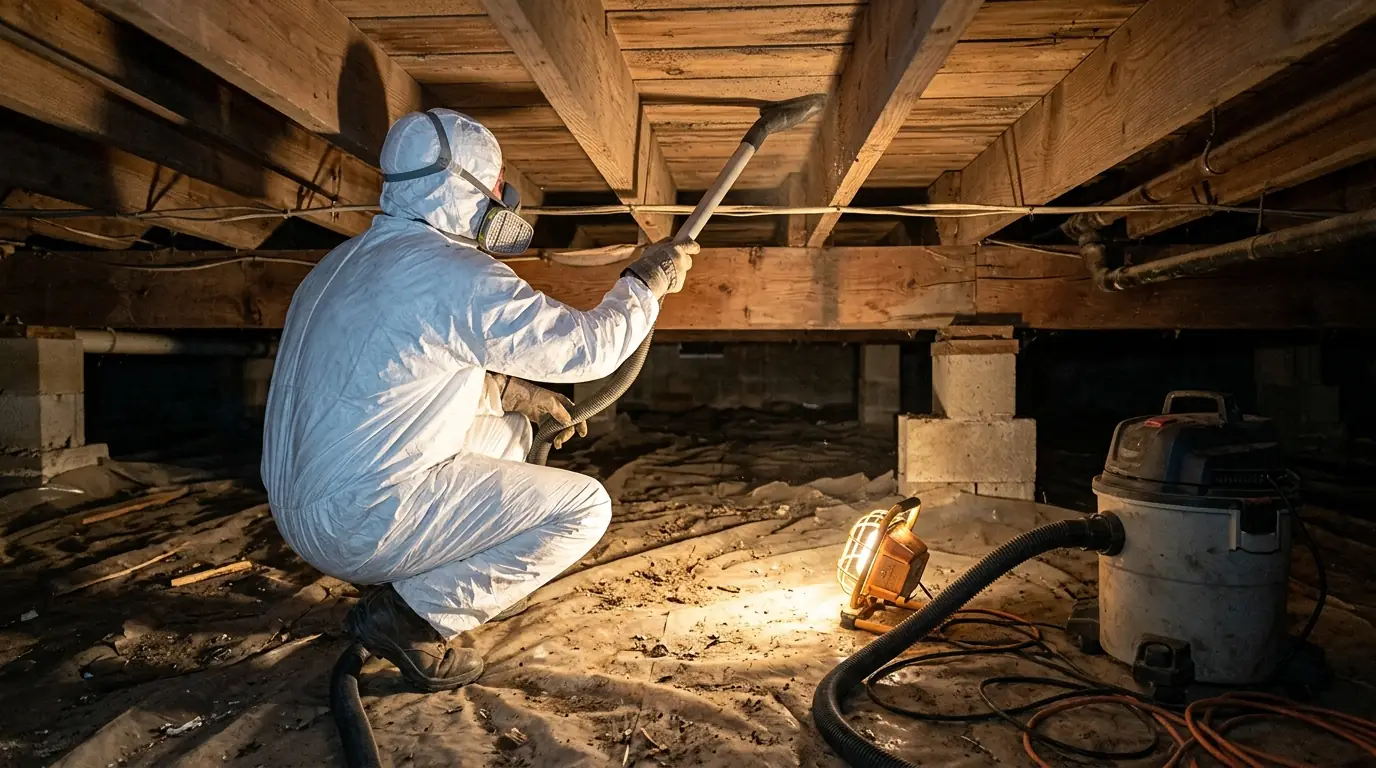
Crawl space mold removal in Newark, NJ means HEPA vacuuming and cleaning the joists, subfloor and sill plates, removing torn vapor barrier and wet insulation, and drying the space before it is sealed. HomeGuide puts remediation at about $15 to $30 per square foot, and a new vapor barrier at $1,200 to $4,000.
Why crawl space mold keeps coming back
Most crawl space mold comes from the ground, not a leak. Bare soil or a torn barrier releases moisture, open vents let in humid summer air, and the underside of the floor stays damp enough to grow mold on every joist.
Cleaning the wood is half the job. The other half is stopping the damp, which usually means a new liner and closed vents, covered on our crawl space encapsulation page. We do the removal so the space is ready for that step.
Crawl space jobs you can do and ones you should not
Checking is easy; the cleanup is dirty, cramped and full of spores.
Fine to do yourself
- Looking in with a flashlight from the access door
- Making sure downspouts discharge away from the house
- Keeping stored items out of the crawl space
Better left to us
- Cleaning moldy joists and subfloor
- Pulling wet insulation and old barrier
- Work in tight spaces under 24 inches
What decides the cost of crawl space work
HomeGuide puts mold remediation at about $15 to $30 per square foot and a vapor barrier at $1,200 to $4,000. What moves your price:
- Crawl space sizeSquare footage of joists and ground.
- Clearance heightLow crawl spaces take longer to work in.
- Insulation removalWet batts are bagged and hauled out.
- Standing waterDrainage must be solved first.
- Structural repairsRotted wood needs a carpenter.
- Sealing afterwardA new liner is a separate step.
Planning ranges, not a quote. Sources: homeguide.com, homeguide.com.
Joists and subfloor
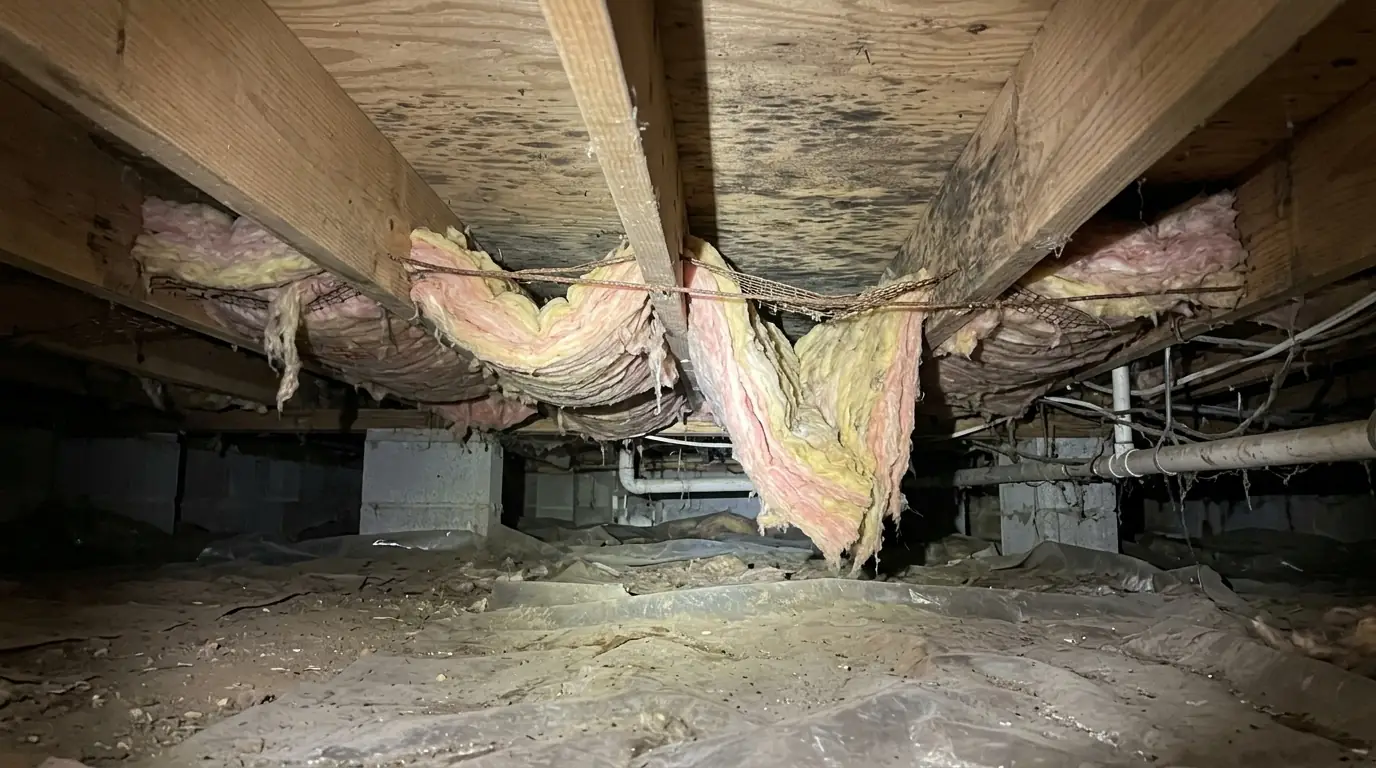
Growth on joists and the underside of the subfloor is usually surface mold on damp wood. We HEPA vacuum each bay, wipe or sand where staining is heavy, and check the wood with a meter. Soft or rotted framing is marked for a carpenter. Fiberglass batts that have sagged, soaked up moisture or grown mold come out, because they hold damp against the wood. We leave the bays clean, dry and open so the next step can be done properly.
Sill plates
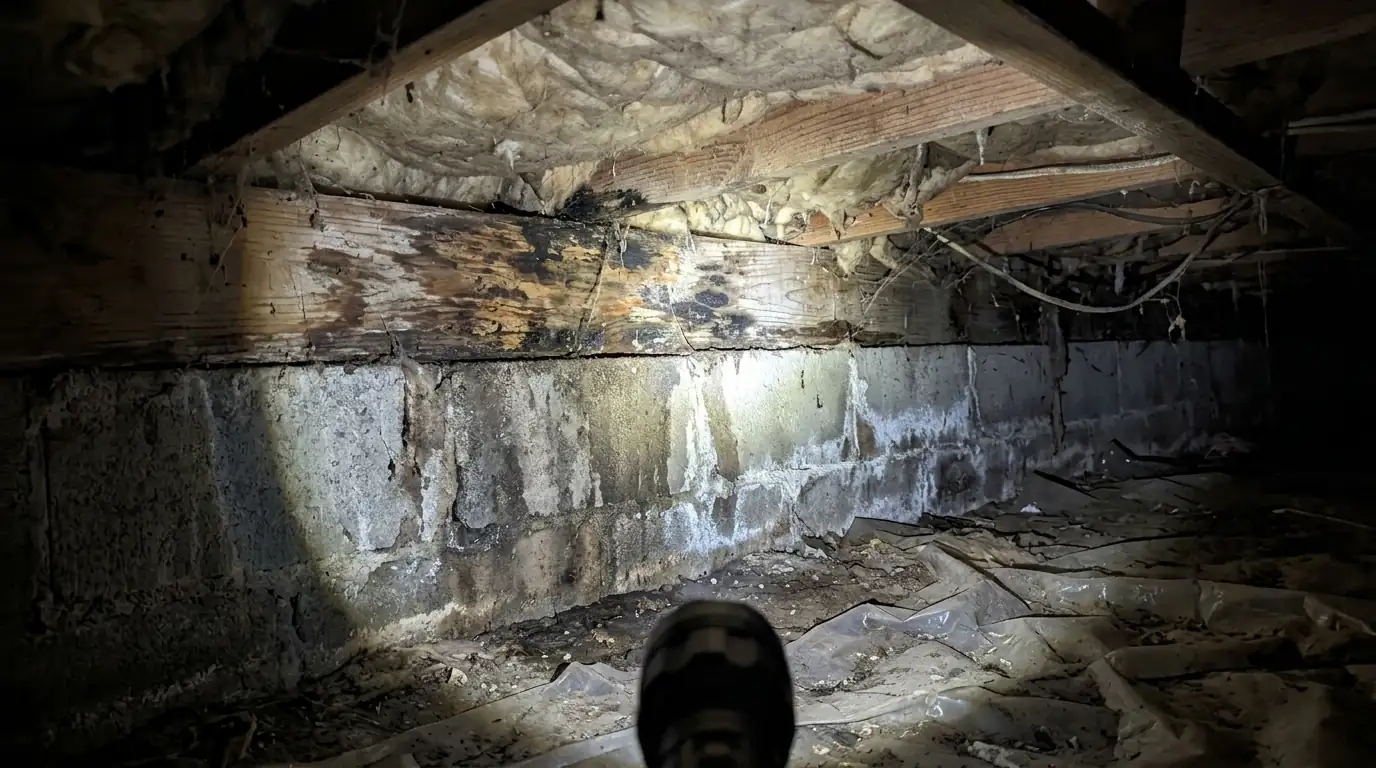
The sill plate sits on the foundation wall at the edge of the crawl space and takes water from both sides: splash from outside and damp air from inside. We check it all the way around, clean surface growth and probe for soft spots. Rot at the sill is structural, so it is noted clearly with photos. We also look at the rim joist above it, where gaps let outside air in and add condensation, and note where sealing would help.
Soil and old vapor barrier
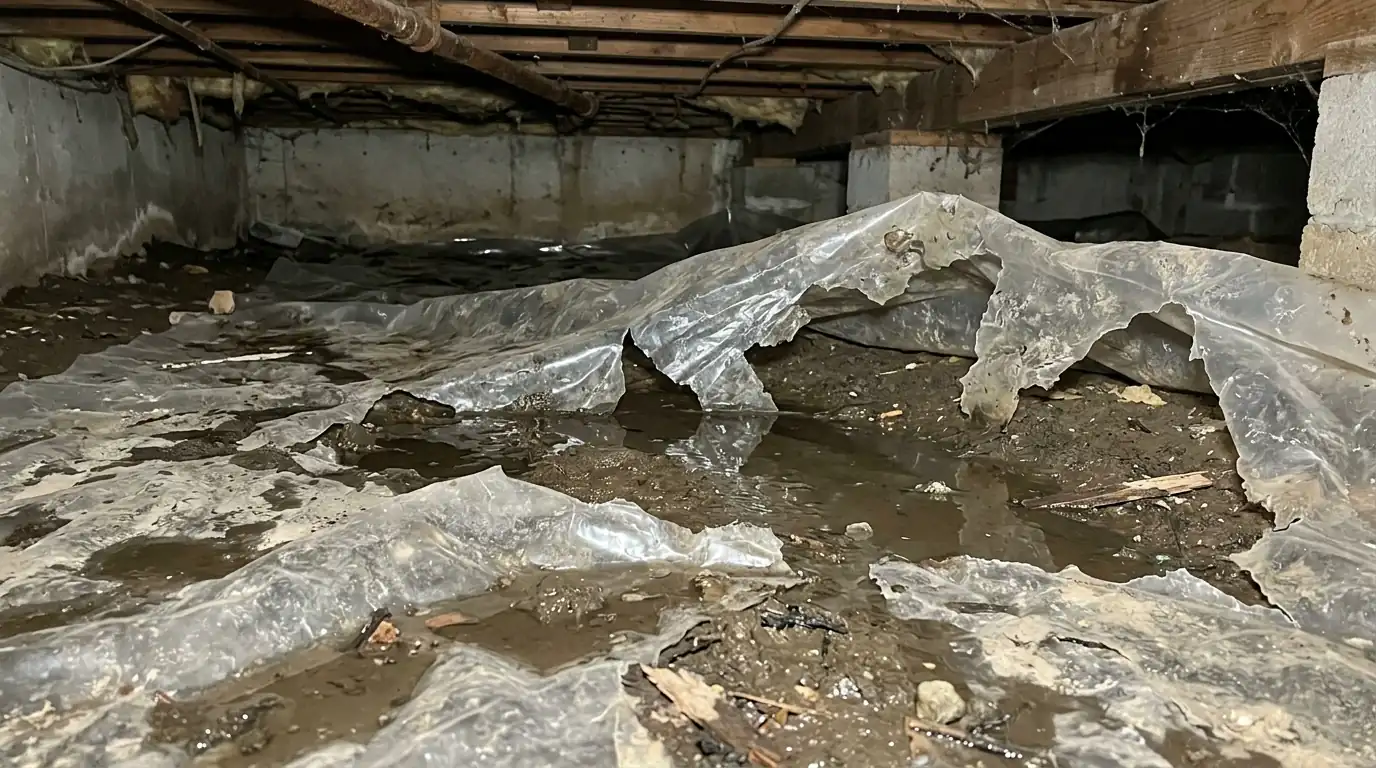
An old, torn or thin barrier often does more harm than good, trapping water on top while letting ground moisture through the tears. We remove it, rake out debris and anything organic, and check for standing water or low spots. Where water pools after rain, drainage has to come first. The ground is then left clean and ready for a new sealed liner, which is the step that actually keeps the joists and subfloor dry season after season, wet spring or humid summer.
How a crawl space job runs
Look underneath
Moisture readings and photos of every bay.
Set up safely
Lighting, ventilation and protective gear.
Remove old materials
Barrier, debris and wet insulation out.
Clean framing
HEPA vacuum, wipe or sand joists and sills.
Dry
Dehumidifier until wood reads dry.
Check again
Readings and photos after cleaning.
Plan sealing
Liner, vents and drainage next.
Shore crawl spaces on Absecon Island
Margate City covers about 1.4 square miles on Absecon Island, and NWS thresholds show flooding beginning in Margate at 6.4 feet on the Atlantic City tide gauge. Many shore homes in Margate City sit on crawl spaces close to that tidal water table, so after a high tide or storm we find wet ground, soaked insulation and salt-damp framing underneath. For crawl spaces there, drainage and a sealed liner matter as much as the cleaning.
Signs the problem is under the floor
Musty smell in the rooms above
Crawl space air rises into the house.
Cupping or soft floors
The subfloor is taking on moisture.
Sagging insulation below
Batts are holding water.
Condensation on ducts or pipes
Humid air in the crawl space.
Standing water after rain
Drainage needs fixing first.
Crawl space questions
Surface mold is mostly a moisture warning, but ongoing damp leads to rot in joists and sills.
Crawl space air moves up into the house, carrying the smell with it.
We remove wet batts. Many owners switch to a sealed crawl space instead of putting batts back.
Usually, though very low spaces take longer. We check access first.
It will if the ground stays open and damp. Sealing the crawl space prevents that.