Updated September 2026
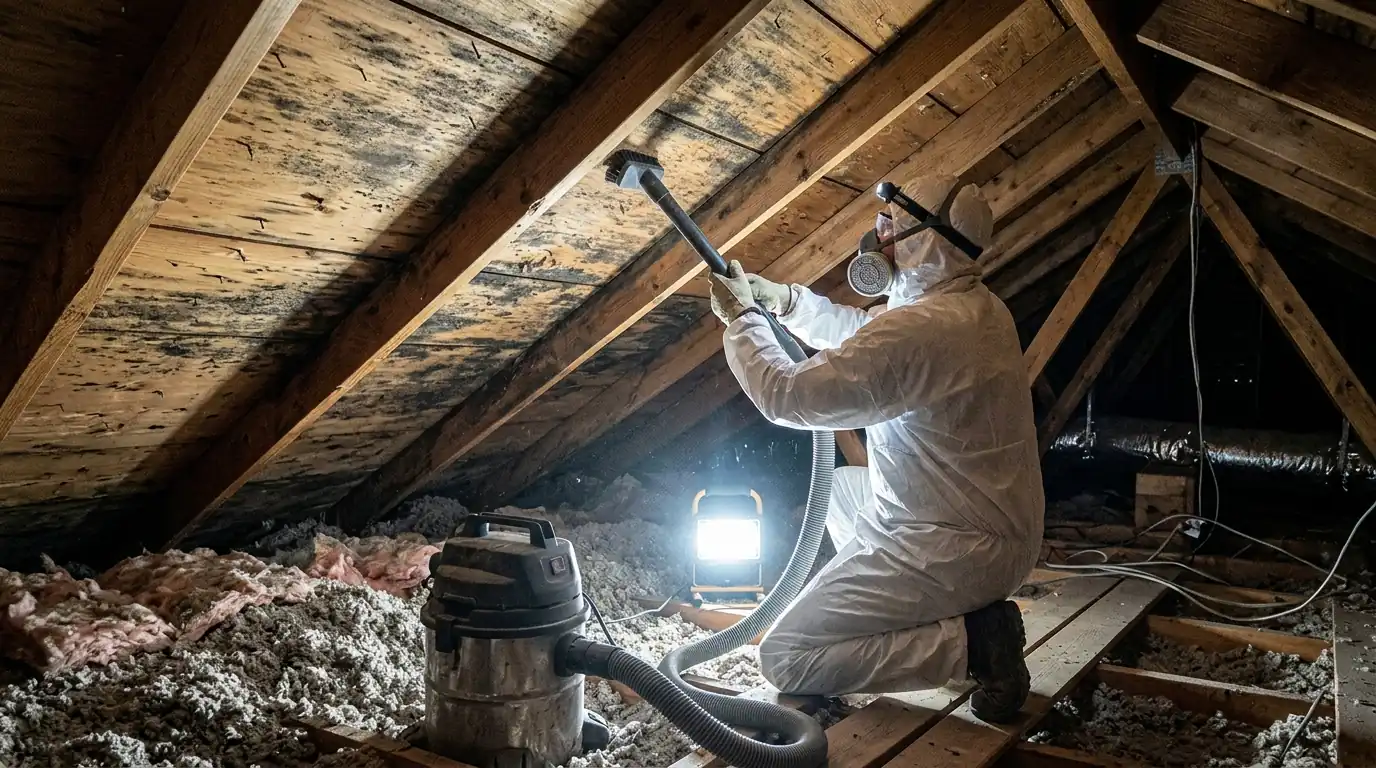
Attic mold removal in Newark, NJ means HEPA vacuuming and cleaning or sanding the roof sheathing and rafters, removing insulation that is wet or contaminated, and fixing the cause, usually a bath fan venting into the attic or blocked soffit vents. HomeGuide puts partial attic jobs at about $1,500 to $6,000 and full attics at $6,000 to $15,000.
How attic mold forms without a single leak
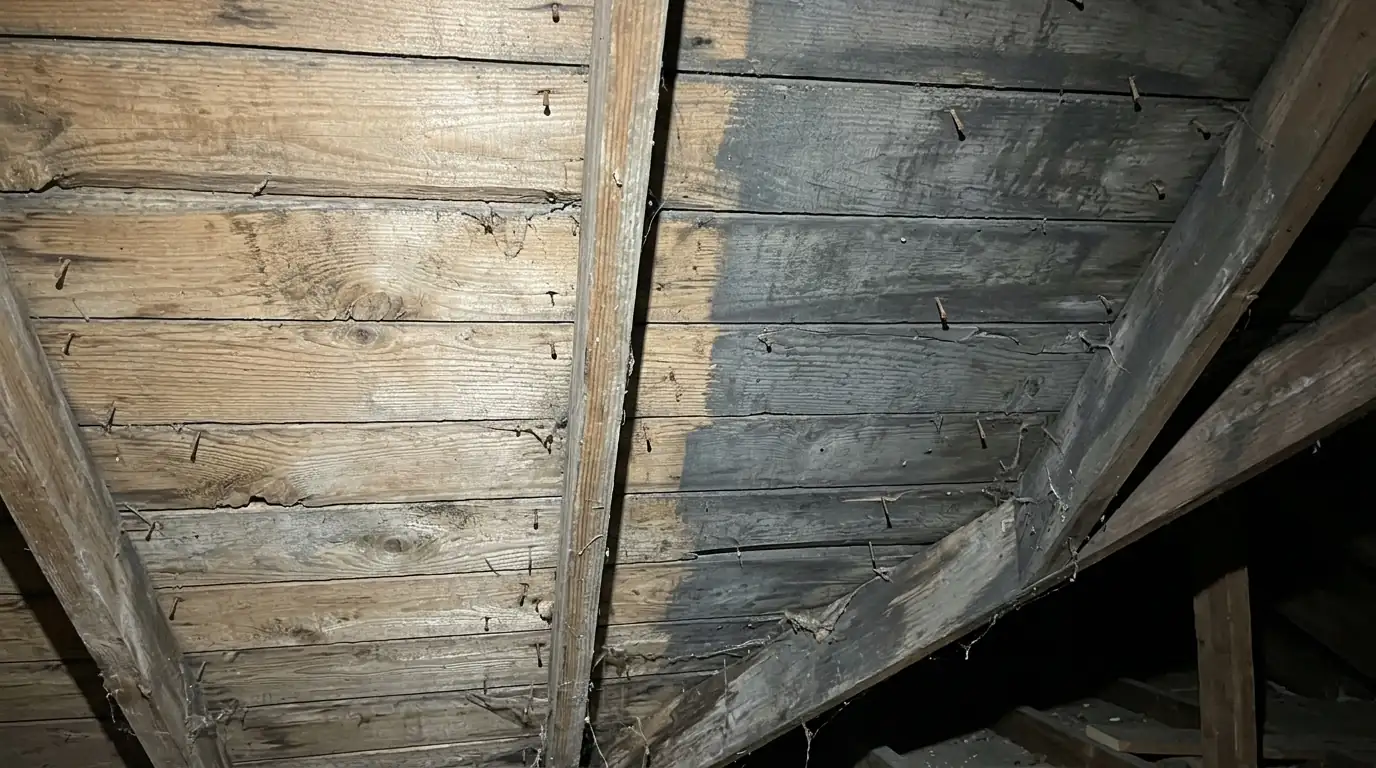
Warm, moist air from the house leaks into the attic through light fixtures, top plates and bath fan ducts. On cold nights it condenses on the underside of the roof deck, and after a few winters the sheathing is gray or black, especially on the north side and near the ridge.
Cleaning without fixing the airflow brings it back. So each job pairs removal with an attic ventilation correction: bath fans ducted outside, soffits opened and bypasses sealed.
What decides the cost of attic mold removal
HomeGuide puts partial attic mold removal at about $1,500 to $6,000 and a full attic at $6,000 to $15,000. What decides yours:
- Attic sizeSquare footage of sheathing to clean.
- AccessLow pitch and tight hatches slow the work.
- Growth severitySanding takes longer than wiping.
- Insulation removalBagging and replacement add labor and material.
- Ventilation fixesBath fan rerouting or soffit work.
- Sheathing damageRotted wood needs a roofer.
Planning ranges, not a quote. Sources: homeguide.com.
Cleaning methods for attic wood
The method depends on how heavy the growth is and how the attic is built.
| HEPA vacuum and wipe | Sanding | Replace sheathing | |
|---|---|---|---|
| Suits | Light surface growth | Stained but sound wood | Soft or rotted wood |
| Disruption | Low | Moderate, more dust | Needs a roofer |
| When | Most attics | Heavier north-side growth | At the next reroof |
Roof sheathing
The sheathing is where most attic mold grows. We HEPA vacuum loose growth, then clean or sand the stained areas until the wood is sound. Plywood and plank sheathing that is soft, delaminated or rotted around nails is marked for replacement by a roofer, usually at the next reroof, and we photograph each spot so the roofer can find it. Surface staining that remains after cleaning is cosmetic, and we can apply a clear or white encapsulant so any new growth is easy to spot on a future check.
Rafters and trusses
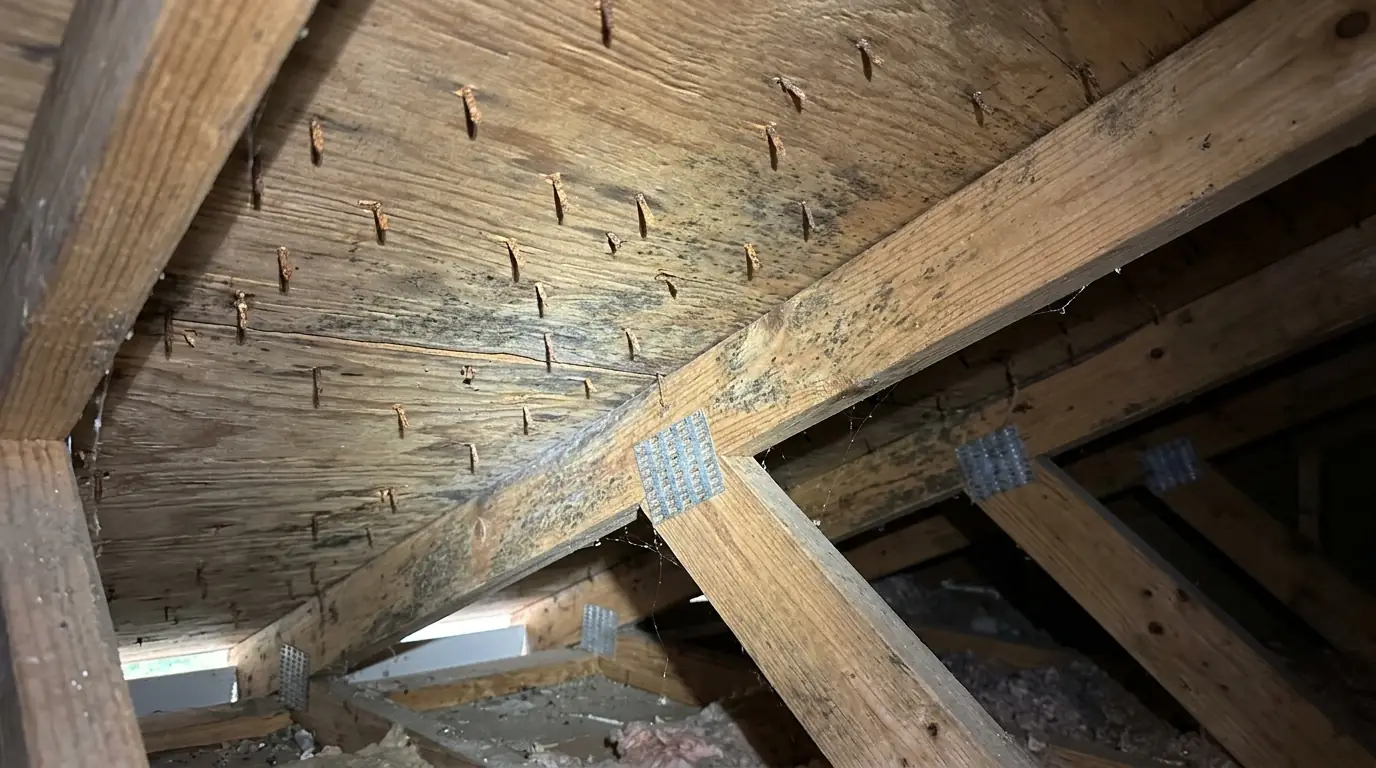
Rafters and truss chords collect growth along their sides and top edges, often worst near the eaves where airflow stops. We vacuum and wipe each member, sand heavier staining, and check the wood with a meter. Nail tips that frost in winter and drip in spring leave rust streaks and small wet spots on the framing, which tells us the condensation has been happening for several seasons. Structural damage is rare, but anything soft is noted with photos so a carpenter can look at it.
Insulation removal and replacement
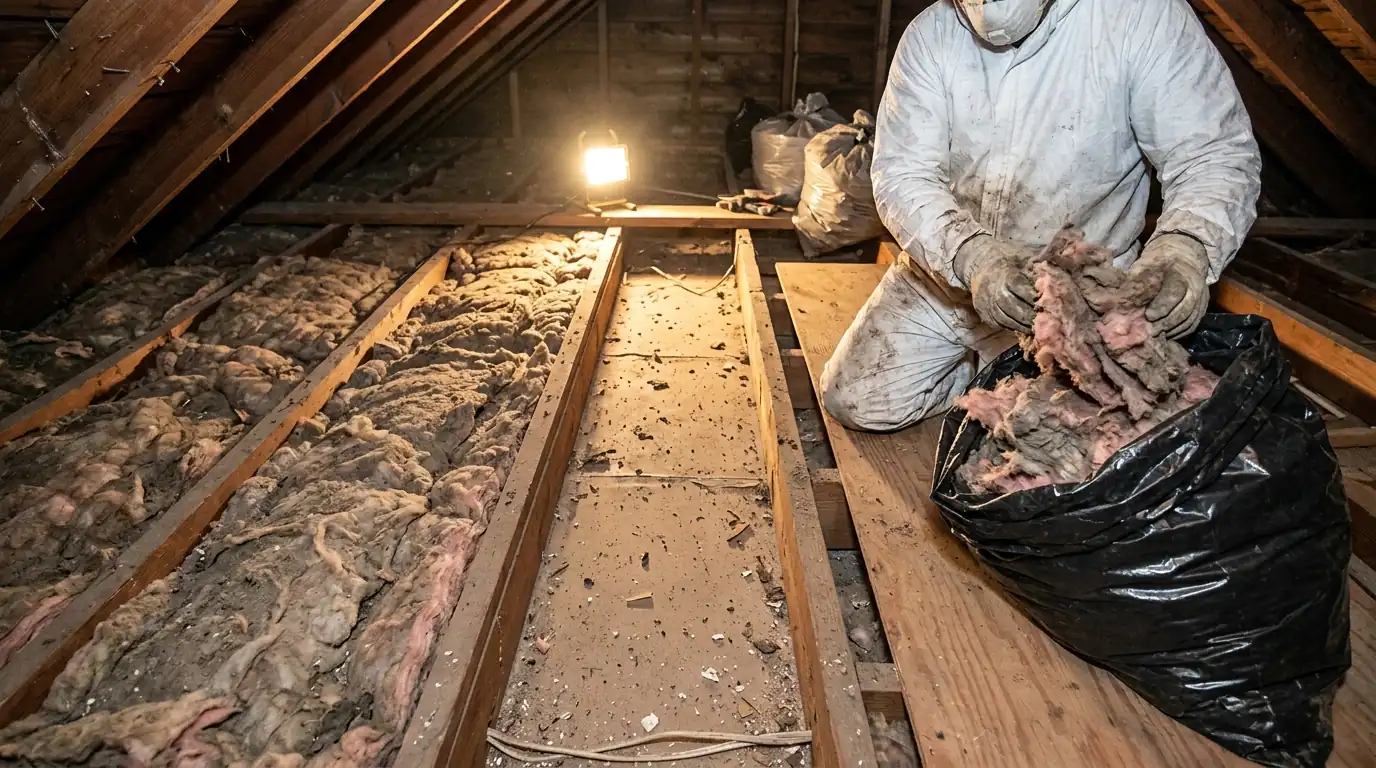
Insulation that is wet, matted or covered in growth comes out, because it holds moisture against the ceiling and the framing. We bag it inside the attic, vacuum the ceiling bays and check the top plates for air leaks before anything new goes in. Replacement insulation goes in only after the air sealing is done and the attic reads dry. Loose-fill over a sealed ceiling performs much better than new batts laid over the same leaky ceiling that caused the problem.
How an attic job runs
Look first
Moisture readings, photos and airflow check.
Protect the house
Hatch sealed, path to it covered.
Remove insulation
Wet or moldy material bagged.
Clean the wood
HEPA vacuum, wipe or sand.
Seal air leaks
Top plates, fixtures and bypasses.
Fix ventilation
Fans outside, soffits open.
Re-insulate
After the attic reads dry.
Cold December nights in Newark attics
NWS 1991-2020 normals put early December overnight lows in Newark at 33 to 35 F. Those are the nights when warm air leaking from a Newark house condenses on the underside of the roof deck, night after night, until the sheathing darkens. In the Newark attics we clean, the heaviest spotting usually sits above a bath fan outlet or a leaky ceiling light, which is why we trace air leaks before we pick up a vacuum.
Signs the attic is holding moisture
Dark spots on the roof deck
Visible from the attic hatch with a flashlight.
Frost on nails in winter
Warm moist air is reaching the cold deck.
Rust streaks on nail tips
Several seasons of condensation.
Musty smell at the hatch
Active growth somewhere up there.
Ice or stains at the eaves
Heat and moisture escaping into the attic.
Attic mold questions
Sometimes, but more often it is winter condensation from warm household air leaking into the attic.
Usually not. Sound sheathing is cleaned; only soft or rotted areas need replacing.
Spraying alone leaves the growth and the cause. Cleaning and ventilation fixes are what last.
Not if the bath fans vent outside and air leaks are sealed. That is why we fix both.
Mostly it is a building problem, but air does move between the attic and the house, so it is worth fixing.