Updated September 2026
HVAC and duct mold cleaning in Newark, NJ cleans the evaporator coil, blower wheel and cabinet, clears the drain pan and condensate line, then HEPA cleans sheet metal ducts and replaces flex duct or duct board that has grown mold. Angi puts air duct mold removal at about $600 to $2,000; HomeGuide notes whole-system HVAC mold removal can reach $2,000 to $10,000.
Where HVAC cleaning should start
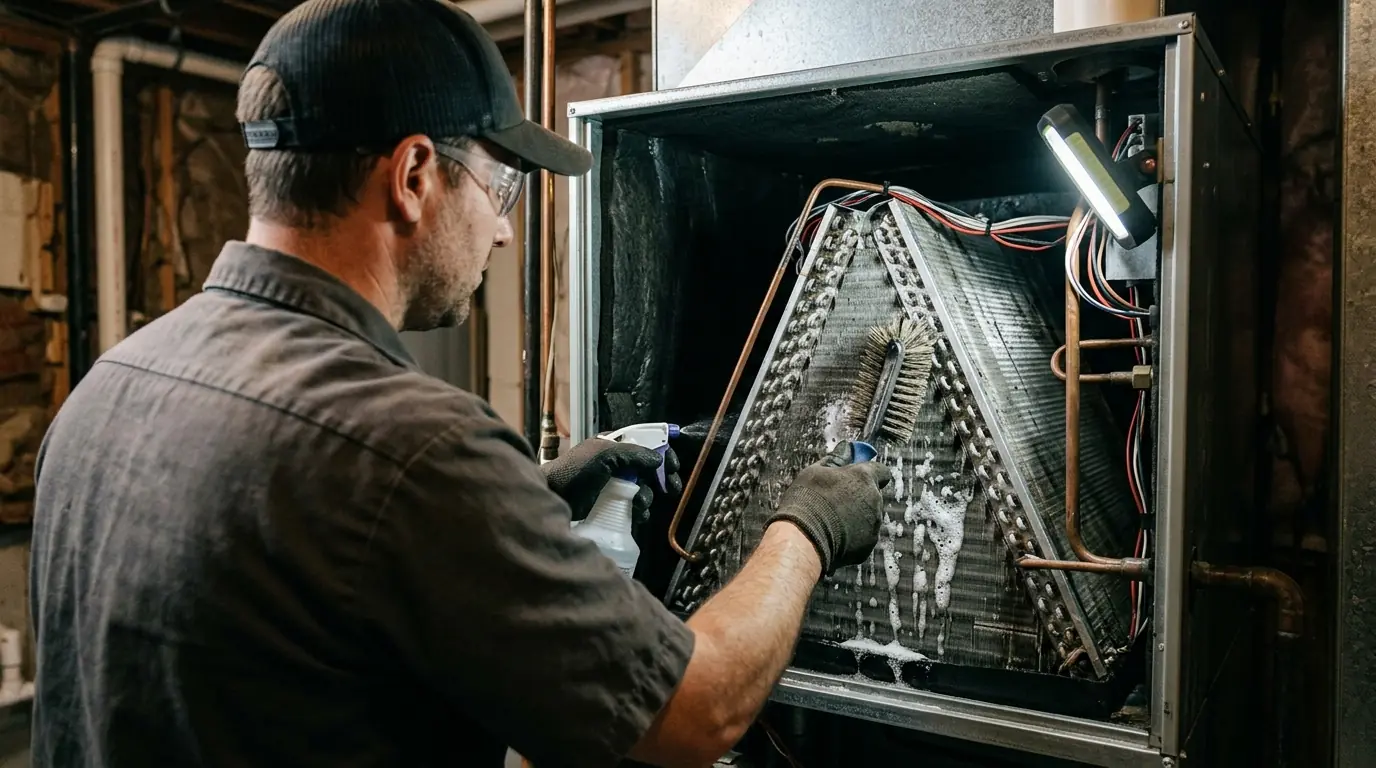
Duct cleaning alone rarely fixes a moldy system, because the growth usually starts in the air handler: a wet coil, a slimy drain pan or a damp fiberglass lining. Clean the ducts and leave the unit, and spores are back in the ducts within weeks.
So we work from the equipment outward. The system is off and sealed at the registers while we work, and we finish by checking that the drain runs freely, because standing water is what grew the mold in the first place.
What decides the cost of HVAC mold cleaning
Angi puts air duct mold removal at about $600 to $2,000, HomeGuide puts routine duct cleaning at $450 to $1,000, and whole-system HVAC mold removal can reach $2,000 to $10,000. What decides yours:
- System sizeMore duct runs and registers, more time.
- Duct typeFlex and duct board usually need replacing.
- Air handler conditionLining replacement adds cost.
- AccessAttic and crawl space ducts are slower.
- Moisture sourceDrain or condensation fixes.
- VerificationPost-cleaning samples add a lab fee.
Planning ranges, not a quote. Sources: angi.com, homeguide.com, homeguide.com.
Clean, seal or replace, by duct type
What the duct is made of decides the approach.
| Sheet metal | Flex duct | Duct board | |
|---|---|---|---|
| Growth on surface | HEPA clean | Replace | Replace or coat |
| Heavy debris | HEPA clean | Replace | Replace |
| Water damaged | Clean and dry | Replace | Replace |
| Typical outcome | Cleaned in place | New run | New section |
Coil and blower cleaning
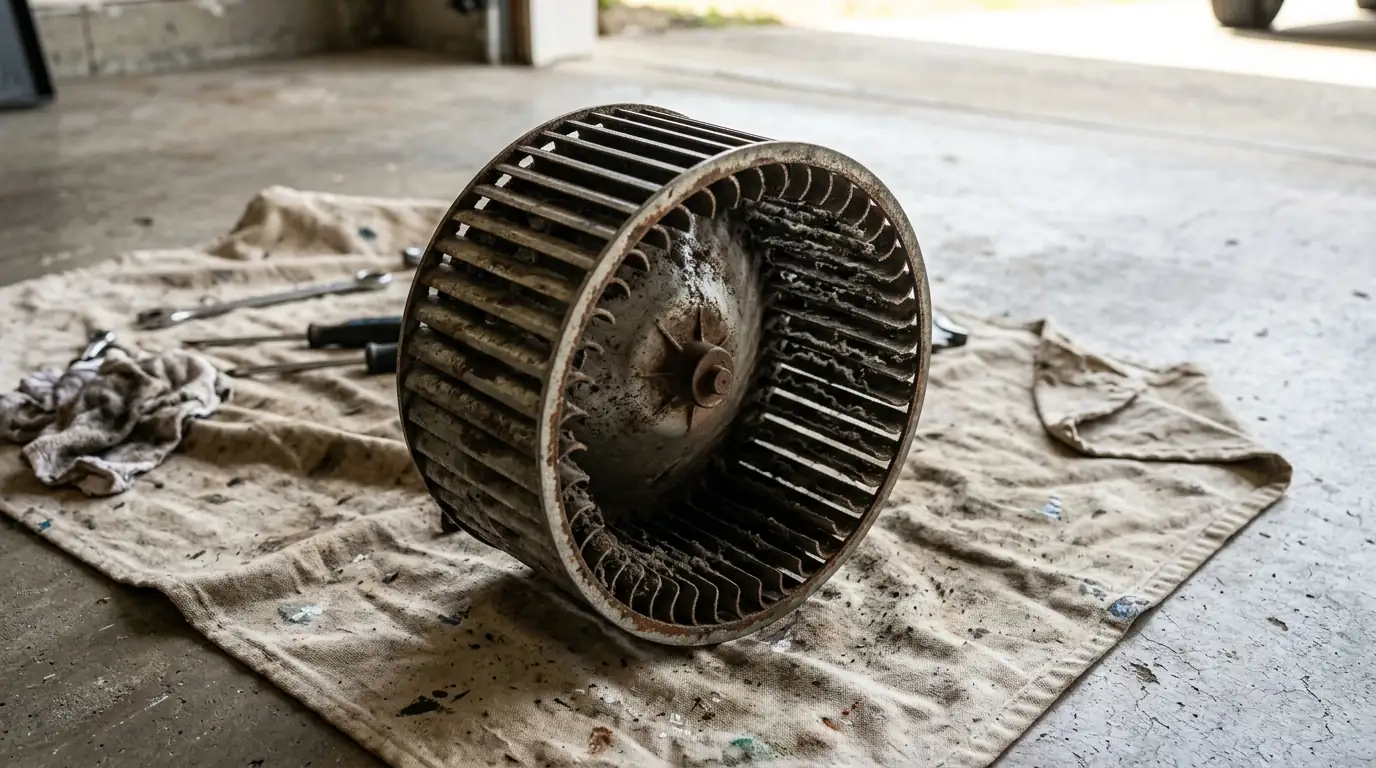
The evaporator coil is cleaned with a coil-safe cleaner and rinsed so water drains through the pan, not into the cabinet. The blower wheel comes out where it can and is cleaned blade by blade, because a caked wheel throws spores and loses airflow. Fiberglass cabinet lining with growth is removed and replaced or covered with a cleanable liner. We work with your HVAC technician when refrigerant or electrical parts need attention beyond cleaning, so nothing is left half finished.
Sheet metal duct cleaning
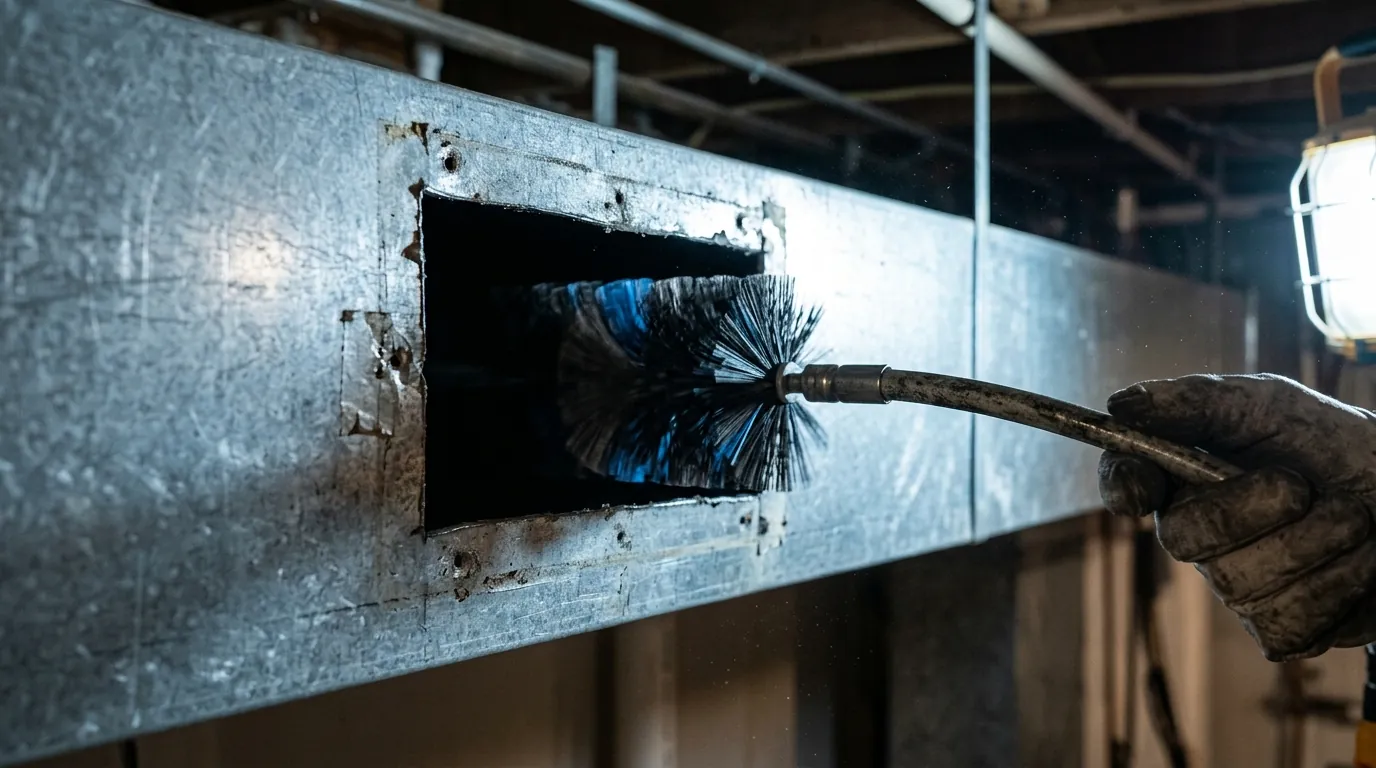
Metal ducts clean well. We seal the registers, put the system under negative pressure with a HEPA collector, and agitate the duct walls with brushes and air whips so the loosened debris is pulled out, not blown into the house. Access holes are cut where needed and sealed with metal patches afterward. Growth on metal is usually surface growth on dust, so once the dust is gone and the moisture source is fixed, it does not return on its own.
Flex duct replacement
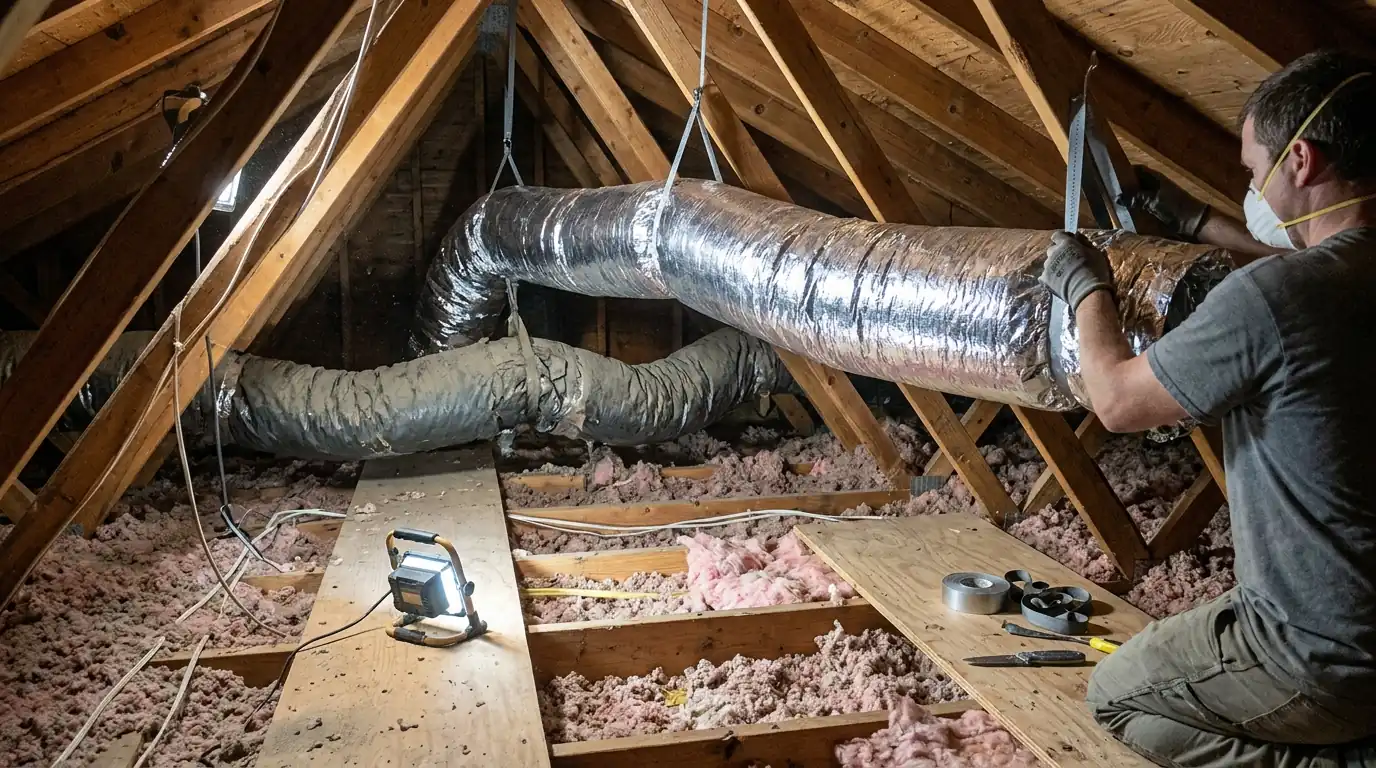
Flexible duct has a plastic inner liner and insulation that cannot be scrubbed without tearing. When growth is inside, replacement is usually the honest answer, and it is often cheaper than trying to clean. We remove the affected runs, install new insulated flex or rigid duct with proper supports and short, straight paths, and seal every connection. Runs through damp crawl spaces or attics get checked for condensation, since that is often why they grew mold in the first place.
Drain pan and line
No cleaning lasts if water keeps standing in the unit. We clear the condensate line, flush it, check the trap and the pitch of the pan, and confirm the float switch shuts the system off if the pan fills. Rusted or cracked metal pans are noted for replacement. Where the unit sits in a basement with no floor drain, the condensate pump is checked too, because a failed pump floods the pan just as surely as a clogged line does.
How an HVAC cleaning runs
Inspect first
Coil, pan, lining and duct camera.
Seal the registers
So nothing blows into the rooms.
Clean the unit
Coil, blower and cabinet.
Clear the drain
Line flushed, pan and float checked.
Clean or replace ducts
By material and condition.
Restart and check
Airflow and drainage confirmed.
Report
Photos of before and after.
Air handlers in Newark basements
On September 1, 2021 Newark took 8.41 inches of rain in a day, the wettest on record, and many of the air handlers we clean in Newark sit on basement floors that flooded then or have taken water since. A unit that sat in water, even briefly, usually needs its cabinet lining and insulation checked closely. In any Newark basement system, we look at the base of the air handler first.
We clean air handlers, coils and ductless heads from Carrier, Trane, Lennox, Rheem, Goodman, Daikin and Mitsubishi Electric, and work alongside your HVAC technician on repairs.
Aprilaire, Santa Fe, AlorAir, Honeywell, Carrier, Trane, Lennox, Rheem, Goodman, Mitsubishi Electric, Daikin, Broan-NuTone, Panasonic
HVAC cleaning questions
Usually not. The unit and drain are where growth starts.
Fogging without mechanical cleaning leaves the growth in place. We clean first.
If mold is inside it, replacement is usually the only reliable fix.
Most homes take a day; replacing duct runs can add time.
Yes. Air samples compared with outdoor air show whether the system is clean.