Updated September 2026
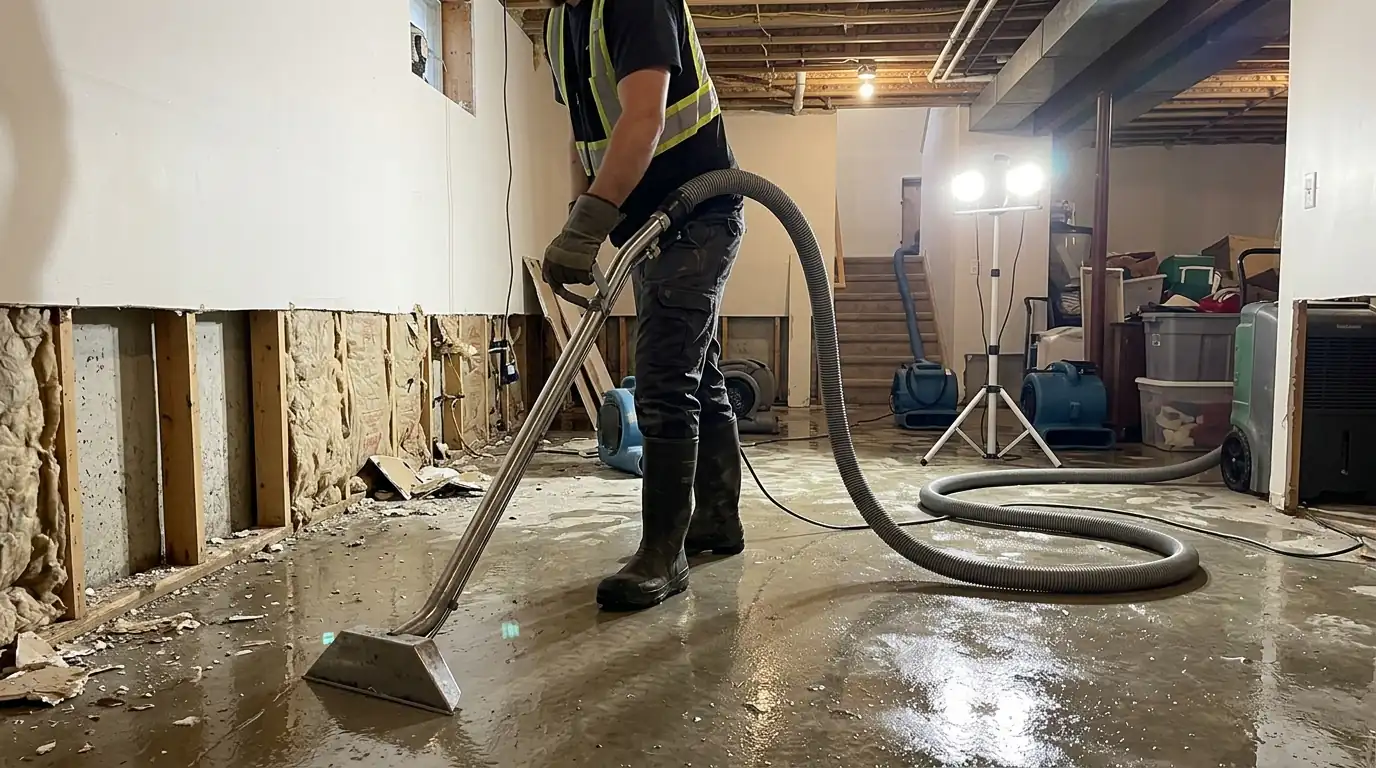
Basement flood cleanup in Newark, NJ starts with extracting standing water, removing wet carpet, pad and drywall below the water line, and setting air movers and dehumidifiers the same visit. Floodwater from outside counts as Category 3, so porous materials it touched come out, and drying is tracked with meter readings until the framing is back to normal.
What happens in the first visit after a flood
Floodwater from rain or rising groundwater carries soil and whatever it picked up on the way in, so it is treated as contaminated. Carpet, pad, insulation and the bottom of the drywall usually come out; concrete, block and most framing can be cleaned and dried.
We extract first, then cut the drywall above the wet line, disinfect and set up drying. If the water came up a floor drain, the job follows our sewage backup process instead.
Signs the water went further than it looks
Carpet wet beyond the puddle
Pad wicks water feet past what you can see.
Drywall soft at the bottom
The wall cavity took water and needs opening.
A tide line on block
It shows how high the water reached.
A smell after two days
Growth or bacteria has already started.
Boxes swelling on the floor
Cardboard and stored items wick water up.
From your call to a dry basement
Call any hour
Tell us how much water and where.
Safety first
Power to the basement checked before we enter.
Extract
Standing water pumped and vacuumed out.
Tear out
Carpet, pad and wet drywall removed.
Disinfect
Surfaces the water touched are treated.
Dry
Air movers and dehumidifiers set and logged.
Confirm dry
Readings recorded before equipment leaves.
How long drying takes
Most flooded basements take several days of drying once wet materials are out, and we go by meter readings rather than a fixed schedule. Dense materials like old plaster and thick framing take longer.
We check readings during the drying and leave equipment in place until the numbers say dry, not until a set day.
Stormwater seepage
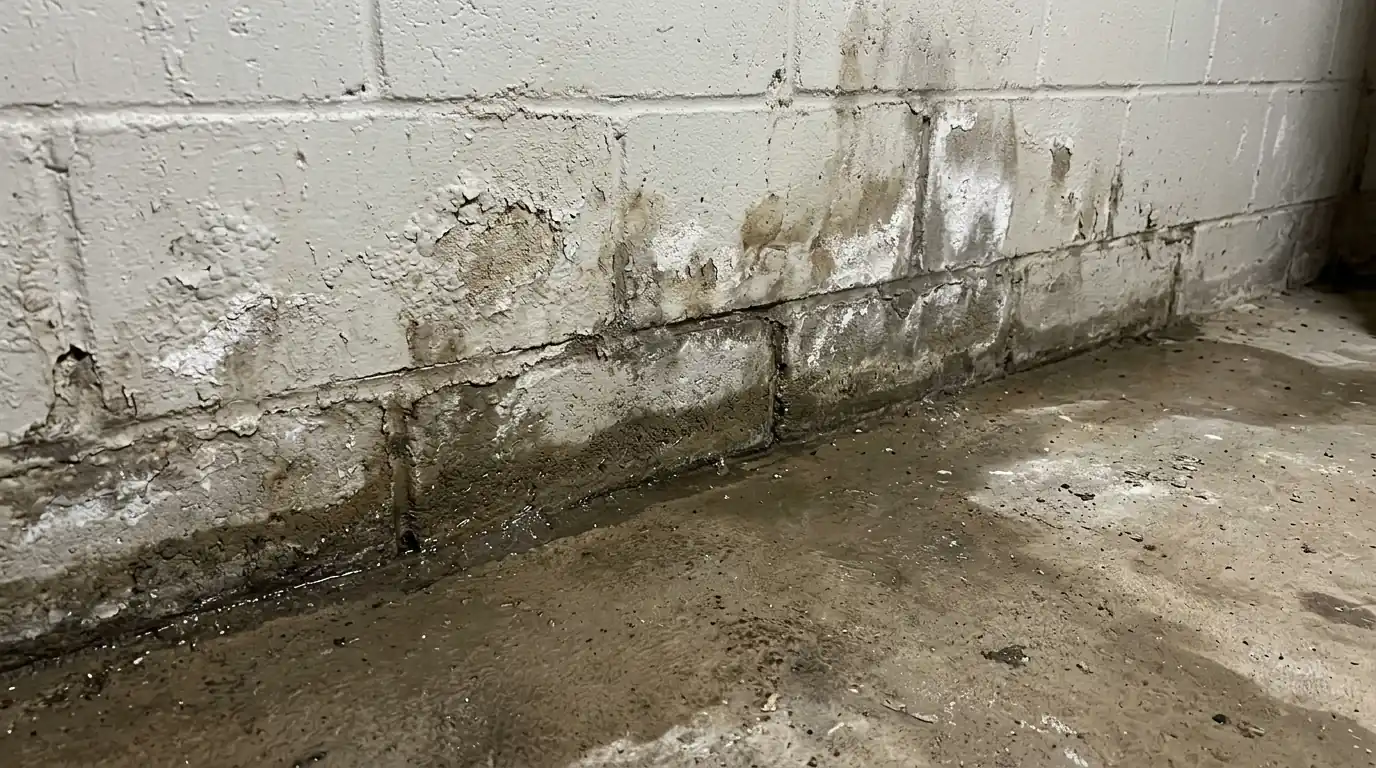
Seepage comes through the wall or up through the slab when the ground around the house is saturated. It usually leaves a tide line on block, wet carpet along one wall and a puddle that grows during the storm and shrinks after. We extract the water, lift the carpet, cut the drywall above the line and read the framing. Once the basement is dry, the source is usually grading, downspouts or a failed foundation seal, and we note which in the report.
Window well flooding

A window well without a drain fills like a bucket in a hard rain, then pours through the window into the basement. The damage sits under and beside the window, often into a finished wall. We extract the water, remove the wet drywall and insulation below the window, and dry the sill and framing. The report notes whether the well needs a drain, a cover or a regrade, because the next heavy storm will do exactly the same thing without one.
Sump pump failure
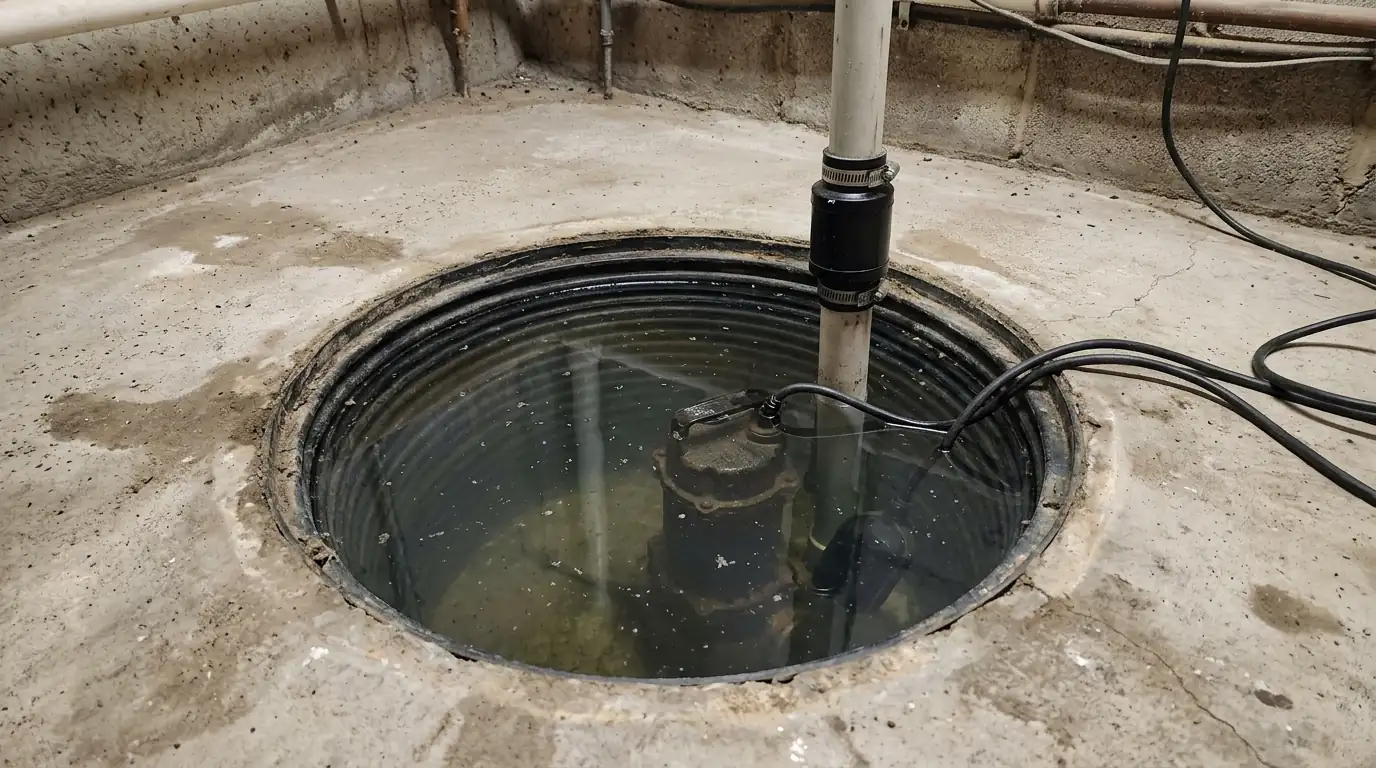
When a sump pump fails, usually in a power outage or with a stuck float, groundwater rises through the pit and spreads across the floor. We extract, dry and check what the water reached, then look at the pump, the float and the discharge line. Replacing the pump is plumbing work, so we tell you what failed and document the damage for a claim while you arrange it. A battery backup on the pump and a basement dehumidifier help keep the space dry afterward.
Newark rainfall that fills basements
On September 1, 2021 the remnants of Ida put 8.41 inches of rain on Newark, its wettest day on record, with 3.24 inches in a single hour. Ironbound residents describe streets near the Passaic River where water pools against buildings after hard rain. For Newark and the Ironbound, that means basements flood from the outside in during intense storms, which is why we treat that water as contaminated and pull porous materials rather than trying to dry them in place.
What decides the cost of flood cleanup
HomeGuide puts extraction and drying at $4 to $6 per square foot for clean water and $9 to $12 for black water, which includes flood and groundwater intrusion. These decide your total:
- Affected areaSquare footage drives equipment and labor.
- Water categoryFlood water means more removal and disinfecting.
- Finished basementDrywall, carpet and trim add tear-out.
- Water depthHigher water means cutting drywall higher.
- Time since floodingLonger waits mean more removal.
- ContentsMoving and sorting stored items takes time.
Planning ranges, not a quote. Sources: homeguide.com.
Flood cleanup questions
Mold can begin within 24 to 48 hours of water exposure, so extraction and drying should start as soon as possible.
After floodwater, usually not. The pad always goes; carpet from outside water is normally discarded.
Yes. The line is answered 24/7 and we tell you what to do until we arrive.
We document the water, the materials removed and the drying readings, which is what a claim file needs.
If drying started late or a smell remains, a water damage mold assessment confirms nothing was missed.