Updated September 2026
Attic ventilation correction in Newark, NJ reroutes bath and kitchen fans that end in the attic to a roof or wall cap, installs baffles so soffit vents can move air past the insulation, and seals the gaps around lights, pipes and top plates that let warm, moist house air into the attic. It is the step that keeps a cleaned attic clean.
Why attic mold comes back after cleaning
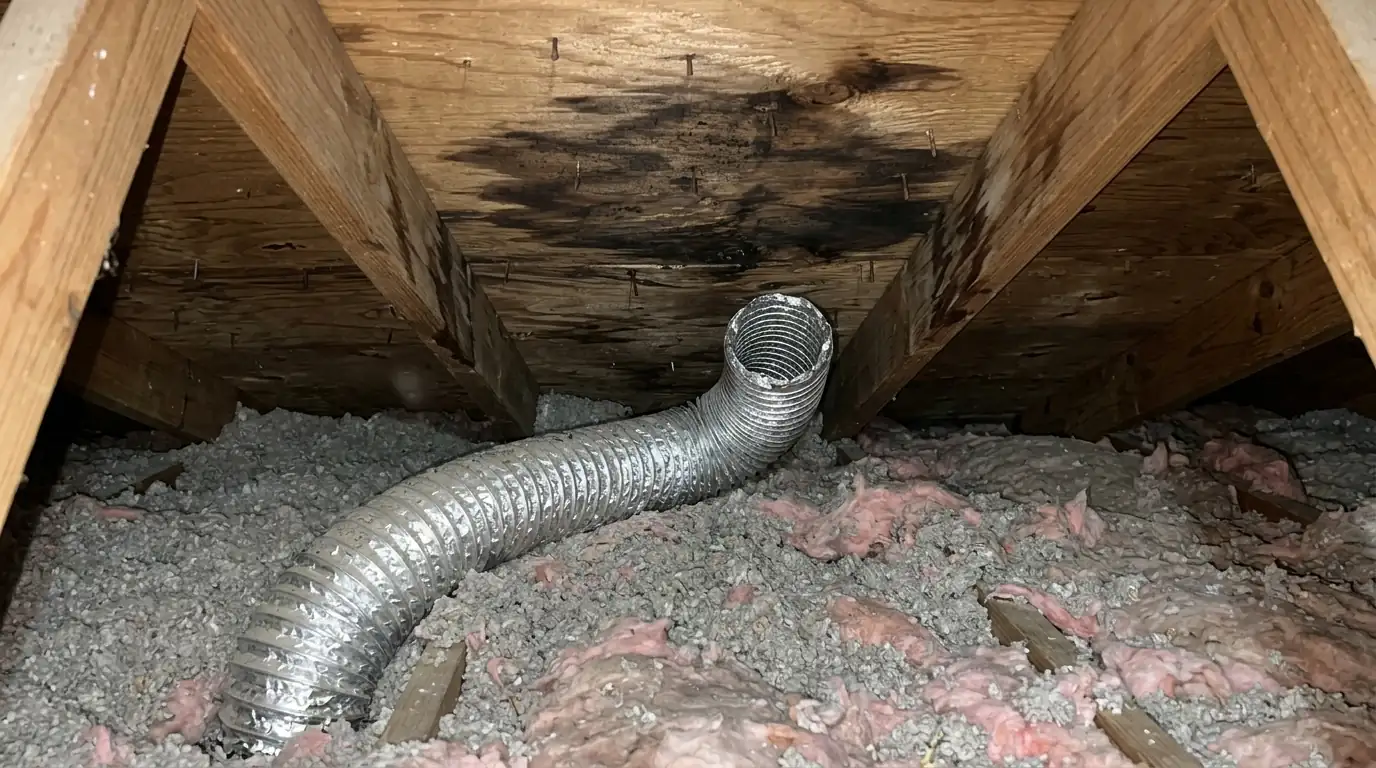
A cold roof deck will collect condensation whenever warm, moist air reaches it. The biggest sources are bath fans venting into the attic, air leaking up through ceiling penetrations, and attics that cannot breathe because insulation has blocked the soffit vents.
Fixing those three stops the cycle. We usually do this work right after attic mold removal, while the insulation is already pulled back, which saves you paying to move it twice.
Attic checks you can do and fixes that need us
Looking is easy. Rerouting ducts and sealing an attic floor is not a weekend job for most people.
Worth checking yourself
- Where your bath fan duct actually ends
- Whether soffit vents are painted or blocked outside
- Frost on nail tips on a cold morning
Better left to us
- Rerouting ducts through the roof
- Air sealing with insulation pulled back
- Any work near existing attic mold
What changes the cost of ventilation work
Ventilation work is priced by what the attic needs, so we quote after looking. What decides the cost:
- Number of fansEach fan duct rerouted separately.
- Roof or wall exitRoof caps need flashing work.
- Baffles neededOne per rafter bay at the eaves.
- Air sealing scopeMore bypasses, more time.
- Insulation handlingPulling back and replacing insulation.
- Attic accessLow pitch and tight hatches slow everything.
Bath fans venting into the attic
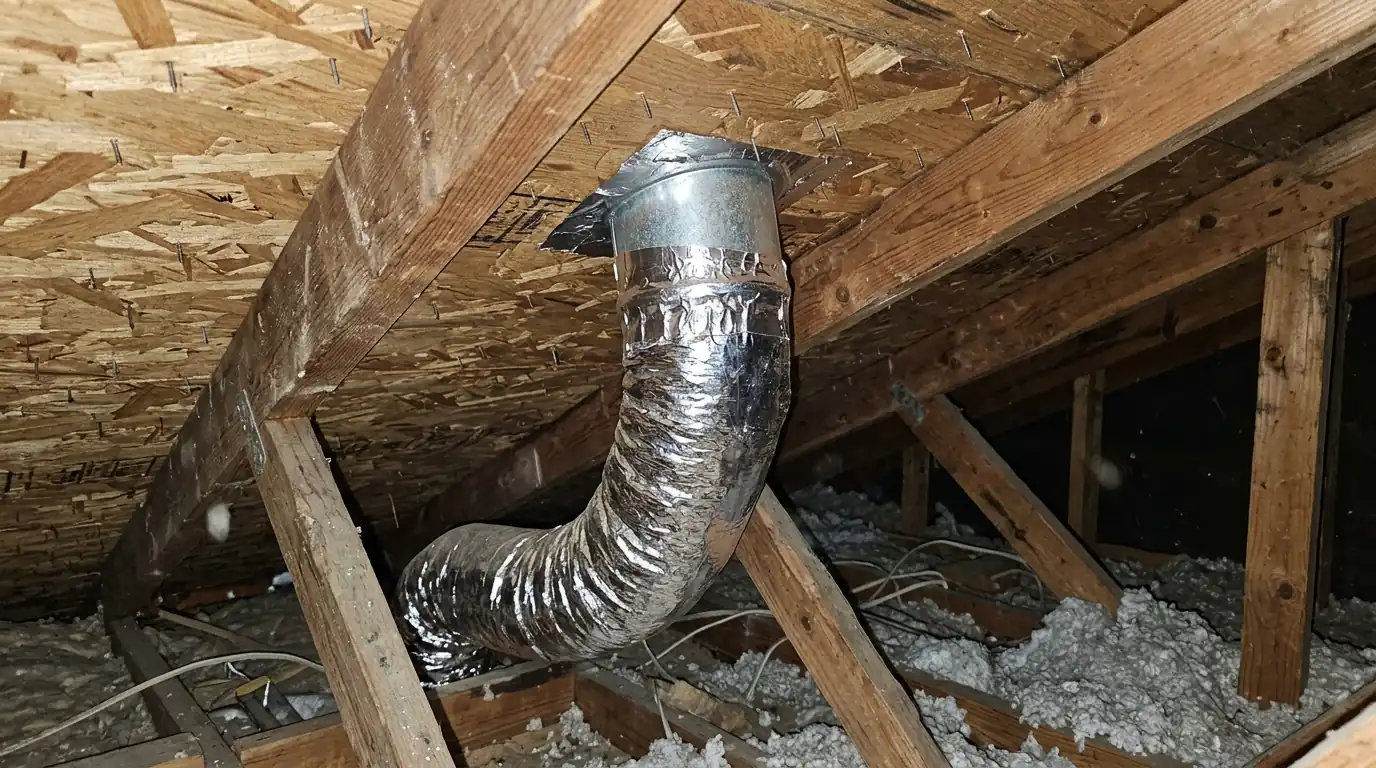
This is the most common cause we find. The duct is either loose on the insulation, pointed at a soffit, or ends a few inches short of a roof vent. Every shower then puts warm, wet air into the attic. We run each fan to a proper roof or wall cap with a damper, use insulated duct on the shortest route, and pitch it so condensation drains out. Kitchen and dryer ducts get the same check, since both carry a lot of moisture.
Soffit baffles
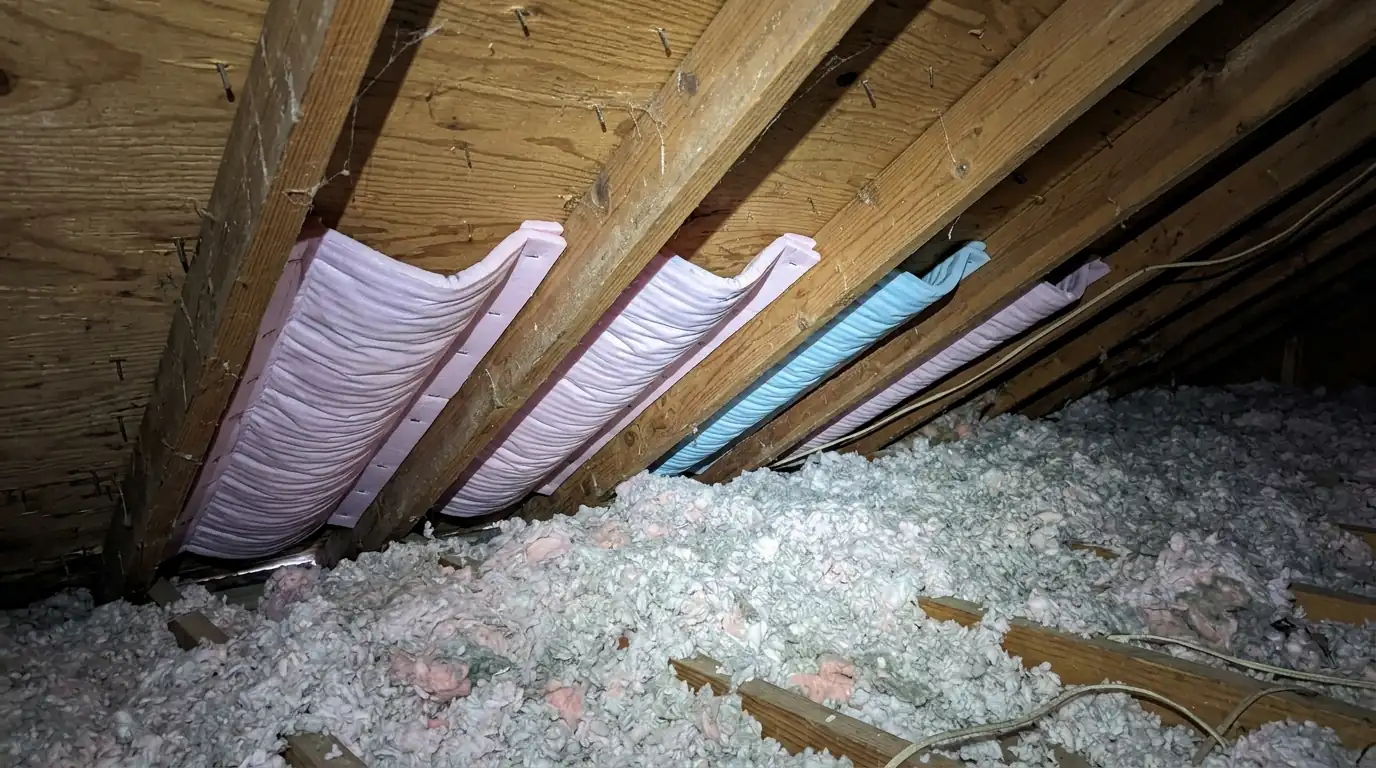
Soffit vents let cool outside air into the attic at the eaves, and the ridge or roof vents let it out at the top. When insulation is pushed against the roof deck at the eaves, the soffits are blocked and the attic stops breathing. We install baffles in each rafter bay to keep a clear channel from the soffit to the attic, then put the insulation back against them. Where soffits were painted shut or covered, we note what needs opening outside.
Air sealing attic bypasses
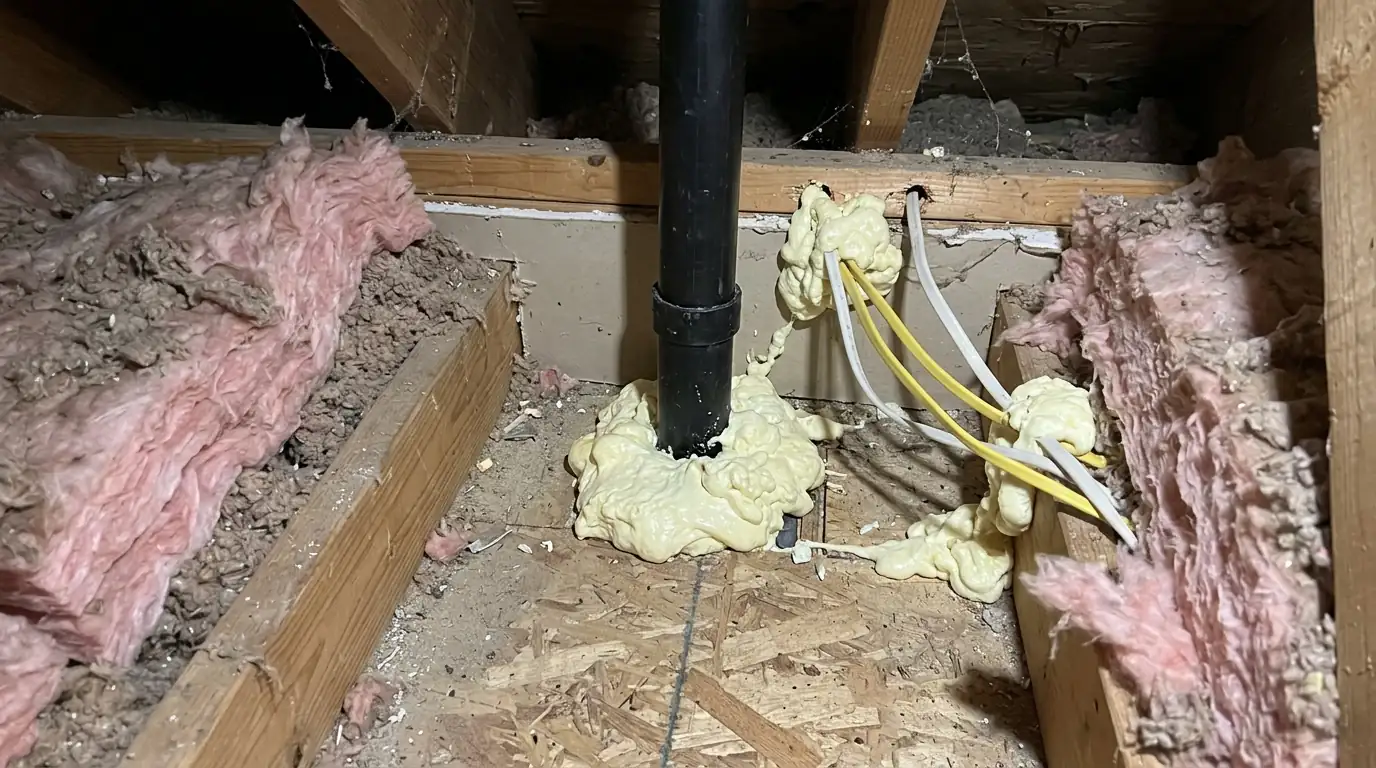
Warm air rises into the attic through gaps around recessed lights, plumbing stacks, chimney chases, wiring holes and the tops of interior walls. These bypasses carry far more moisture than people expect. With the insulation pulled back, we seal them with foam, caulk and fire-rated material where needed, then build the insulation back up. It is dusty, cramped work, but it often makes the rooms below warmer as well as keeping the roof deck dry through the next cold season.
How a ventilation correction runs
Check the attic
Fan ducts, soffits and air leaks.
Plan the fixes
What matters most for moisture.
Reroute ducts
Fans to roof or wall caps.
Install baffles
Clear channels at the eaves.
Seal bypasses
Lights, stacks, chases and plates.
Restore insulation
Back in place, soffits clear.
Check next winter
A follow-up look on a cold day if wanted.
Winter in Newark attics
Newark winters bring long runs of cold nights, and that is when a roof deck collects condensation from any warm air reaching it. Older houses often had bath fans and ceiling lights added long after they were built, with fan ducts run to whatever spot was easiest. That is why attic mold in Newark so often returns after a cleaning that skipped the airflow. When we quote attic work here, the ventilation fixes are part of the scope, not an optional extra.
How long attic work takes
Rerouting a bath fan duct is usually part of a day. Baffles and air sealing across a whole attic take longer, often a full day or two, depending on how much insulation has to be moved.
When the work follows mold cleaning, we do it in the same visit while the attic is already open.
Attic ventilation questions
Warm, moist air from the house condenses on the cold roof deck. It happens without a single leak.
Sometimes, but blocked soffits and bath fans in the attic are more common causes. We fix those first.
Air sealing often helps, since warm air stops escaping. The main goal here is a dry roof deck.
Yes, but existing growth stays. We usually clean and correct together.
No frost on nail tips on cold mornings and no new spotting after a winter.