Updated September 2026
A musty smell investigation in Newark, NJ traces the odor to hidden growth using moisture readings, thermal imaging and a borescope inside wall cavities, with air samples only when the source stays hidden. Most sources turn out to be a basement wall, a closet on an exterior wall, an air handler or an old leak that was painted over.
Why a smell with nothing visible still means something
The musty smell comes from gases released by active mold and bacteria. If you smell it, something is growing, and it is usually close to where the smell is strongest after the room has been shut for a while.
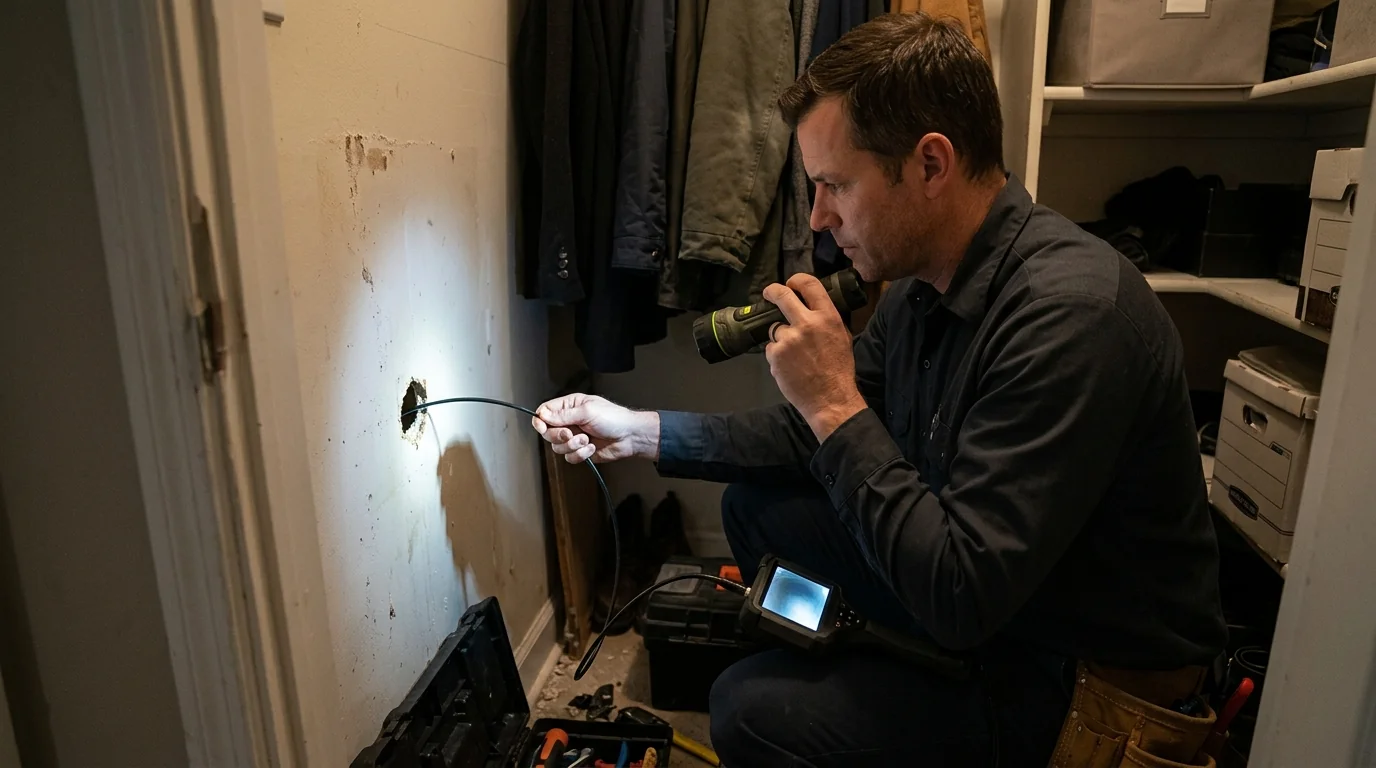
We follow the smell with instruments rather than guesses: meters on the walls and floors, thermal imaging for cool damp patches, and a borescope through a small hole to see inside a cavity. Air freshener, ozone and paint do not fix it; they hide it.
What you can check before you call
A few checks can narrow it down before we arrive, and sometimes they solve it.
Worth checking yourself
- Whether the smell is worse after rain or when the AC runs
- Boxes, rugs or furniture pressed against outside walls
- A dehumidifier reading below 50 percent in the basement
Where we take over
- A smell that stays after cleaning and drying
- Anything inside a wall, ceiling or air handler
- A smell tied to an old leak or flood
What goes into the cost of finding the smell
HomeGuide puts a mold inspection at about $300 to $650 for an average home, and Angi notes extensive air testing can reach up to $700. The factors that decide yours:
- How hidden the source isAn obvious wall reads fast; a whole-house hunt takes longer.
- Finished spacesPaneling and carpet slow the search.
- Borescope holesSmall holes are quick; opening a wall is not.
- Air samplesAdded only when instruments cannot find the source.
- HVAC accessTight air handlers take extra time to open.
- Number of roomsOne room is simpler than a smell that moves.
Planning ranges, not a quote. Sources: homeguide.com, angi.com.
Four ways to find a hidden source
We use the cheapest method that answers the question, and only add the next one if we still need it.
| What it shows | When we use it | |
|---|---|---|
| Moisture mapping | Which materials are wet | Every investigation |
| Thermal imaging | Cool damp patches worth reading | Walls, ceilings, exterior corners |
| Borescope | Inside a cavity through a small hole | When a wall reads wet |
| Air sampling | Spore levels indoors versus outdoors | When the source stays hidden |
Basement odor with no visible growth
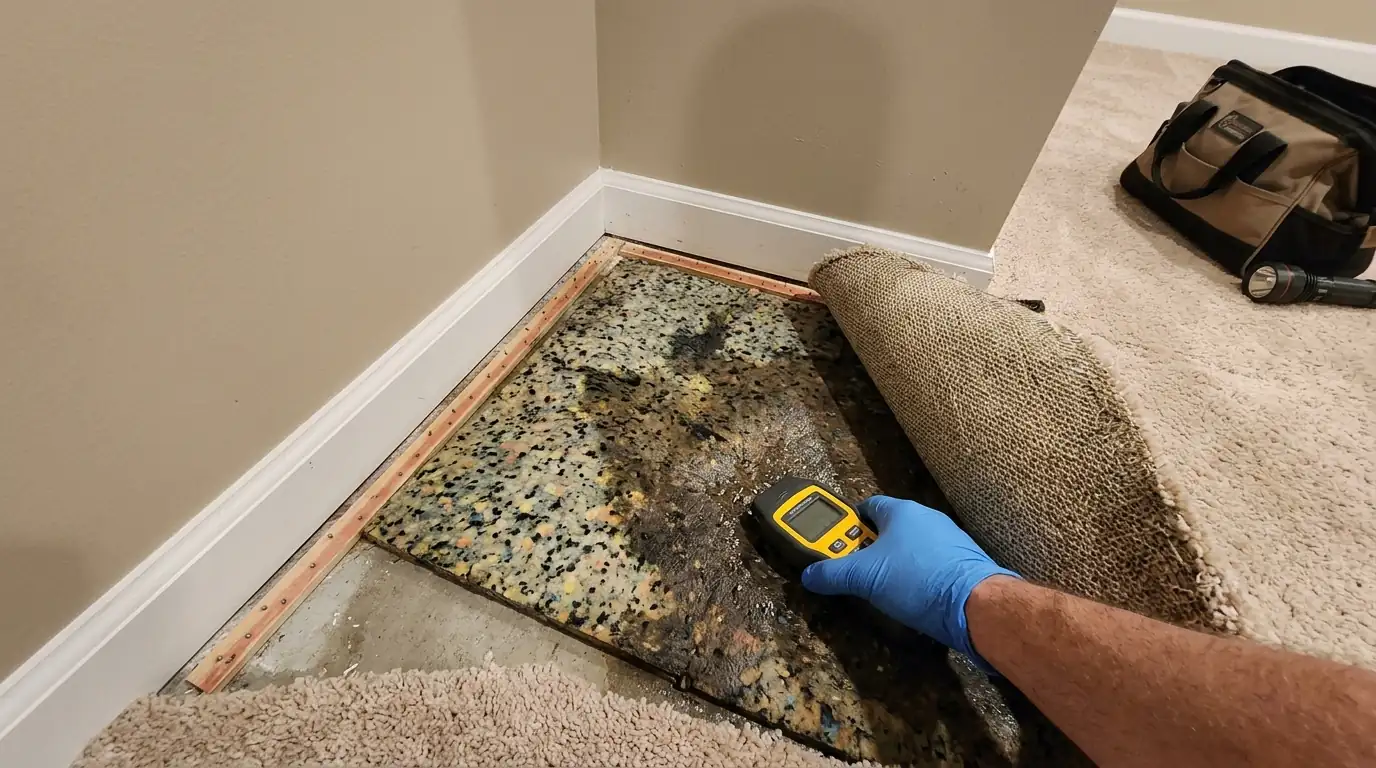
Basements are the most common source. The smell often comes from the back of finished paneling, the underside of carpet pad, cardboard boxes against a block wall, or the sill plate where the house sits on the foundation. We read the lower wall, pull a corner of carpet where you allow it and look behind stored items. If the whole basement smells and nothing reads wet, humidity alone may be doing it, and a basement dehumidifier is part of the answer.
Closet and furniture odor
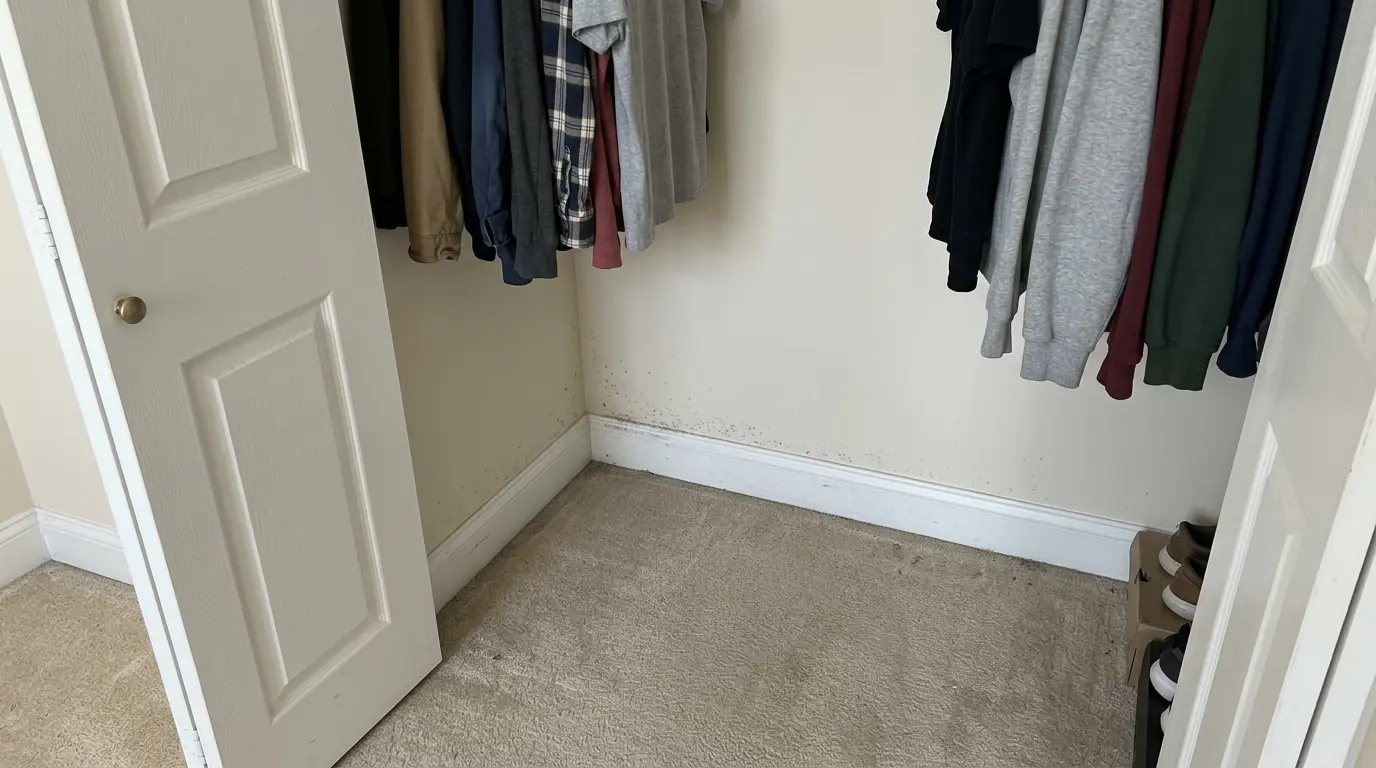
Closets on exterior walls stay colder than the rooms around them, so moisture condenses on the back wall and on anything pressed against it. Clothes, shoes and luggage pick up the smell and carry it around the house. We read the wall behind the rod, check for growth on the back of the drywall and look at furniture that sits tight against outside walls. Often the fix is air circulation plus cleaning, not removal, and moving the dresser a few inches off the wall matters more than any spray.
Smell when the AC starts
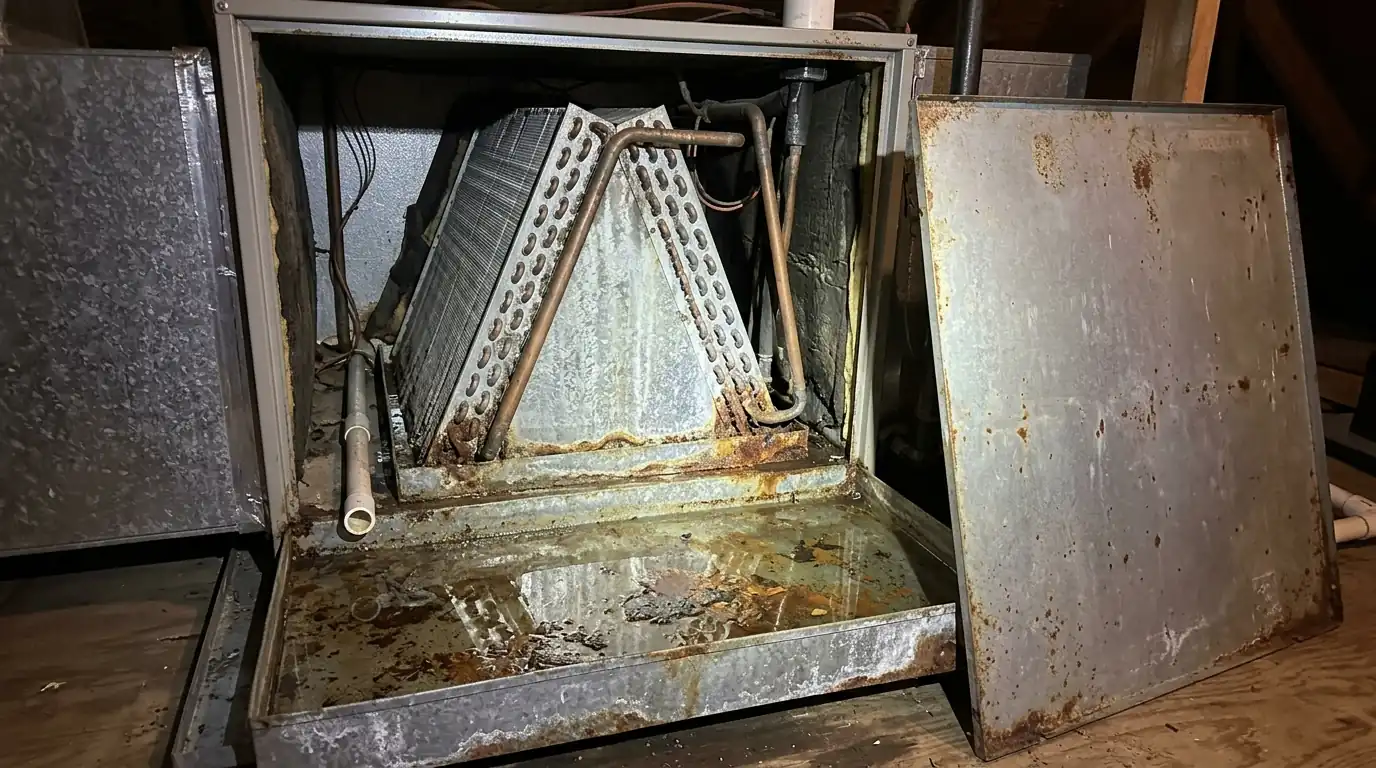
If the smell arrives when the cooling kicks on, the air handler is the first suspect. Coils, drain pans and the insulation lining the unit stay wet all summer, and a clogged condensate line lets water stand. We open the access panels, check the pan and the drain, and look at the first few feet of duct. A slimy pan or a line that will not drain explains most summer smells. Findings here go to an HVAC mold inspection or straight to cleaning.
Odor after a past leak
An old leak that was patched and painted can keep growing mold inside the wall for months. We ask when the leak happened, read the wall around the patch, and look inside the cavity through a small hole. If the insulation or the back of the drywall is contaminated, the patch has to come out. The fix then follows the drywall removal process under containment so the cleanup does not spread spores into the rest of the room or the house.
How we trace an odor
Tell us where it is strongest
Rooms, times of day, and after rain or AC.
Close up the house
A closed room concentrates the smell.
Read walls and floors
Meters and thermal imaging, room by room.
Look inside
Borescope through a small hole where needed.
Check the air handler
Coil, pan, drain and duct entry.
Sample if still hidden
Indoor air compared with outdoor air.
Show you the source
Photos, readings and the fix, in writing.
Newark summers and the smell in the basement
Newark's early July normals run to highs near 87 F and overnight lows near 69 F, and humid summer air meeting a cool foundation wall is the most common reason a Newark basement smells musty with nothing visible. We see it most in July and August. When a summer basement smell comes up on a call, we bring a hygrometer as well as moisture meters, because the answer is sometimes the air rather than a leak.
Musty smell questions
Usually mold or bacteria on something wet. Either way, the fix is finding and drying the source.
It can mask it for a while. The growth keeps going, so the smell returns.
Rarely. A borescope through a small hole usually answers it, and we ask first.
Water is getting into a wall, the foundation or the basement, and the growth becomes active again.
Air samples compared with an outdoor control can confirm hidden growth and point to the area.