Updated September 2026
Bathroom mold removal in Newark, NJ ranges from cleaning ceiling and grout growth to opening a shower wall where water has reached the backer board. HomeGuide puts bathroom mold removal at about $500 to $2,000, depending on whether the growth is on the surface or inside the wall, and a weak or missing fan is fixed alongside.
Surface mold versus mold behind the tile
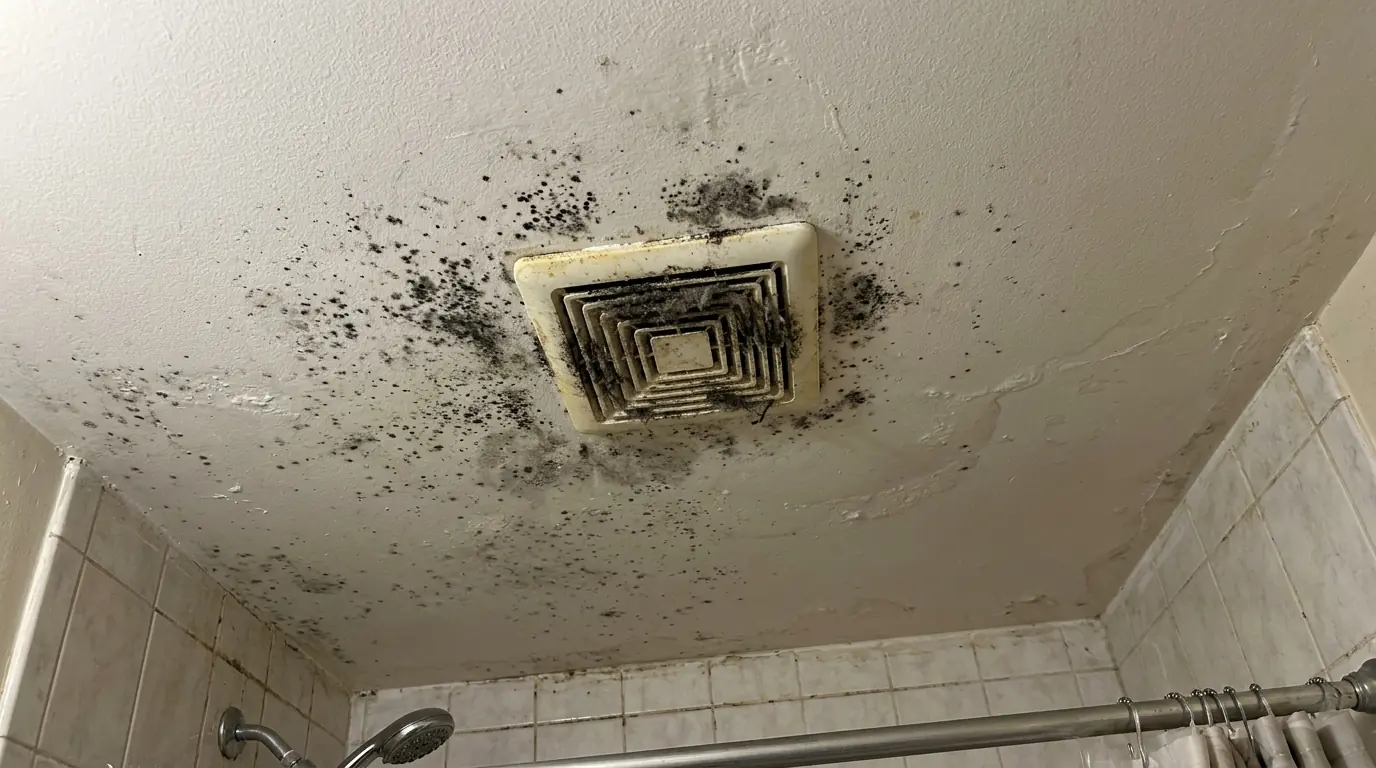
Ceiling spots and dark grout are usually surface growth fed by steam that never leaves the room. Soft drywall, loose tiles, a musty vanity or stains on the ceiling below mean water has gone further, into the wall or subfloor.
We check with a meter before deciding. Surface growth is cleaned and the ventilation fixed; hidden growth is opened up under containment. Where the fan is the cause, a properly vented bath fan is part of the job.
What you can clean and what needs us
Surface spots are fair game for a homeowner. Growth behind tile or drywall is not.
You can usually clean
- Spots on painted ceilings smaller than a small towel
- Grout lines with an appropriate cleaner and a brush
- Caulk you are willing to cut out and replace
Call us for
- Soft drywall or loose tiles
- Stains on the room next door or below
- Spots that return within weeks of cleaning
What changes the cost of bathroom mold removal
HomeGuide puts bathroom mold removal at about $500 to $2,000. What decides where yours lands:
- Surface or hiddenCleaning costs far less than opening walls.
- Tile workRemoving and resetting tile adds time.
- Subfloor damageSoft subfloor needs cutting out and drying.
- Ventilation fixA new fan or duct run is added work.
- Plumbing repairValve or seal repairs by a plumber.
- ContainmentNeeded whenever walls or ceilings are opened.
Planning ranges, not a quote. Sources: homeguide.com.
Ceiling mold
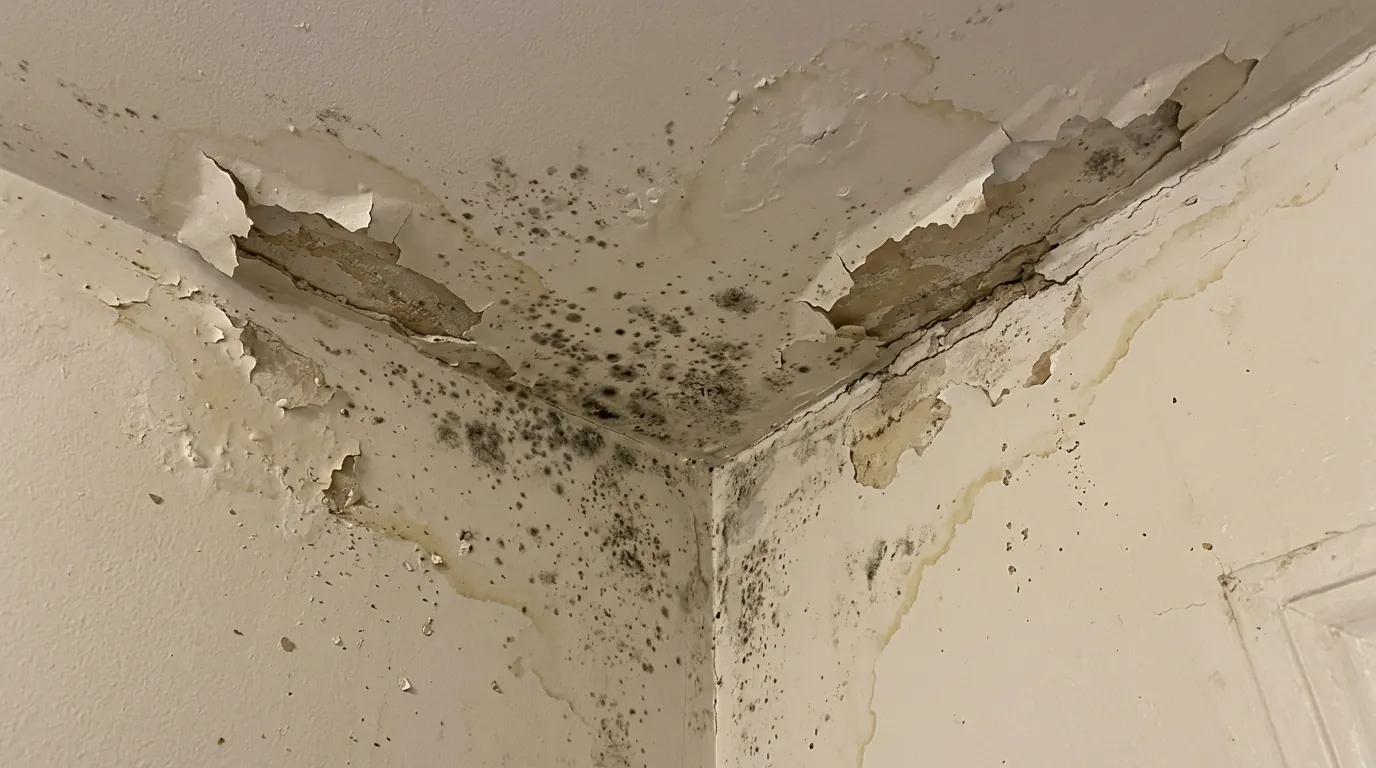
Steam rises and condenses on the coldest part of the ceiling, often the corner on an outside wall or the area around a weak fan. Light spotting on painted drywall can be cleaned, dried and repainted with a moisture-resistant finish. If the drywall is soft, stained through or the paper has lifted, that section is cut out and replaced. We check the attic above where we can, because a ceiling that keeps spotting may have wet insulation or a fan duct dumping moisture right above it.
Grout and caulk
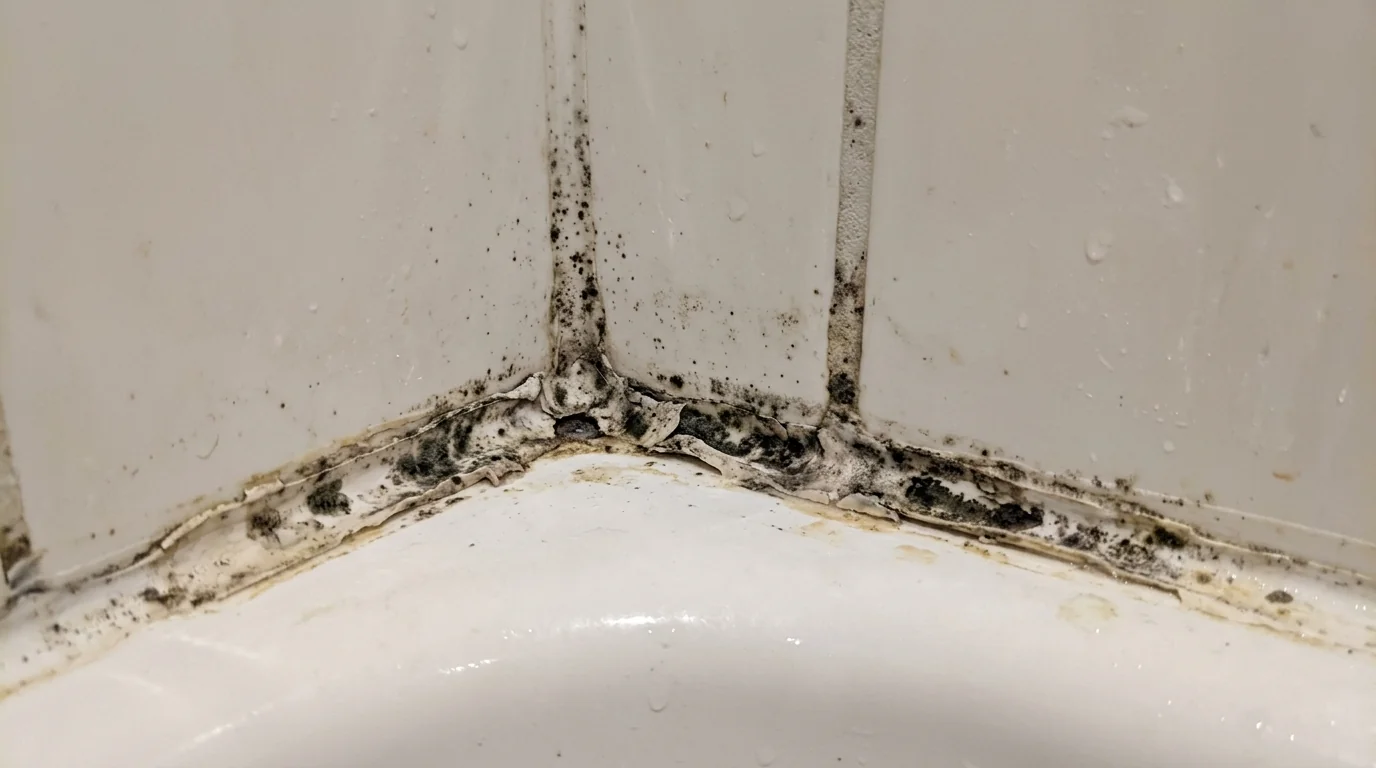
Dark grout and caulk lines are the most common complaint, and often the easiest to fix. Growth in caulk usually runs into the joint behind it, so old caulk is cut out, the joint cleaned and dried, and new mildew-resistant caulk applied. Grout that stays dark after cleaning is ground out and regrouted in the worst areas. If grout keeps cracking or tiles sound hollow, water is getting behind them, and the job moves to the wall itself and the grout is the least of it.
Behind the shower wall
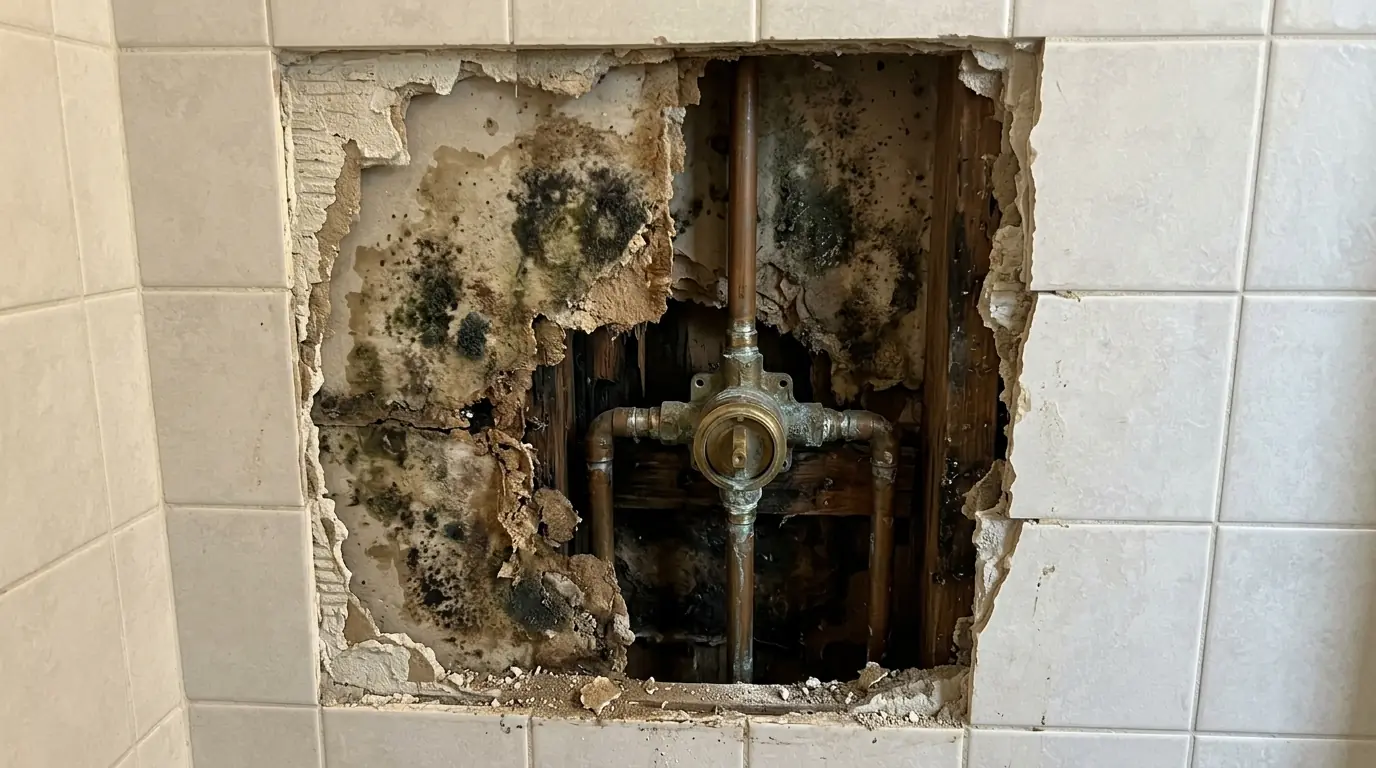
A shower valve leak, failed grout or a wall built without a proper waterproof layer sends water into the cavity behind the tile. From the room you may see loose tiles, a stain on the wall of the next room or a musty smell. We read the wall, look in with a borescope where possible, and open it under containment if it is wet. The plumbing and the waterproofing need fixing before new tile goes back, or the next wall will fail the same way.
Vanity and subfloor
Vanities hide slow drain leaks and toilet seal failures. The cabinet bottom swells, the floor near the toilet feels soft, and mold grows under the vanity where nobody looks. We check the cabinet, the flooring and the subfloor with a meter, then remove the damaged cabinet base or flooring section, clean and dry the subfloor, and note what the plumber needs to fix. Solid wood vanities can often be cleaned and kept; particleboard rarely survives water and usually has to be replaced.
How a bathroom job runs
Read the room
Meter on walls, floor and ceiling.
Find the cause
Fan, leak, grout or condensation.
Contain if opening
Plastic and negative air for cut-outs.
Remove or clean
Surface growth cleaned, damaged material out.
Dry
Until the wall and floor read normal.
Fix the cause
Fan ducted outside, leak noted for repair.
Hand over
Ready for new tile, drywall or paint.
Bathrooms in Newark rentals
About 77 percent of Newark dwellings are rentals, and most of the bathroom calls we take in Newark come from apartments where the fan is undersized, broken or was never ducted outside. Tenants clean the ceiling, the spots return, and nobody fixes the fan. For Newark rental bathrooms, we write the moisture cause into the report so the landlord and the tenant both know what actually stops it.
Signs the problem is inside the wall
Loose or hollow tiles
Water is behind the tile.
A stain in the next room
The wall cavity is wet.
Soft floor near the toilet
The seal or subfloor has failed.
Musty smell from the vanity
A slow drain leak is feeding growth.
Spots back within weeks
Ventilation or a leak is not fixed.
Bathroom mold questions
On tile and grout surfaces it can help. It does nothing for growth inside drywall or behind tile.
The steam is not leaving the room. A properly sized fan ducted outside usually stops it.
We handle removal, cleaning and drying. Retiling is done after the wall is dry, by us or your tile setter.
Yes. We coordinate with the tenant and the landlord and keep the work area sealed.
Surface cleaning is quick. Opening a shower wall takes longer because of drying time.