Updated September 2026
Mold prevention treatment in Newark, NJ applies an antimicrobial solution and, where it helps, a mold-resistant encapsulant coating to framing, sheathing and masonry after they have been cleaned and dried. It is used after remediation, after a flood cleanup, or on new framing during renovation, and it only works when the moisture source is also under control.
What prevention coatings can and cannot do
Prevention products are sold with big promises. The honest version: a coating on clean, dry wood makes it harder for new growth to take hold and easier to spot if it does. It does nothing about a leak, humidity or condensation, and sprayed over existing growth it just seals the mold in.
So we treat only surfaces that have passed cleaning and read dry, and we tell you plainly when the money would be better spent on a dehumidifier or a ventilation fix.
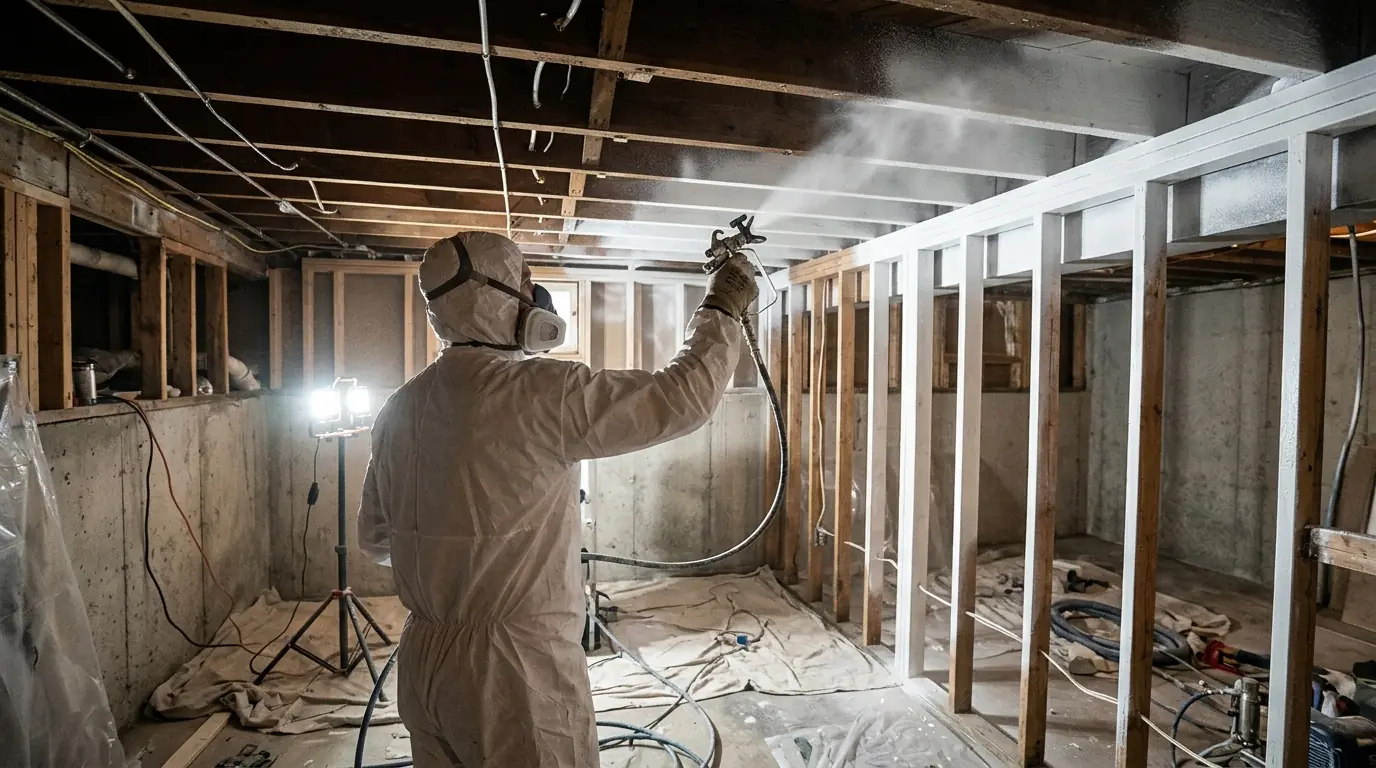
How a treatment is applied
Confirm clean
Cleaning and clearance come first.
Confirm dry
Meter readings on every surface.
Mask
Wiring, fixtures and finished surfaces.
Apply antimicrobial
Where the job calls for it.
Apply encapsulant
Full coverage where it helps.
Let it cure
Before anything covers it.
Record it
Photos and product noted for your file.
Encapsulant after remediation
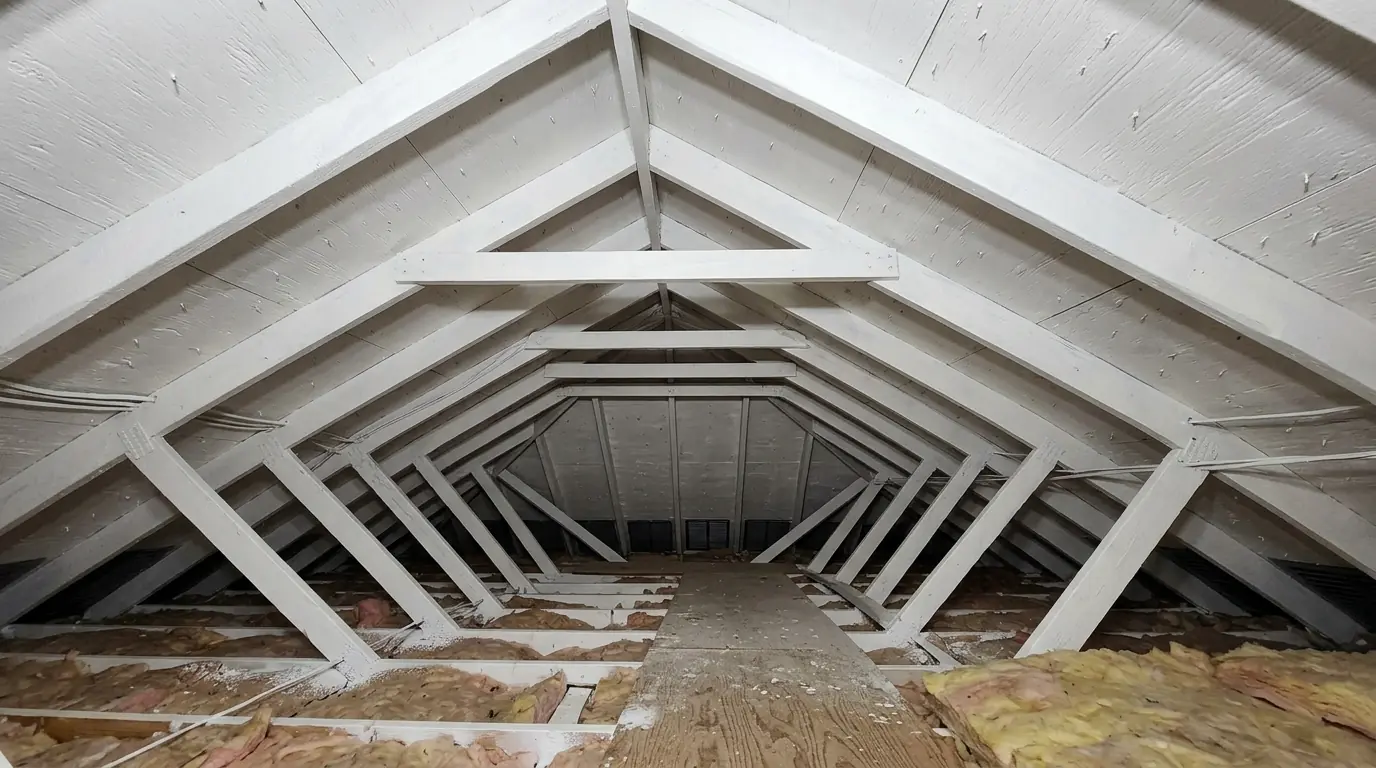
After framing and sheathing have been cleaned and cleared, an encapsulant coating locks down any staining left in the wood grain and gives a uniform surface. White or clear coatings make any future spotting easy to see during a check. We apply it with a sprayer or roller to full coverage, keep it off wiring and fixtures, and let it cure before the insulation or drywall goes back. It is a finishing step for the remediation, not a way to skip any part of it.
Antimicrobial after a flood
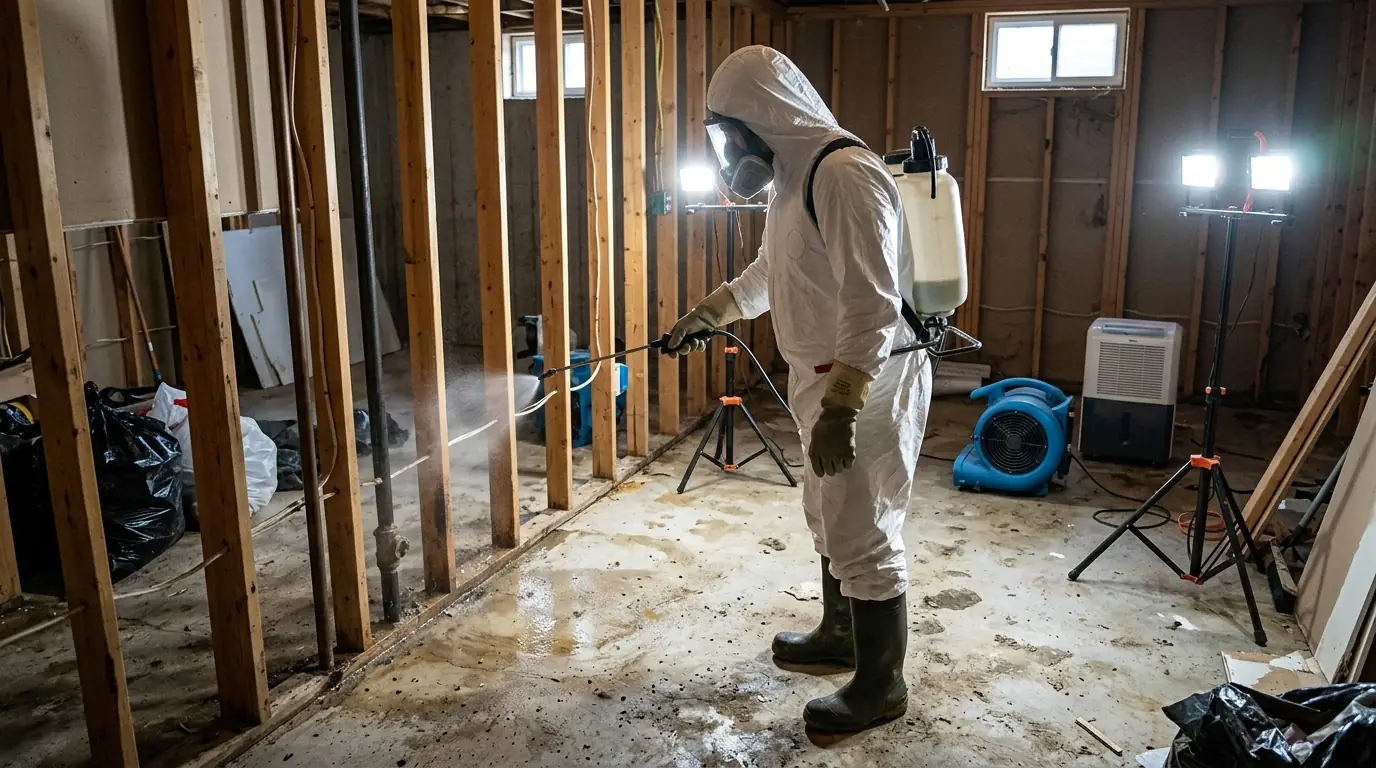
After floodwater is extracted and the space is dried, an antimicrobial treatment on the exposed framing, slab and lower walls reduces what remains on surfaces the water touched. It is part of the cleanup standard for contaminated water, applied before the space is closed up again. We use it on hard materials only; porous materials that took floodwater come out rather than being treated, because a spray cannot reach what is soaked into them and would only give false comfort.
Framing treatment during renovation
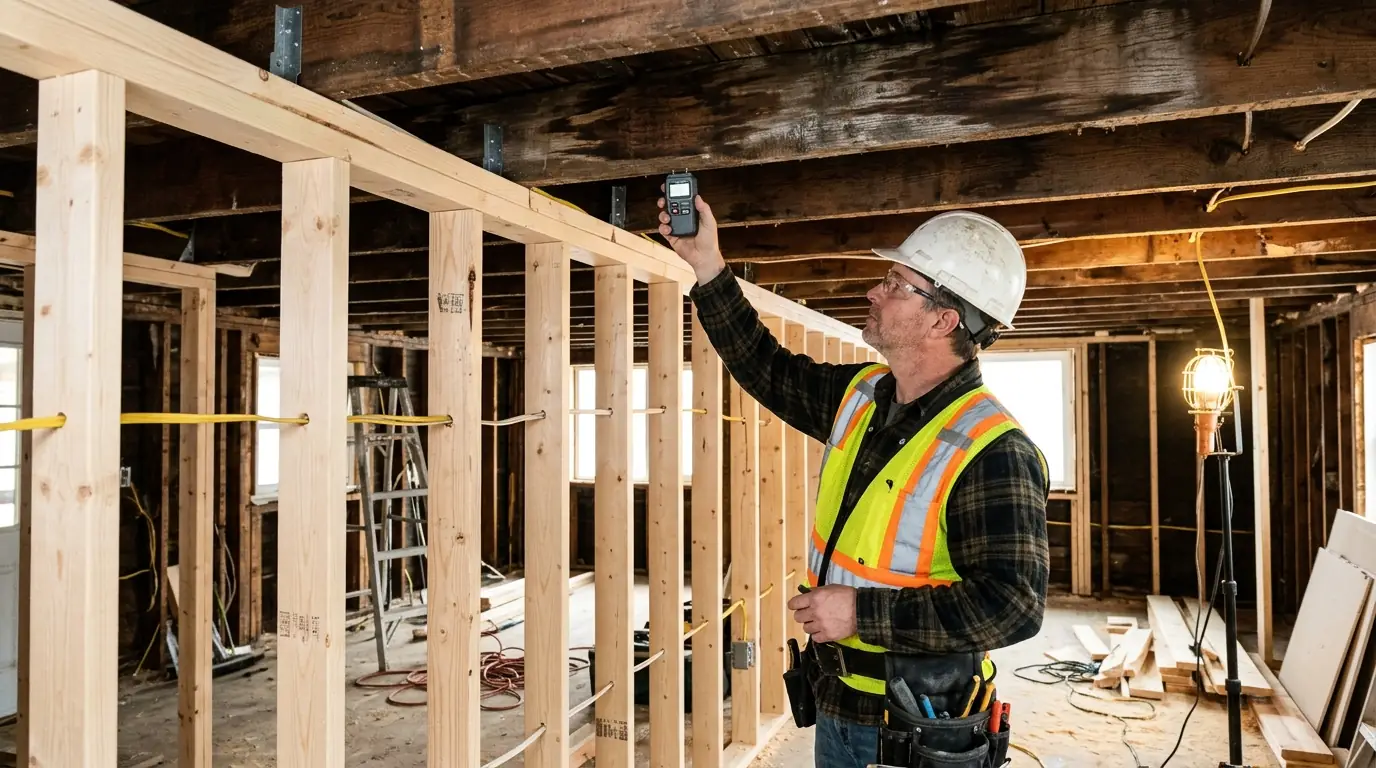
Gut renovations and additions expose framing that may have been rained on during construction, and older houses opened up often show old water staining. Treating clean, dry framing before insulation and drywall go in is inexpensive compared with opening walls later. We check the moisture content first, because lumber that is still wet should dry fully before it is treated or closed in, whatever product is used, and whatever the schedule of the renovation says about closing walls this week.
What decides the cost of a prevention treatment
Treatment is priced by the surface area and access, and it is usually added to a cleaning job rather than done alone. What decides the cost:
- Surface areaSquare footage of framing or masonry.
- Product typeEncapsulant coatings cost more than antimicrobial sprays.
- AccessAttics and crawl spaces take longer.
- PreparationSurfaces must already be cleaned and dry.
- MaskingProtecting wiring, fixtures and finishes.
- Cure timeScheduling around the rebuild.
Tidal flooding in the Meadowlands
During Sandy, a tidal surge up the Hackensack River overtopped the old mosquito-control berms, which average about 5 feet above sea level, and flooded Moonachie and Little Ferry. Homes in low-lying Meadowlands towns like Moonachie and Little Ferry can flood again the same way, so after a flood cleanup there we recommend an antimicrobial on exposed framing and a check of the lowest wall sections before anything is closed in.
Store-bought sprays versus a professional treatment
Store-bought sprays can help on small hard surfaces. They are not a substitute for cleaning or drying.
Reasonable to do yourself
- Wiping small hard surfaces after cleaning
- Treating a shower or window sill area
- Keeping surfaces dry afterward
Worth calling us for
- Coating attic or crawl space framing
- Treatment after a flood cleanup
- Any surface that still reads wet
When to apply and how long it takes
Treatment is applied in the same visit as the final cleaning or right after clearance, and most areas take a few hours. Coatings need time to cure before insulation or drywall covers them.
We check moisture readings first; if the wood is still wet, treatment waits.
Prevention treatment questions
No. Coating over growth seals it in. Removal and cleaning always come first.
It protects the surface, but no coating stops mold if the area gets wet again.
We use products labeled for the purpose and ventilate the area while applying them.
Not always. It helps most in attics, crawl spaces and flood-prone basements.
Yes, once the framing reads dry, before insulation and drywall go in.