Updated September 2026
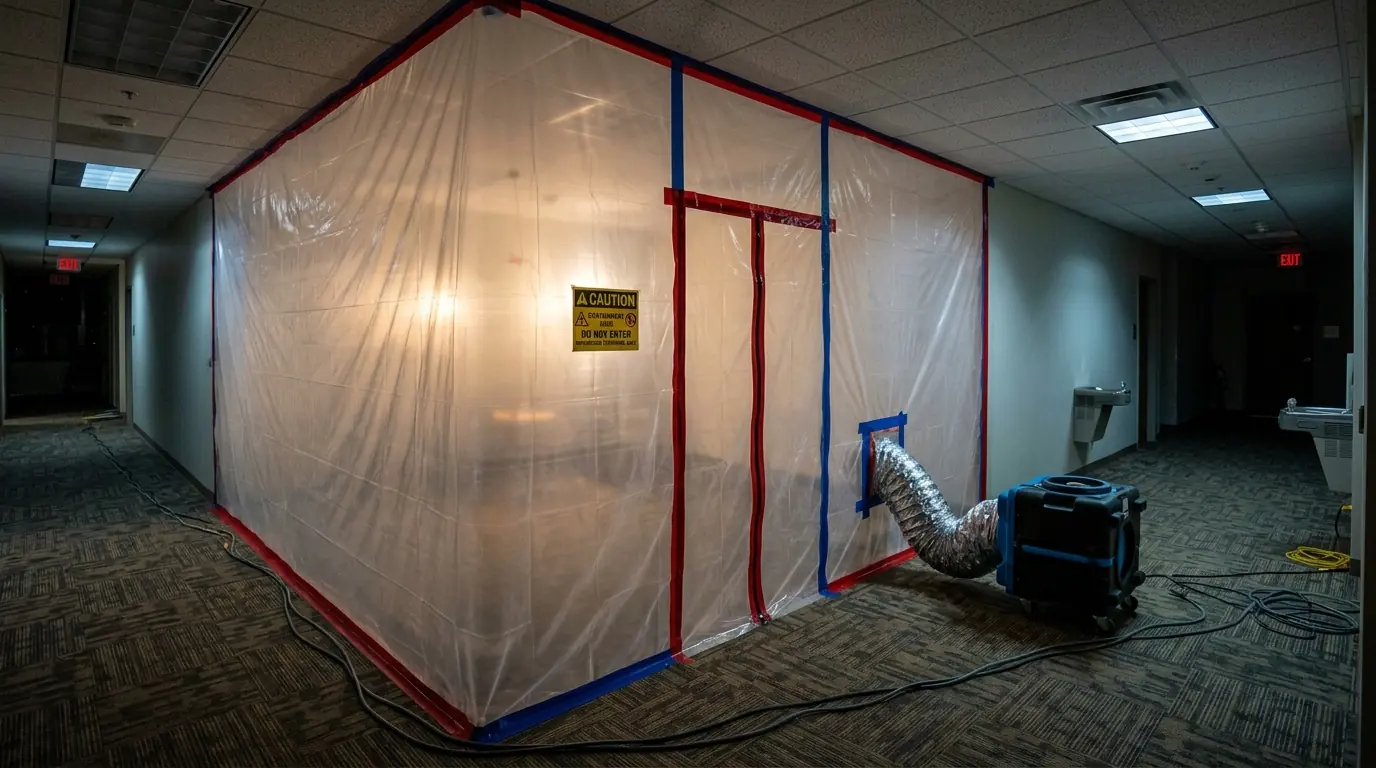
Commercial mold remediation in Newark, NJ is planned in phases: each work area is sealed with plastic and negative air, moldy materials are removed and cleaned after hours or in closed sections, and clearance is checked before the area reopens. The schedule is built around your business so staff and customers stay out of the work zone.
What changes when the building stays open
The removal methods match residential work: containment, negative air, HEPA cleaning and material removal. What changes is logistics. Occupied floors, food service rules, tenants with leases, and air handlers serving several suites all shape how the job is sequenced.
We start from an inspection scope, or a written protocol from your consultant, and turn it into a phased plan with dates, work hours and which areas close when. Findings from a commercial inspection feed straight into it.
What decides the cost of commercial remediation
HomeGuide puts residential mold remediation at about $15 to $30 per square foot. Commercial jobs are quoted after a walkthrough because these vary so much:
- Affected areaSquare footage across all zones.
- Work hoursNight and weekend work changes labor cost.
- Number of phasesMore phases mean more setups.
- HVAC involvementShared air handlers may need cleaning too.
- ContentsStored goods and furniture to move or protect.
- Clearance testingEach phase may need its own clearance.
Planning ranges, not a quote. Sources: homeguide.com.
Phased work or a full shutdown?
Most buildings can stay open. Shutdowns make sense for small spaces or widespread growth.
| Phased work | Full shutdown | |
|---|---|---|
| Business impact | Sections close briefly | Whole space closed |
| Schedule | Nights, weekends, by floor | Continuous until done |
| Suits | Offices, larger buildings | Small shops, heavy contamination |
| Planning time | More upfront | Less upfront |
Occupied offices
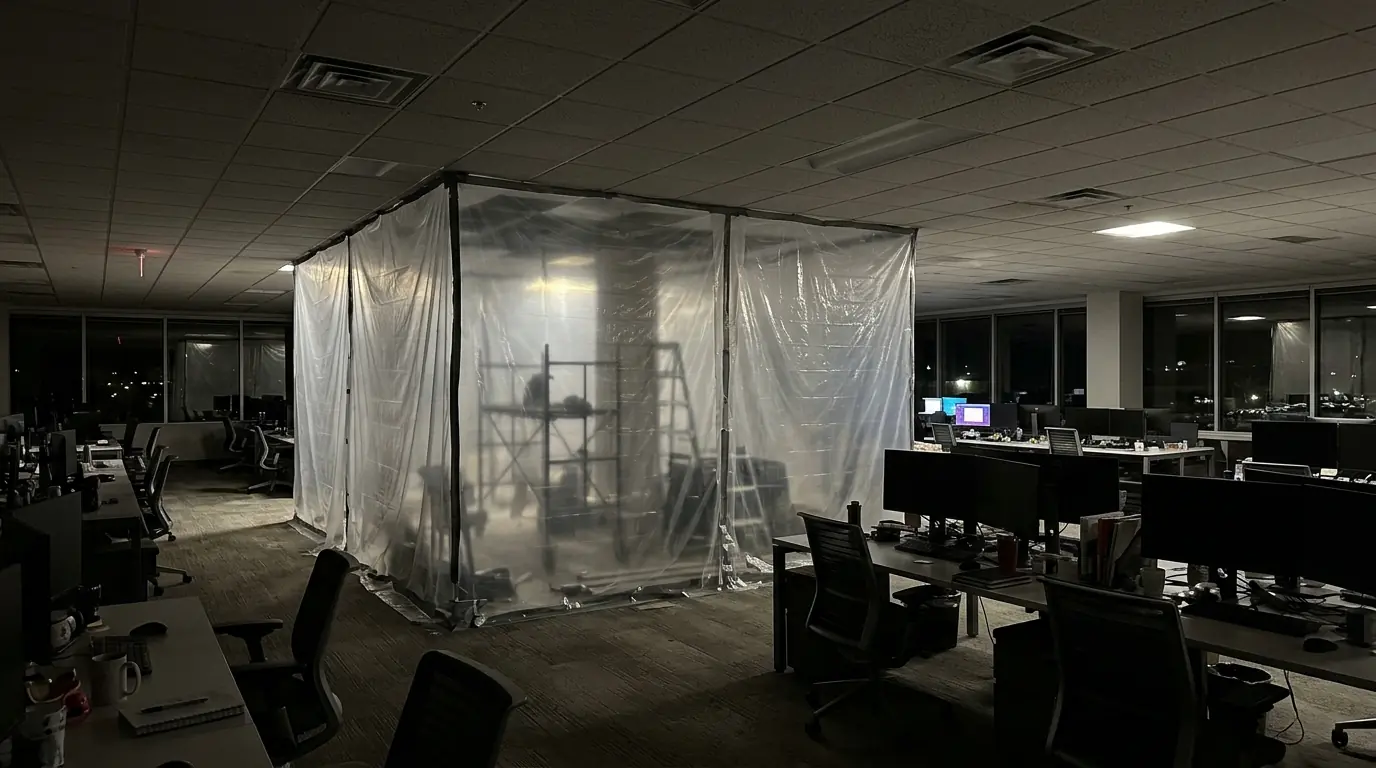
In offices we usually work nights or weekends, one suite or section at a time. Each zone is sealed with plastic, the supply and return registers inside it are covered, and negative air exhausts outside or through HEPA filtration. Ceiling tiles, wet drywall and carpet come out; framing and deck are cleaned. By morning, the containment is intact, the corridor is clean and the space outside the zone is in normal use. Staff notices are written in plain language and posted before each phase.
Restaurants
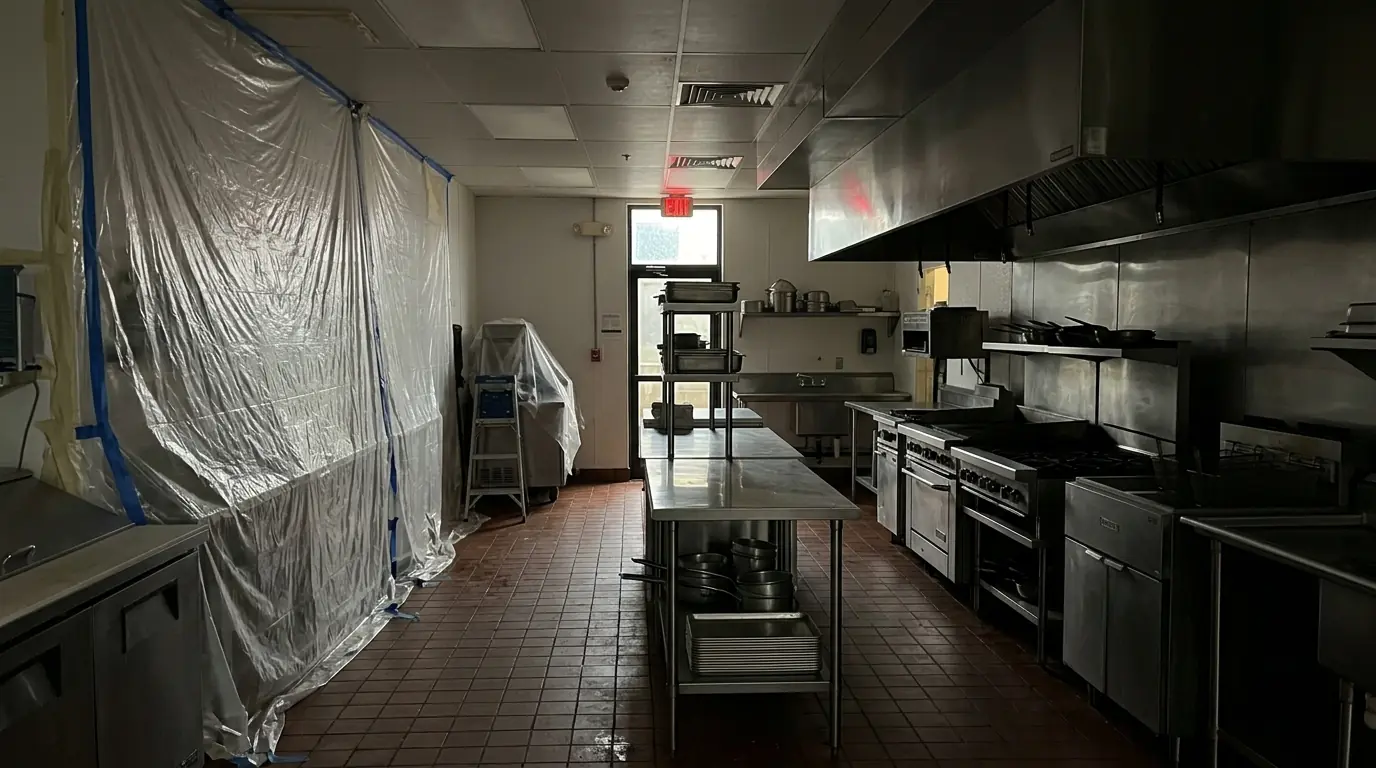
Restaurants cannot have dust near food. We schedule around closing days or overnight, move or cover equipment, and seal the work area from the kitchen and dining room. Common problems are walls behind dish stations, cooler walls and the ceiling above the hood. After removal and cleaning, the area is wiped down, the containment comes out and we leave the space ready for your own cleaning before service. Paperwork is written so it can go straight to a health inspector.
Multi-family common areas
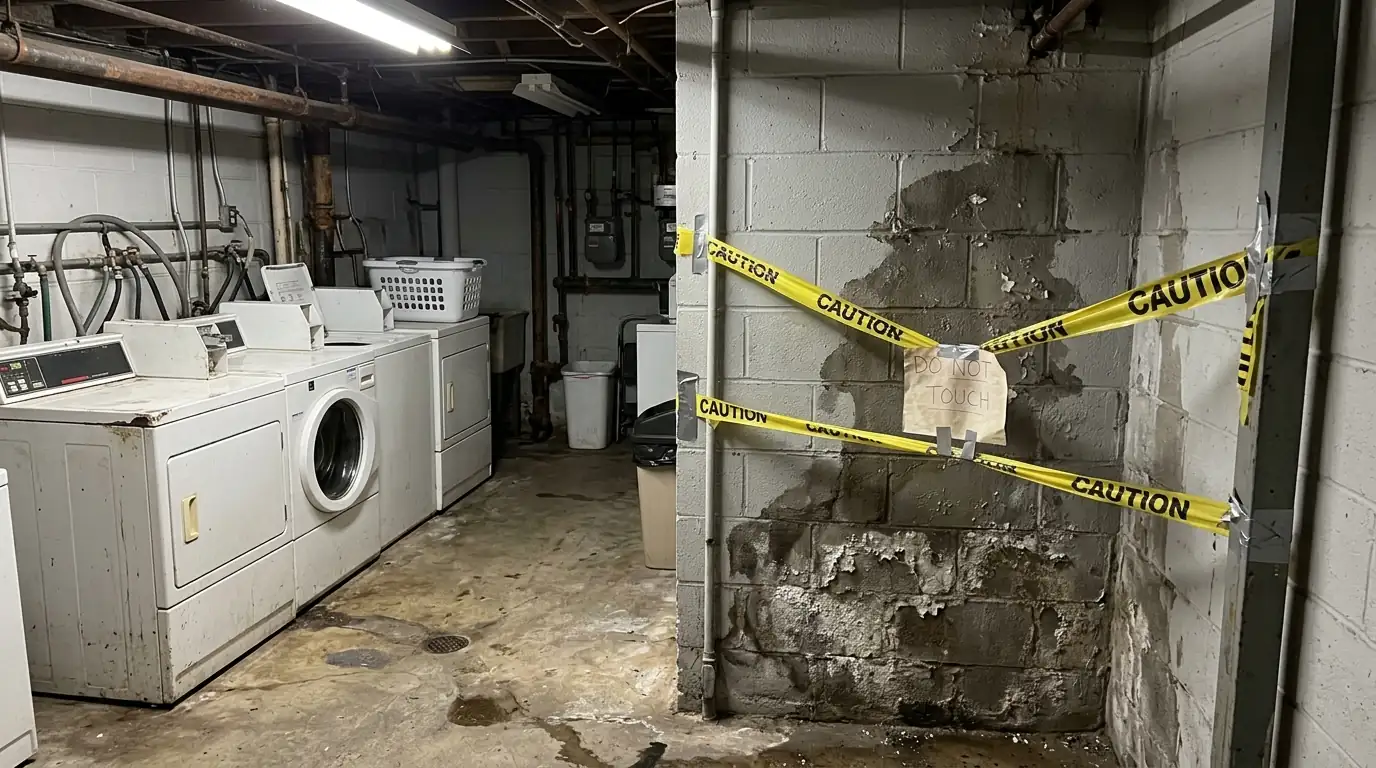
In apartment buildings, common basements, laundry rooms and hallways affect every tenant. We coordinate access with management, post notices, and schedule so laundry and storage are closed for the shortest time. Individual units that share the problem are handled with the tenant present or with management's key. The report separates common-area work from unit work, which matters when costs are split between an association and owners. We can also meet with a board or manager to walk through the plan and the schedule before anything starts.
How a commercial job runs
Review the scope
Inspection findings or your consultant's protocol.
Plan phases
Dates, hours and which areas close.
Notify occupants
Plain-language notices for staff or tenants.
Contain each zone
Plastic, negative air, registers covered.
Remove and clean
Materials out, framing HEPA cleaned.
Clear the zone
Visual check and testing where required.
Reopen and move on
Zone released, next phase begins.
Low-lying Meadowlands buildings
During Sandy, a tidal surge up the Hackensack River overtopped the berm and flooded Moonachie and Little Ferry, with water reaching 5 feet within 45 minutes in Moonachie. The warehouses, shops and flex buildings in low-lying Meadowlands towns like Moonachie, Little Ferry and Carlstadt share that exposure. For commercial buildings there, we check the base of every wall and anything stored on the floor, because flood water reaches well past the obvious damage.
How long a commercial job takes
A single contained area can often be done overnight or over a weekend. Larger jobs run over several phases, with each area cleared before the next one starts.
We give you a written schedule before work begins, and it changes only if we find more than the scope expected, in which case you hear about it before we proceed.
Commercial remediation questions
Usually yes. We phase the work and seal each zone from occupied space.
Yes. Most commercial work is scheduled around business hours.
Yes. We work to a written protocol and document each step for the consultant.
If ducts or air handlers serve the work area, they are covered or cleaned as part of the plan.
Yes. Each phase is documented with photos, materials removed and clearance results.