Updated September 2026
Mold remediation in Newark, NJ seals the affected area under plastic and negative air, removes contaminated porous materials, HEPA vacuums and wipes the framing, dries it to normal readings and confirms it is clean before rebuild. HomeGuide puts remediation at about $15 to $30 per square foot, or $1,500 to $6,000 for a typical job.
What proper remediation involves
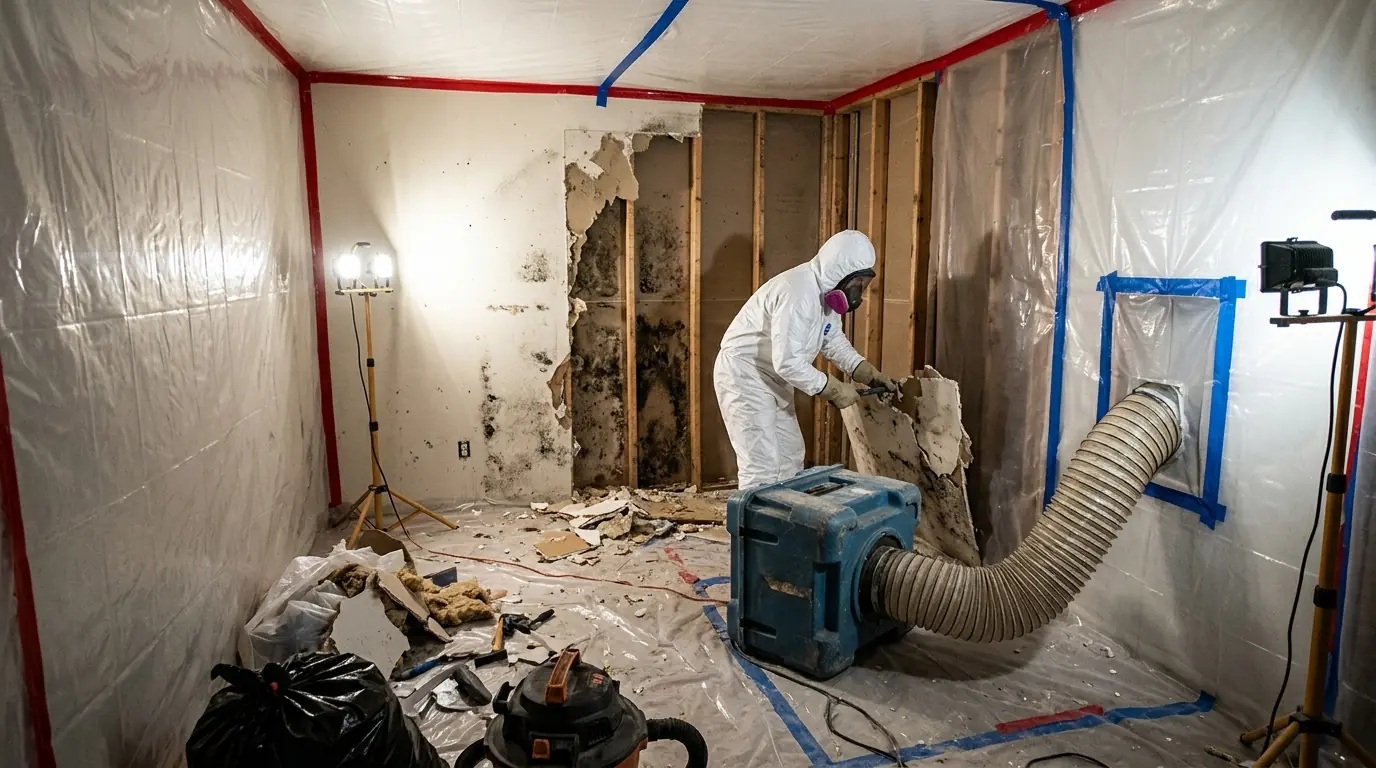
Remediation is not spraying. Spores and fragments are easily stirred into the air, so the first job is keeping them in one place. Then porous materials with growth inside them come out, hard materials are cleaned, and the area is dried until the meter agrees.
Most jobs are one area of a house. Specific rooms have their own pages, like basement mold removal and attic mold cleanup; this page covers the process they all share.
What decides the cost of mold remediation
HomeGuide puts mold remediation at about $15 to $30 per square foot, or $1,500 to $6,000 on average, and whole-house jobs at $15,000 to $30,000. Angi's national average runs $1,223 to $3,757. What decides yours:
- Affected areaSquare footage drives labor and disposal.
- MaterialsDrywall, insulation, carpet or framing.
- Containment sizeMore zones, more setup.
- AccessAttics, crawl spaces and finished areas are slower.
- Contamination typeSewage or floodwater raises the standard.
- ClearanceTesting before rebuild adds a lab fee.
Planning ranges, not a quote. Sources: homeguide.com, homeguide.com, angi.com.
Black mold removal
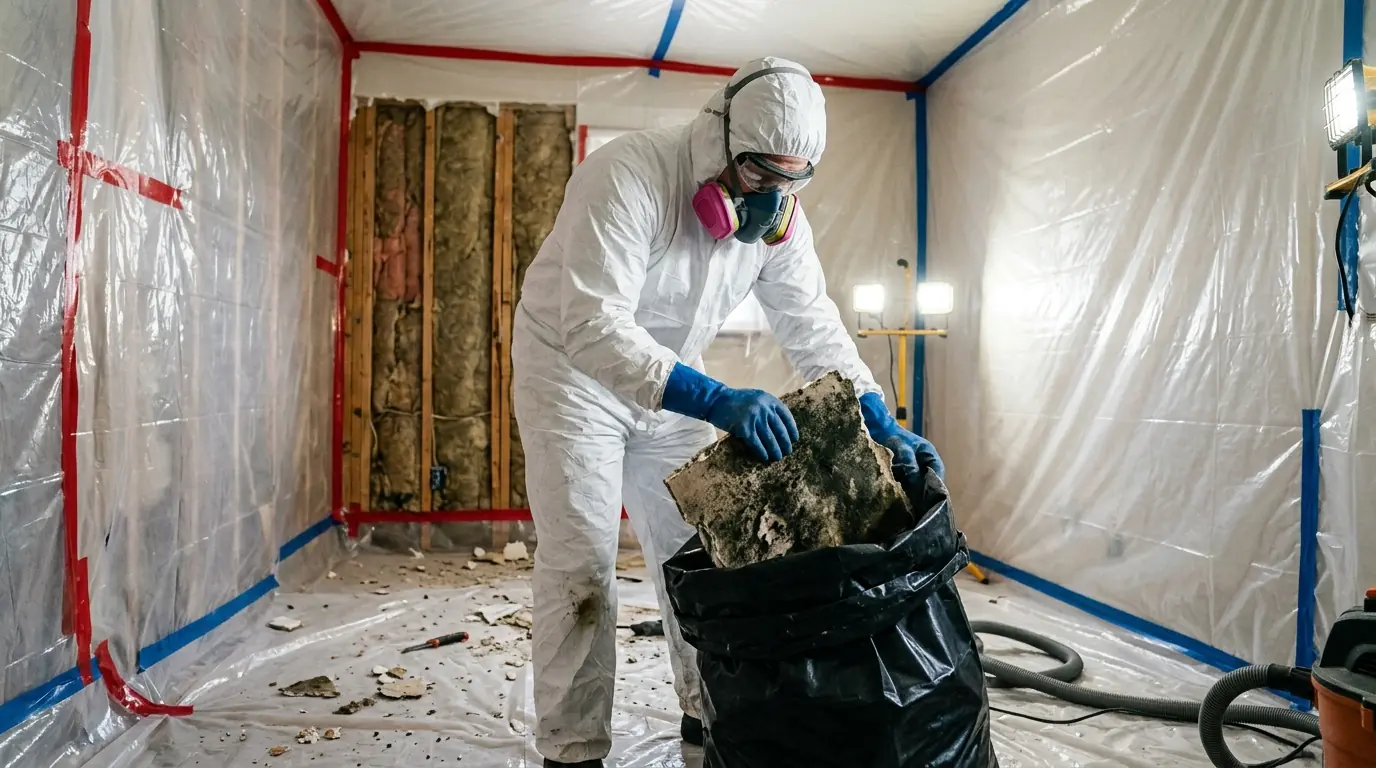
Stachybotrys and other long-term water molds are removed the same way as any other growth on porous material: contained, cut out, bagged and cleaned. What changes is caution. We keep the containment tighter, use more air filtration and bag materials inside the work area. Finding it also tells us the water has been present for a while, so we look harder for the source and carefully check neighboring walls and cavities before calling the scope final and starting the removal.
Containment and negative air
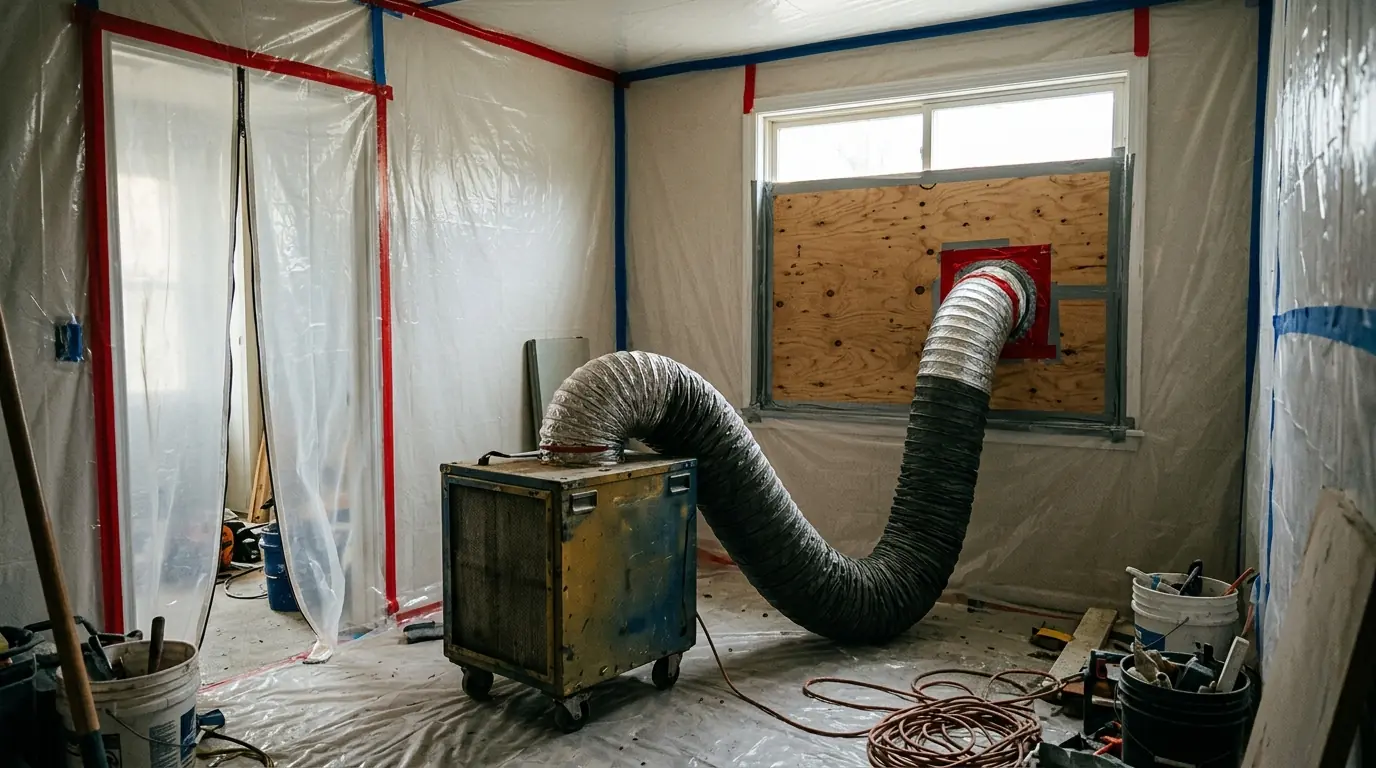
Plastic barriers seal the work area from floor to ceiling, with a zippered entry. An air scrubber with a HEPA filter pulls air out of the space and exhausts it outside or through filtration, so air flows into the work area rather than out of it. HVAC registers inside are sealed. The size of the containment matches the job: a small wall section gets a small enclosure, and a whole basement gets its own contained zone with more than one air scrubber.
HEPA cleanup
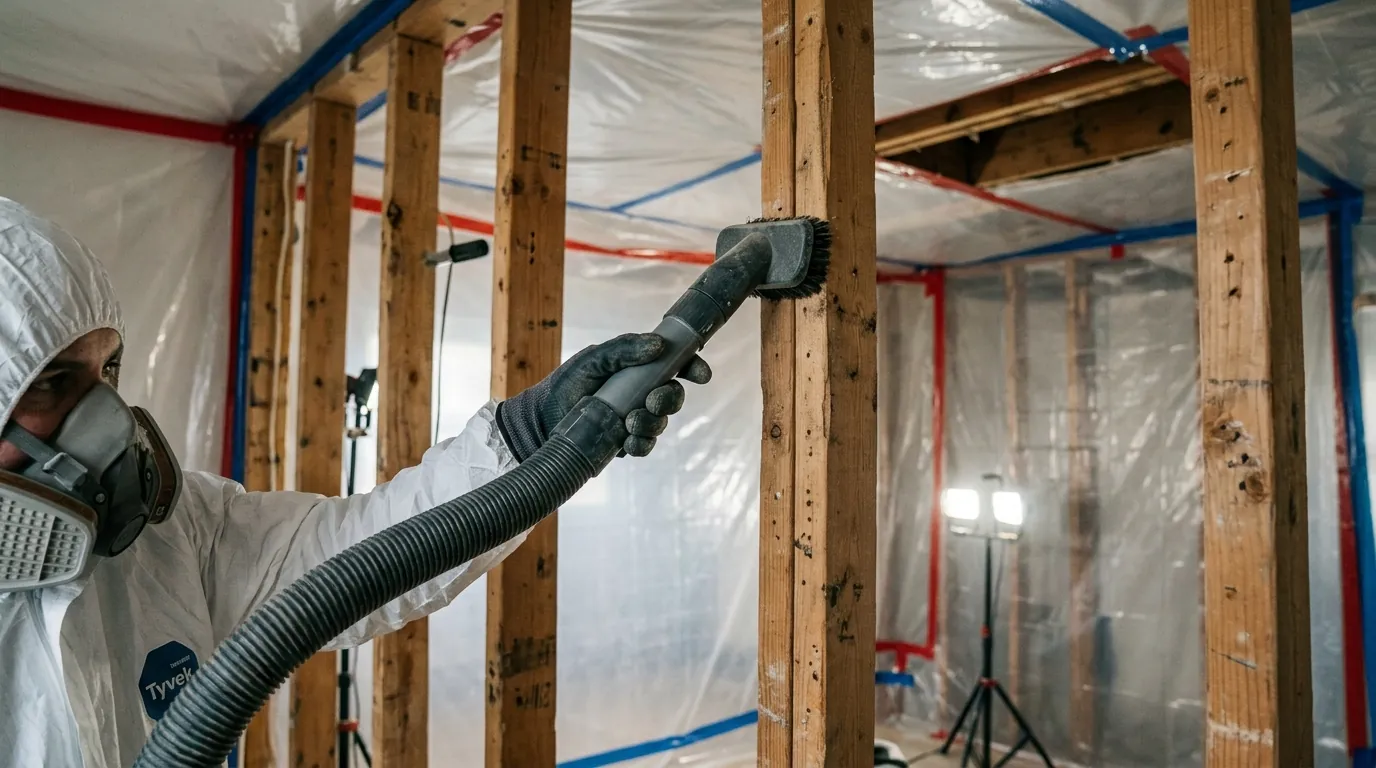
After removal, every surface in the work area is HEPA vacuumed, from the top of the framing down, then wiped with a damp cloth and cleaner, then vacuumed again. Stained wood that is structurally sound is sanded or wire-brushed and cleaned. Debris is bagged inside the containment and carried out sealed. The goal is simple and checkable: no visible dust or growth anywhere inside the area when we are done, and nothing tracked into the rest of the house on shoes or tools.
Whole house remediation
Whole-house jobs follow floods, long vacancies and major leaks. We divide the house into zones and remediate them in an order that keeps clean areas clean, usually top to bottom and back to front. Contents are sorted and cleaned or removed first. Each zone is dried and cleared before the next one opens. HVAC systems serving the house are cleaned last, once the rooms they serve are clean, so they do not recontaminate the finished zones once the system starts again.
How a remediation job runs
Inspect and scope
Extent, materials and water source.
Contain
Barriers, negative air, registers sealed.
Remove
Contaminated porous materials bagged out.
Clean
HEPA vacuum, wipe, vacuum again.
Dry
Until the meter reads normal.
Clear
Visual check and testing.
Fix the cause
Source repaired before rebuild.
What every remediation job includes
- Containment sized to the work area
- Negative air with HEPA filtration
- HVAC registers sealed inside the zone
- Removal of contaminated porous materials
- HEPA vacuuming and wiping of all surfaces
- Drying to normal readings
- Clearance before containment comes down
River flooding and remediation in North Jersey
The 82 square mile Rahway River basin reaches across Union, Essex and Middlesex counties, and when Ida came through, an apartment complex on the Raritan River in Piscataway flooded too. Jobs after river flooding in Middlesex County and the Rahway basin are usually larger than they look, because water sat in wall cavities and under floors. We size containment and removal to the wet readings, not to the visible spots.
Signs you need remediation, not cleaning
Growth larger than a small patch
Needs containment, not a spray bottle.
Spots inside drywall or paper
The material has to come out.
Mold after a flood or leak
Wet materials need removal and drying.
A smell that survives cleaning
Growth is somewhere you cannot reach.
Mold that keeps returning
The moisture source is still active.
Mold remediation questions
A single room is often a day or two plus drying. Larger jobs are scheduled in zones.
Usually yes, since containment keeps the work area sealed. We say if it cannot be.
We handle removal, cleaning and drying. Rebuild follows clearance, by us or your contractor.
The process is the same, with tighter containment and extra care. The source is investigated harder.
Not if the moisture source is fixed. That is why the cause is part of every scope.