Updated September 2026
Sewage backup cleanup in Newark, NJ treats the water as Category 3: we extract it, bag and remove carpet, pad, drywall and insulation it reached, disinfect hard surfaces, and dry the space with meters to confirm. HomeGuide puts professional sewage cleanup at $7 to $15 or more per square foot, depending on the area and depth.
Why sewage is not treated like other water
Sewage carries bacteria and viruses, and anything porous it soaks into cannot be reliably cleaned. That is why carpet, pad, the bottom of the drywall and wet insulation come out, bagged inside the work area, while concrete, tile and sealed framing are cleaned and disinfected.
We wear full protective gear, keep the area closed off from the living space, and document every material removed. If the backup keeps happening, the report points to the likely cause so a plumber can fix the line.
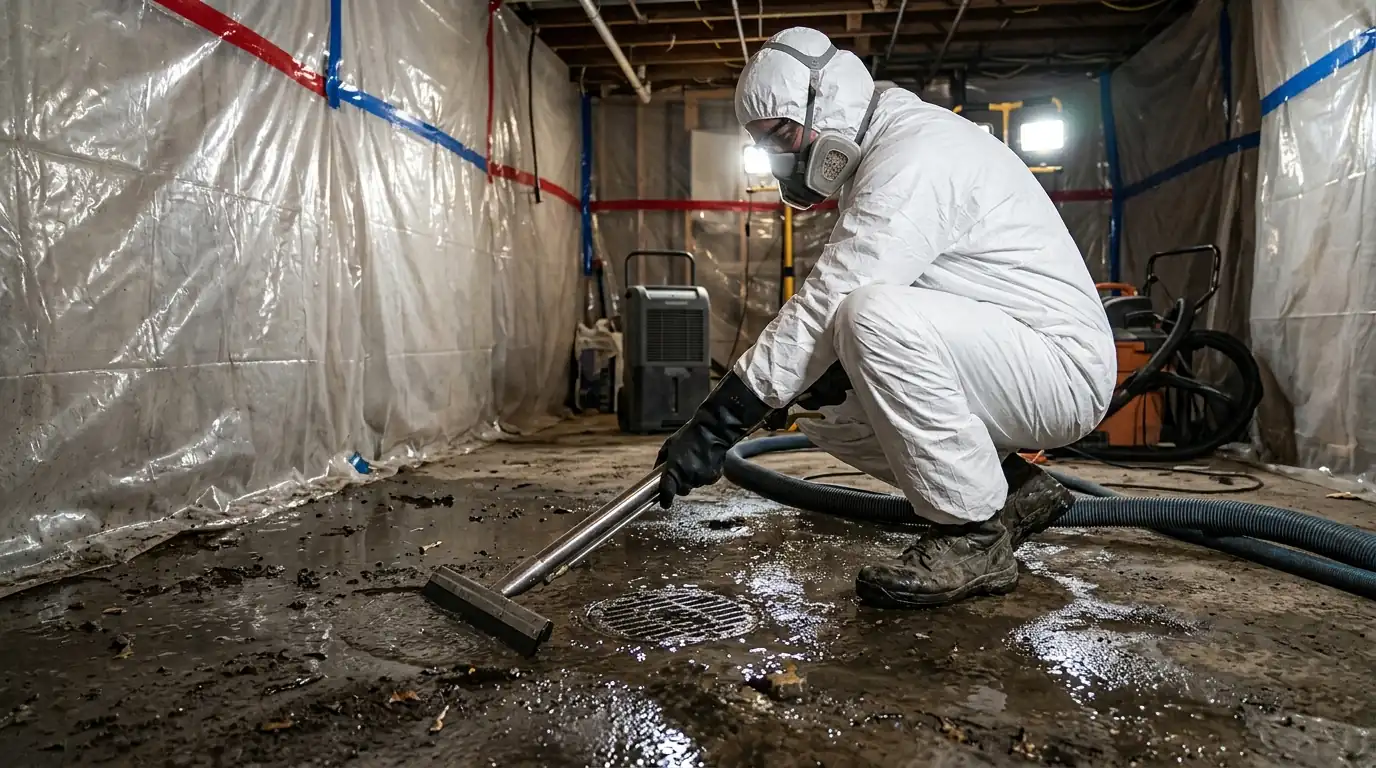
How a sewage cleanup runs
Call any hour
We tell you what to shut off and avoid.
Seal the area
Plastic barriers and protective gear on.
Extract
Water and solids removed first.
Remove porous materials
Carpet, pad and lower drywall bagged.
Disinfect
Every surface the water touched.
Dry and monitor
Air movers and dehumidifiers, readings logged.
Document
Photos and removed-material list for the claim.
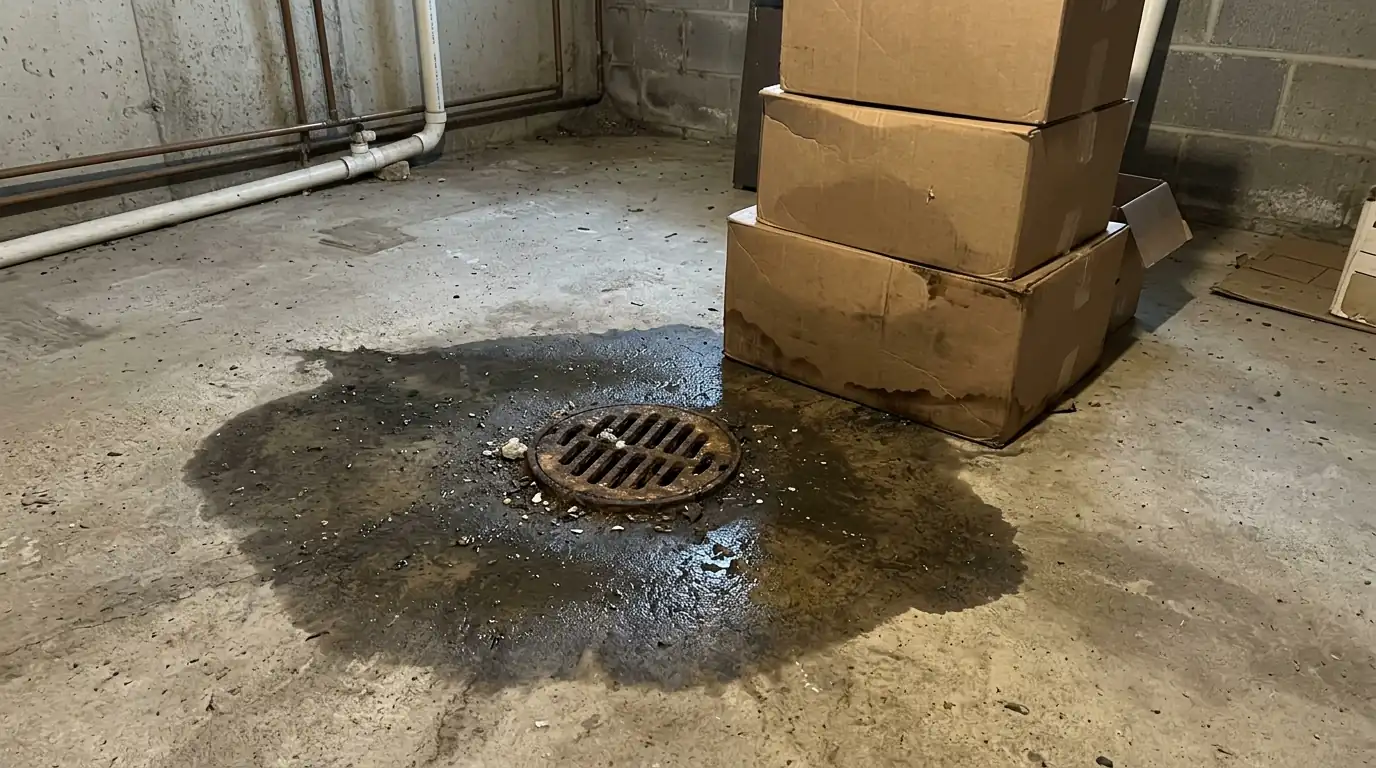
Floor drain backups
The most common call is water coming up through the basement floor drain. It spreads across the slab and soaks whatever sits on it: carpet, pad, stored boxes and the bottom of paneling. We extract the water, remove porous materials to a clear line above the wet mark, then clean and disinfect the slab and the lower walls. Before we leave, we check the drain area and note whether a backwater valve is present, because that single fitting is what most often stops a repeat.
Toilet and tub backups
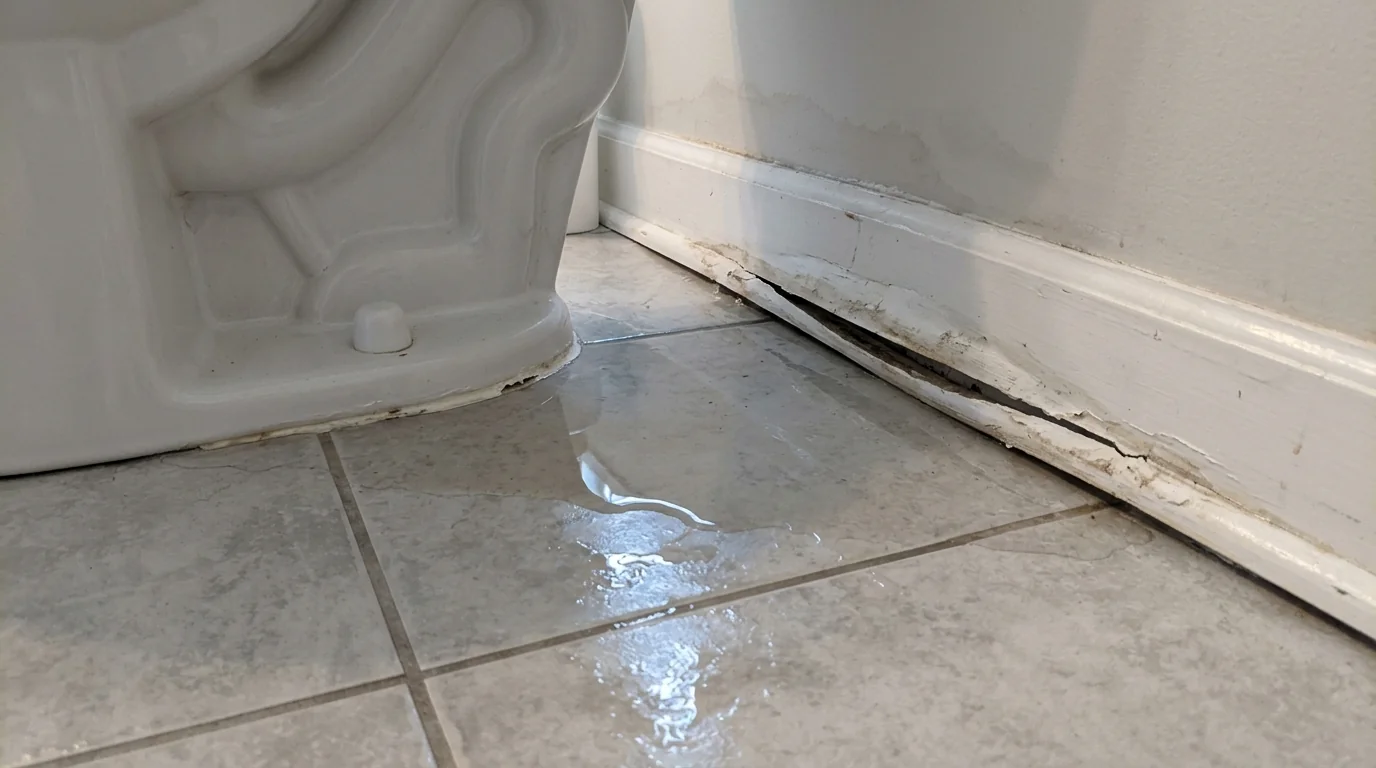
When a main line clogs, the lowest fixture in the house overflows first, often a basement toilet or a first floor tub. The water runs under vanities, into the subfloor and down through the ceiling below. We extract, pull the baseboard and the lower drywall, check the subfloor and the ceiling underneath, and disinfect every surface the water touched. Cabinets with particleboard bottoms usually come out; solid wood can often be cleaned, disinfected and dried in place. We also check the wax ring and flange once the area is clean.
Backups during heavy rain
Backups that only happen in hard storms point to the sewer system rather than a clog in your line. Rainwater fills the same pipes that carry sewage, pressure builds, and the lowest opening in the building becomes the relief point. The cleanup is identical to any other Category 3 job. What changes is the fix: a backwater valve or a standpipe on the floor drain is usually the answer, and we note which in the report so you can arrange it with a plumber.
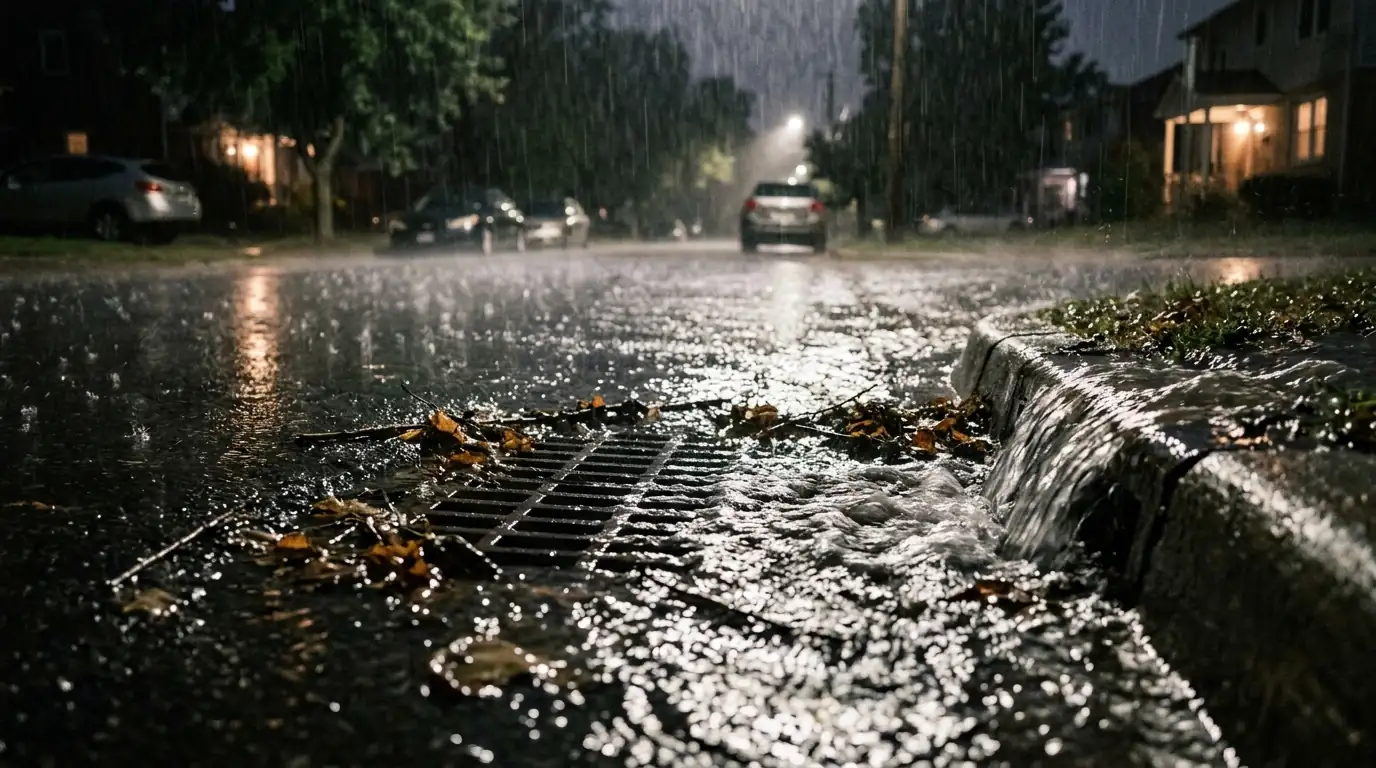
Combined sewers and Newark basements
About 11 square miles of Newark are served by a combined sewer that carries stormwater and sewage in the same pipe, and the Passaic Valley Sewerage Commission system that treats it serves about 1.4 million residents in 48 towns. In a hard Newark storm, those shared pipes fill, and a basement floor drain can become the overflow point. When a backup happens during rain, we treat it as a sewer-side event and recommend a backwater valve before the next storm.
What a sewage cleanup covers
- Extraction of standing water and solids
- Removal of carpet, pad and wet drywall to a clear line
- Wet insulation bagged and removed
- Cleaning and disinfection of hard surfaces
- Air scrubbers running during the work
- Drying equipment with daily readings
- Photos and a list of removed materials for your claim
What to do before we arrive, and what not to
Your part is keeping people and pets out and stopping more water. The cleanup itself needs protective gear.
Do this now
- Stop using sinks, toilets and the washer
- Keep children and pets out of the area
- Turn off power to the basement if water is near outlets
Leave to us
- Walking through or mopping sewage
- Moving soaked carpet or boxes
- Using bleach and fans before extraction
What decides the cost of sewage cleanup
HomeGuide puts professional sewage cleanup at $7 to $15 or more per square foot. These factors move your total:
- Affected areaSquare footage sets extraction and disinfection time.
- Depth and spreadWater that reached walls means more removal.
- Finished spaceDrywall, carpet and trim add tear-out and disposal.
- Time since backupLonger exposure means more material comes out.
- Ceiling belowUpper floor backups can damage the room underneath.
- ContentsStored items touched by sewage are sorted and bagged.
Planning ranges, not a quote. Sources: homeguide.com.
Sewage backup questions
Both are Category 3, but sewage carries more pathogens, so disinfection and porous material removal are stricter.
Small, clean-water spills, maybe. Sewage needs protective gear, extraction and disinfection, so we advise against it.
We note the likely cause, often a missing backwater valve, so a plumber can fix it.
Usually not, if the area can be sealed off. We will say if it cannot.
It depends on your policy's sewer backup coverage. Our photos and removed-material list support the claim either way.