Updated September 2026
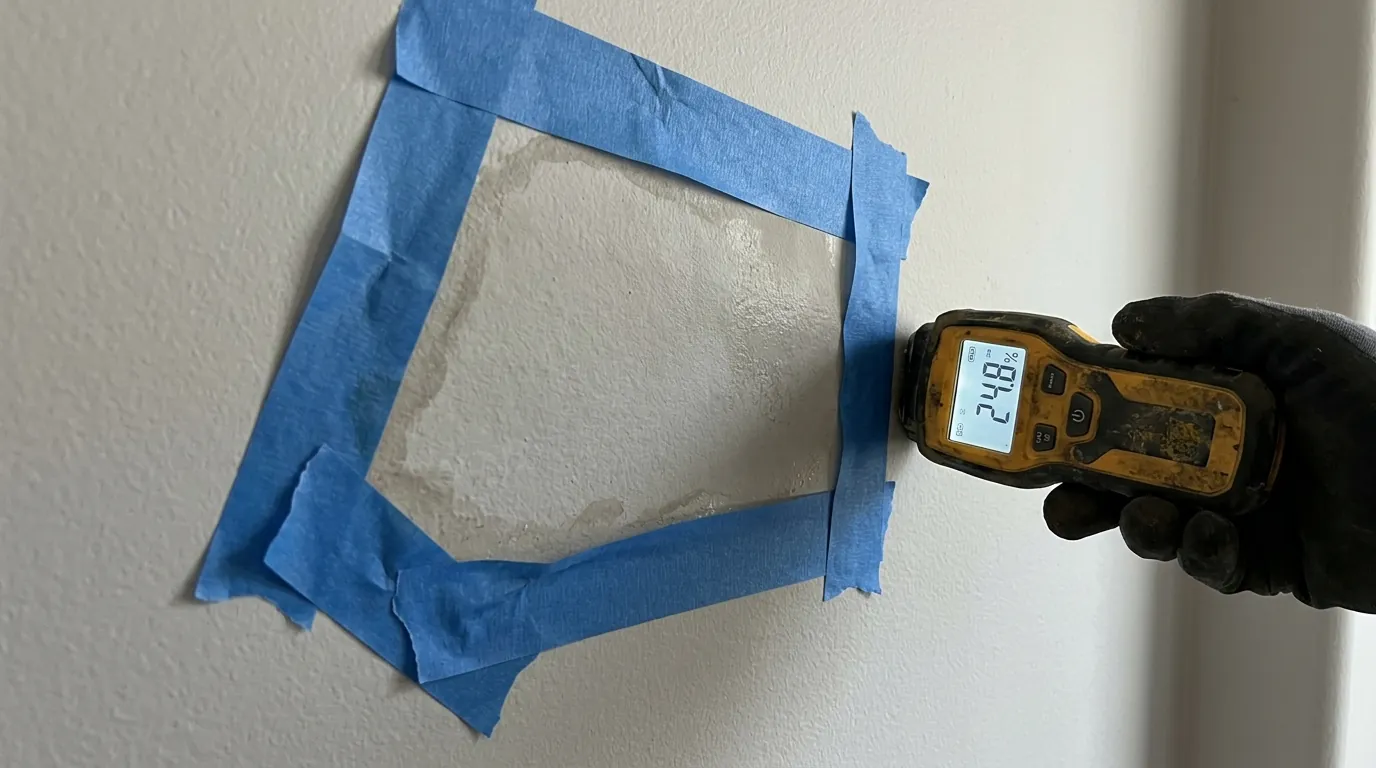
A thermal imaging moisture inspection in Newark, NJ scans walls, ceilings and floors for cool patches that often mean evaporating water, then confirms each one with a moisture meter before anything is called wet. The result is a map of wet areas with images and readings, usually without cutting a single hole.
What a thermal camera can and cannot tell you
Thermal cameras read surface temperature, not moisture. Wet materials usually read cooler because water evaporates, so a thermal image points us to likely trouble. But cold spots also come from missing insulation, air leaks and drafts, which is why every suspicious patch gets a meter reading before it goes in the report.
Scanning is most useful when there is a temperature difference between inside and outside, so we time visits for it where we can.
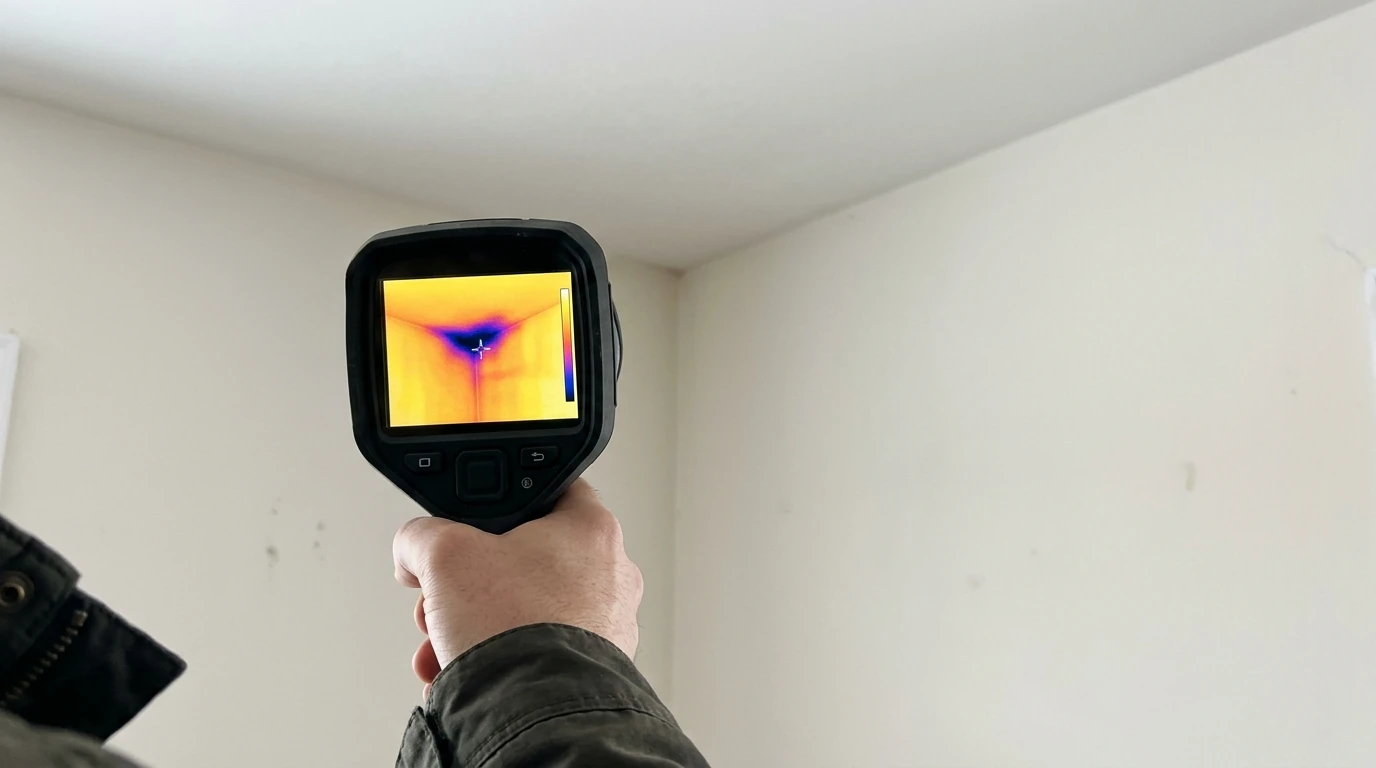
What you get from a thermal scan
- Thermal images of each area checked, labeled by room
- Meter readings confirming wet or dry at each finding
- Marked boundaries of wet areas
- Likely source for each finding
- Notes where cold spots are insulation, not water
- What should be opened and what can stay closed
- Suggested next step for each area
How the scan runs
Book with timing in mind
Cool mornings or evenings give clearer images.
Walk the problem area
You show us what you noticed.
Scan outward
Walls, ceilings and floors around it.
Confirm with meters
Every cool patch gets a reading.
Mark the boundaries
Edges of wet areas photographed.
Separate causes
Leak, condensation or missing insulation.
Report
Images, readings and next steps.
Moisture mapping
Mapping means marking the edges of a wet area, not just finding its center. We scan outward from the problem, confirm readings at the edge with a meter, and mark the boundary on photos. That map decides how much drywall or flooring has to come out and how big the drying setup needs to be. It also gives you a before picture to compare against once the space is dry, so nobody has to guess whether the job actually worked.
Ceiling and roof leaks
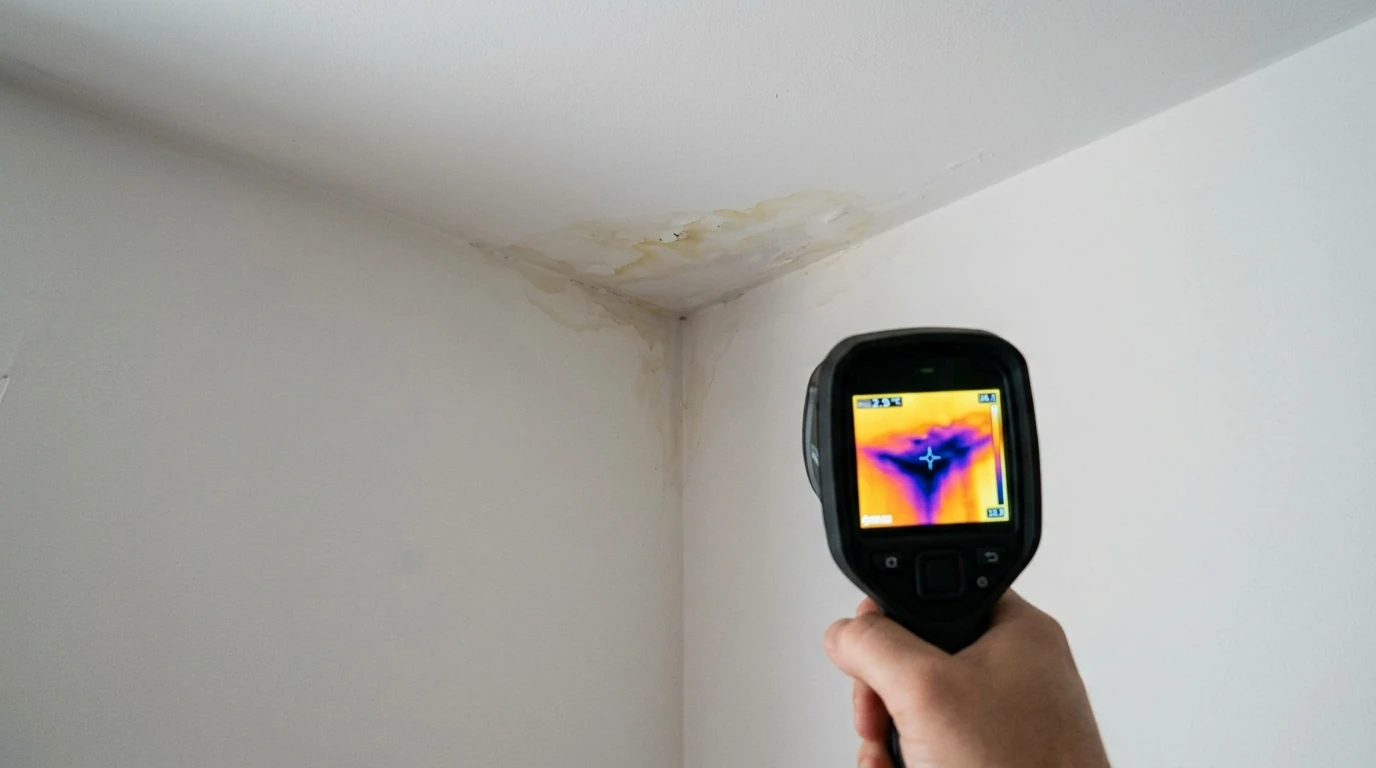
Roof and flashing leaks rarely drip where they enter. Water runs along the roof deck or a rafter and shows up as a stain somewhere else. Scanning the ceiling shows the full wet footprint, often larger than the stain, and scanning from the attic side can trace it back toward the entry point. We report where the water is and where it likely comes from, so a roofer is not left guessing, and so any attic mold is caught early.
Plumbing leaks inside walls
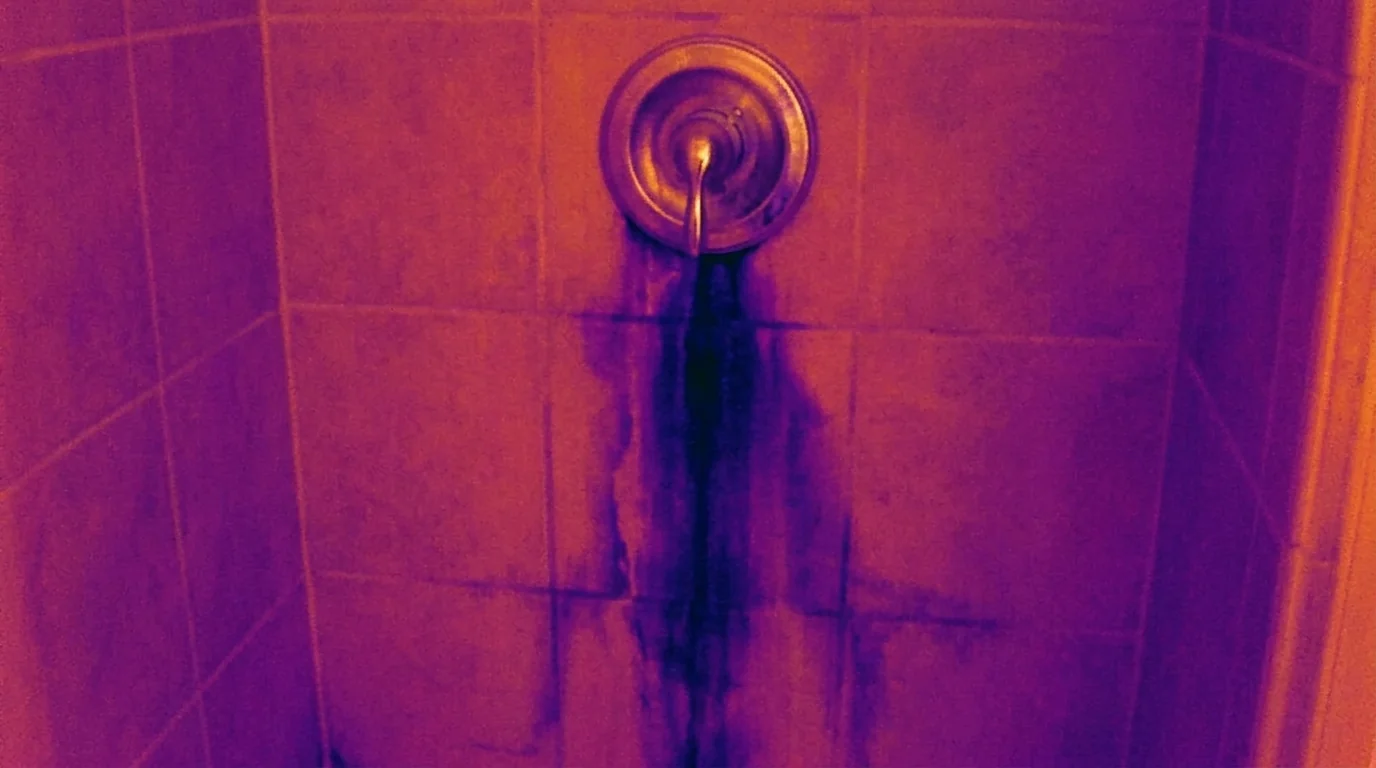
Slow supply and drain leaks show up as a cool band running down from a fixture or along a pipe path. We scan the walls behind bathrooms and kitchens, the ceiling under upstairs bathrooms and the floor near the water heater, then confirm with meters. A leak found this way costs far less to open and repair than one found after the floor has buckled or the drywall has turned soft and started to grow mold behind the tile or the cabinet.
Condensation on exterior walls
Some cool patches are not leaks at all. Corners and exterior walls with missing or settled insulation get cold in winter, and indoor moisture condenses on them. On a scan they look like a leak, but the meter reads dry most of the day and damp after a cold night. The fix is insulation, air sealing or better ventilation rather than a plumber, and knowing which one you have saves money, time and a wall torn open for no reason at all.
What goes into the cost of a thermal scan
Thermal scanning is usually priced as part of an inspection, which HomeGuide puts at about $300 to $650 for an average home. What changes the scope:
- Area scannedOne ceiling is quicker than a whole house.
- AccessFurniture and storage against walls slow scanning.
- Temperature differenceMild days may need a second visit.
- Attic accessScanning from the attic side adds time.
- Confirmation readingsEach cool patch needs a meter check.
- Report detailMarked maps take longer to prepare.
Planning ranges, not a quote. Sources: homeguide.com.
Cold Newark winters on thermal images
NWS normals for Newark put early December overnight lows at 33 to 35 F, and those cold nights are when thermal scans in Newark houses read most clearly, because warm indoor walls stand out sharply against cold ones. They are also when condensation on poorly insulated exterior walls shows up. In older Newark homes, we expect some winter cold spots to be insulation gaps rather than leaks, and the meter tells us which.
Phone thermal cameras versus a full scan
Phone-mounted thermal cameras are handy for spotting drafts. They are easy to misread on moisture.
A phone camera helps with
- Finding drafty windows and outlets
- Spotting a warm or cold pipe run
- Showing us a spot before we arrive
A full scan adds
- Meter confirmation of every cool patch
- Mapped boundaries of wet areas
- Telling missing insulation apart from water
Thermal imaging questions
No. It sees temperature. Cool damp areas are where mold is likely, and meters confirm the moisture.
No. It is a camera. Nothing is opened unless you agree after seeing the results.
When inside and outside temperatures differ, such as winter or cool mornings.
Often yes, as a cool band from a fixture or pipe. A meter confirms it.
Yes, it is part of our mold inspections wherever it helps.