Updated September 2026
Kitchen mold removal in Newark, NJ opens up the areas behind sink bases, dishwashers and refrigerators, removes wet drywall, flooring or particleboard cabinet parts, cleans and dries the framing and subfloor, and saves solid cabinets where possible. HomeGuide puts mold remediation at about $15 to $30 per square foot of affected area.
Why kitchen mold is usually a leak problem
Kitchens have more water connections than any room except the bathroom, and most of them sit behind cabinets or appliances. A drip at a supply valve, a loose dishwasher drain or a pinhole in an ice maker line can run for months, soaking the cabinet floor, the wall and the subfloor.
We find the wet area with meters, open only what is needed, and work to keep the kitchen usable. Cabinets are pulled carefully so the solid ones can go back.
What decides the cost of kitchen mold removal
HomeGuide puts mold remediation at about $15 to $30 per square foot of affected area. For kitchens, these decide the total:
- Affected areaOne sink base versus a whole cabinet run.
- Cabinet removalPulling and resetting boxes takes time.
- Appliance movesRefrigerators and dishwashers pulled out.
- FlooringWet flooring under cabinets is removed.
- ContainmentNeeded whenever walls are opened.
- Leak repairPlumber or appliance repair noted separately.
Planning ranges, not a quote. Sources: homeguide.com.
Save the cabinet or replace it
The cabinet material decides it more than the size of the spot.
| Usually saved | Usually replaced | |
|---|---|---|
| Cabinet box | Solid wood or plywood | Swollen particleboard |
| Cabinet floor | Plywood that dried flat | Particleboard that swelled |
| Wall behind | Drywall with surface spots only | Soft or stained-through drywall |
| Flooring | Sealed tile that dried | Laminate or vinyl with water under it |
Under the sink
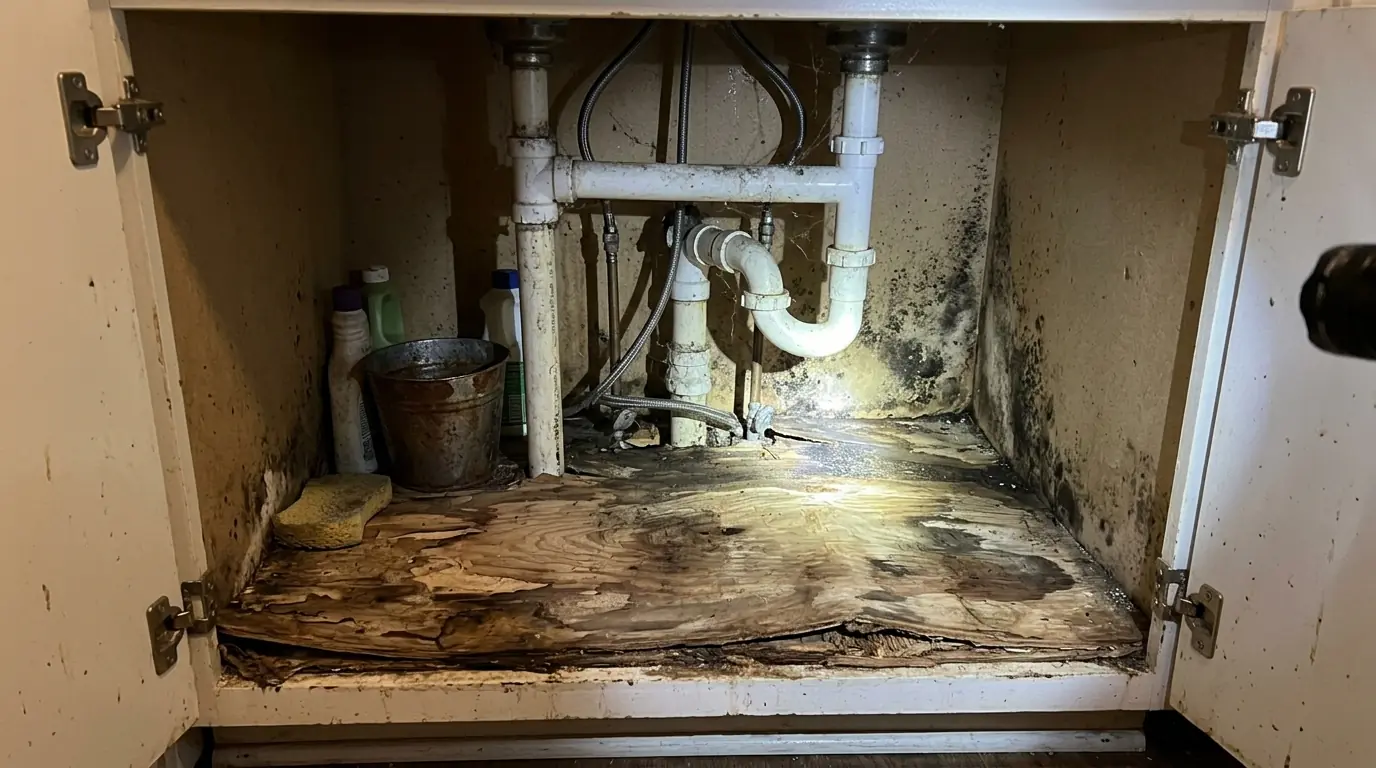
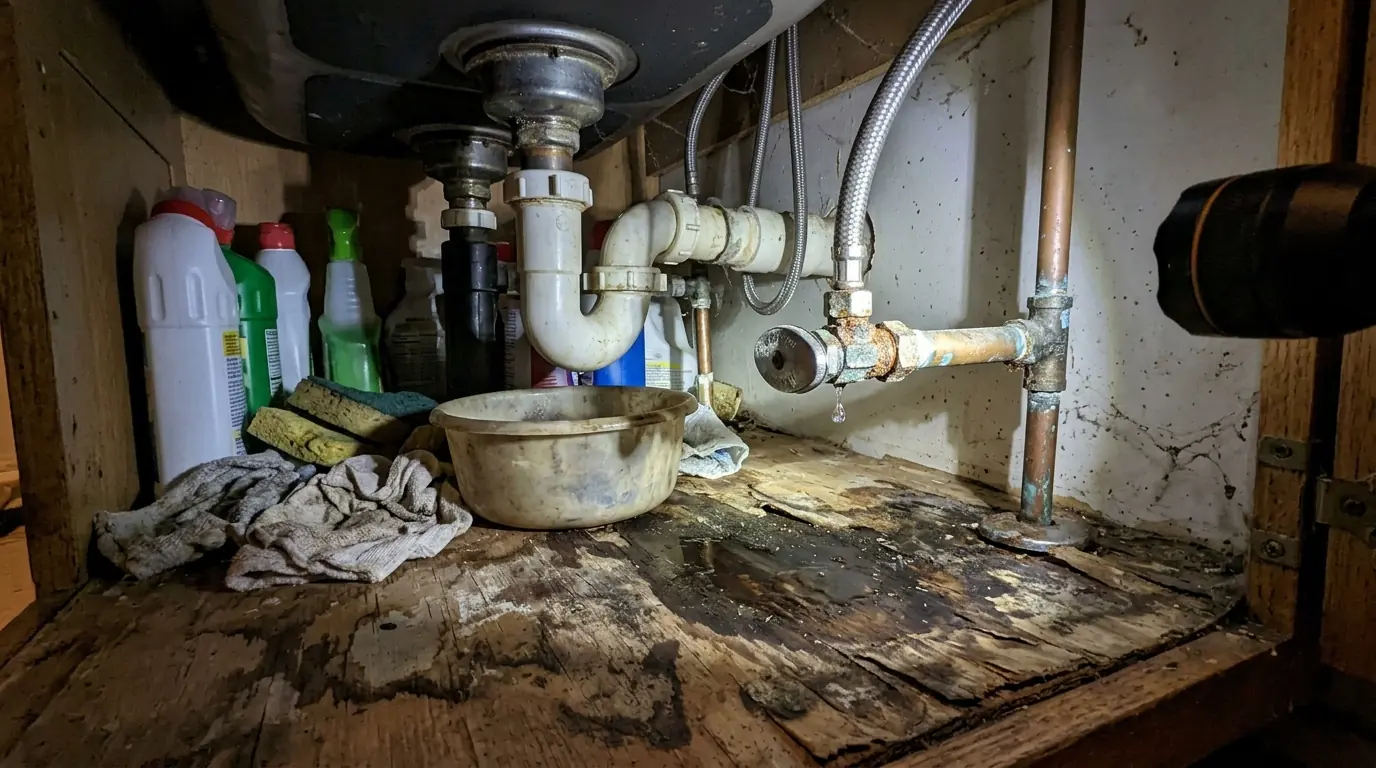
The sink base takes water from supply valves, the faucet body, the drain and the garbage disposal. The cabinet floor swells, the back wall darkens and the smell comes out when you open the doors. We remove the stored items, read the cabinet floor and wall, and open the back panel if the wall is wet. Particleboard floors are cut out and replaced with a moisture-resistant panel; the wall behind is dried and cleaned before anything goes back under the sink.
Dishwasher leaks
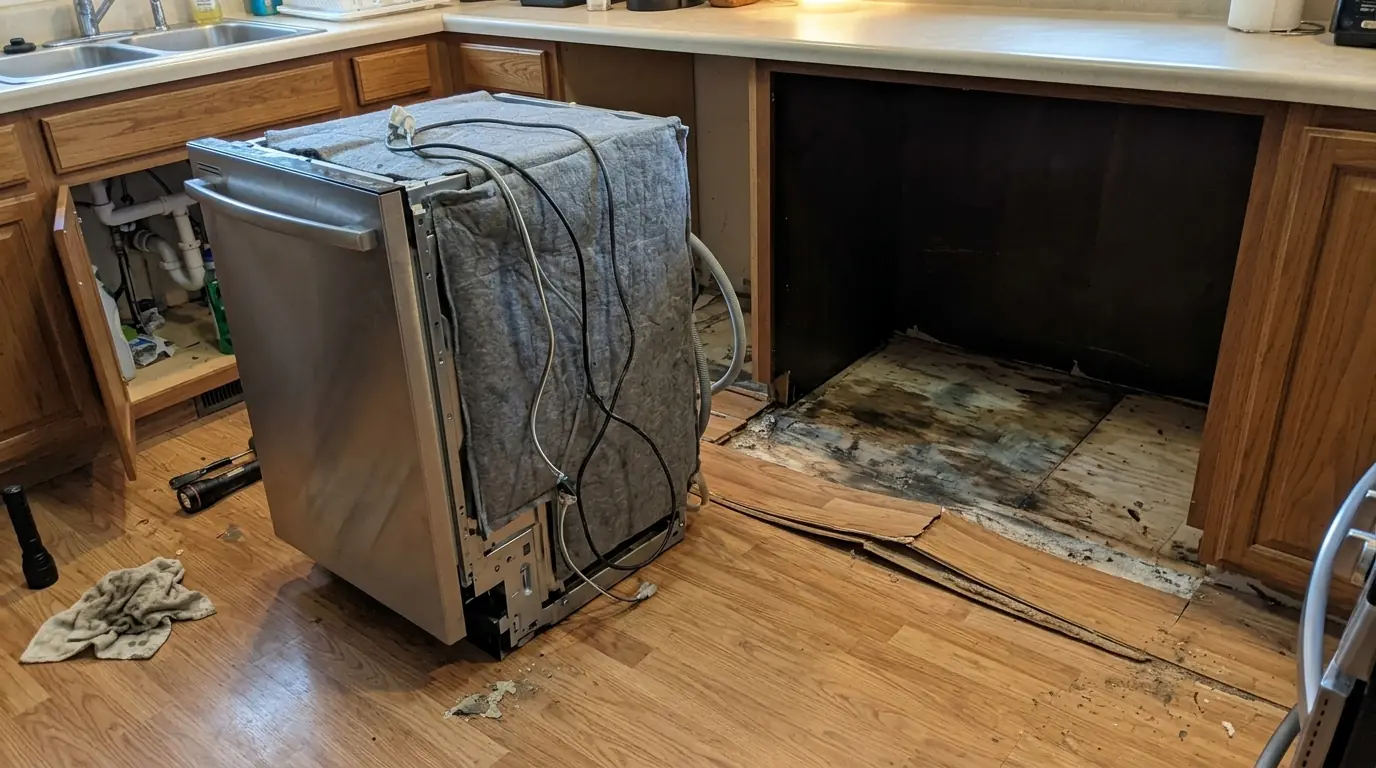
Dishwashers leak from the door seal, the drain hose connection or the inlet valve, and the water runs under the unit into the subfloor and the cabinet beside it. The first sign is often a soft floor or lifted flooring in front of the machine. We pull the dishwasher, check the subfloor and the neighboring cabinet side, remove the wet flooring and dry the subfloor. The leak itself is noted for an appliance repair or plumber before the dishwasher goes back in.
Refrigerator ice line
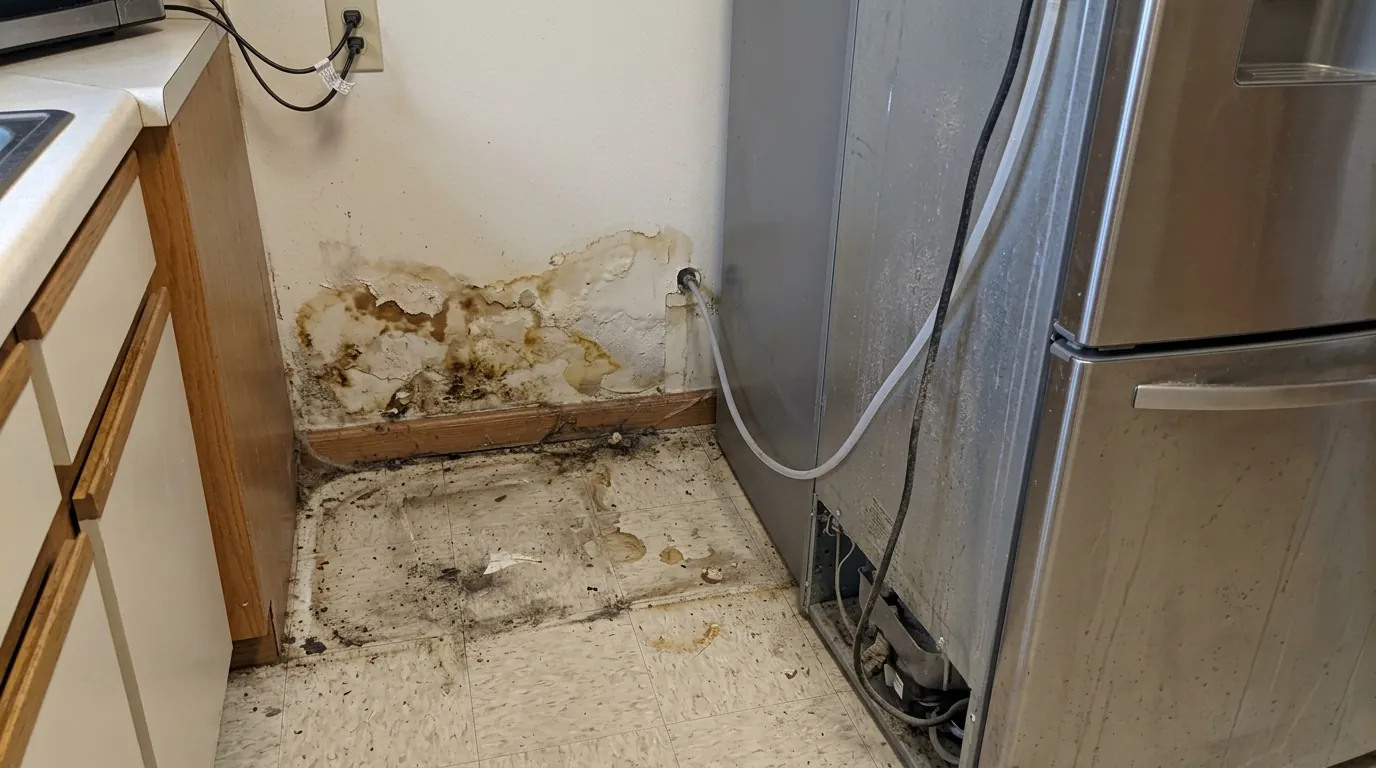
Ice maker and water dispenser lines are thin, and a pinhole or loose fitting drips slowly behind the refrigerator where nobody looks. By the time anyone notices, the wall behind is stained and the floor under the fridge is soft. We pull the refrigerator, read the wall and floor, remove wet drywall and flooring, and dry the area. Replacing a plastic line with a braided one is a cheap fix we always recommend while the fridge is out of its space.
Cabinet backs and toe kicks
Leaks spread along the floor under the whole run of cabinets, hidden by the toe kicks. Mold grows on the cabinet backs, the bottom of the drywall and the subfloor. We remove toe kicks and read along the run, then decide whether cabinets need to come off the wall. Solid wood boxes usually clean well; particleboard that swelled does not recover. The countertop can often stay in place while the lower boxes are handled one at a time underneath it.
How a kitchen job runs
Find the wet area
Meters on cabinets, walls and floors.
Empty and protect
Cabinets emptied, counters protected.
Contain if opening
Plastic and negative air for cut-outs.
Remove damaged parts
Cabinet floors, drywall and flooring.
Clean and dry
HEPA cleaning, dehumidifier until dry.
Note the leak
Valve, line or drain for repair.
Reset
Solid cabinets back, ready for repairs.
Kitchens in older Newark buildings
Kitchens in older homes and apartment buildings are often updated piece by piece, with a new dishwasher or refrigerator connected to an old shutoff valve or drain. Those connection points are where most of the kitchen leaks we find start. When we open a kitchen in Newark, we check the shutoff valves and supply lines along with the mold, because replacing a corroded valve while the cabinet is empty costs little and heads off the next leak.
Signs a leak has been feeding mold
Musty smell when opening the sink cabinet
A slow leak is feeding growth.
Swollen cabinet floor
Particleboard has absorbed water.
Soft floor by the dishwasher
The subfloor is wet.
Stain low on the wall behind the fridge
The ice line is leaking.
Lifted flooring at the cabinet base
Water is running under the run.
Kitchen mold questions
Usually yes, with one area closed off while we work.
Solid wood cabinets usually clean well. Swollen particleboard parts are replaced.
We find it and note it. Plumbing or appliance repairs go to a plumber or technician.
It depends on how long the leak ran. We go by meter readings.
A braided line is a cheap upgrade while the refrigerator is already pulled out.