Updated September 2026
A commercial mold inspection in Newark, NJ maps moisture and visible growth across occupied space, mechanical rooms and roof-to-wall joints, usually outside business hours. Samples are taken where an owner, insurer or tenant needs lab proof, and the report ranks areas by urgency so work can be phased without a full shutdown.
What changes when the building is a business
Commercial buildings share the same causes as houses, roof leaks, plumbing and condensation, but add rooftop units, long duct runs and people who cannot be sent home. A complaint from one office often traces back to a unit several rooms away.
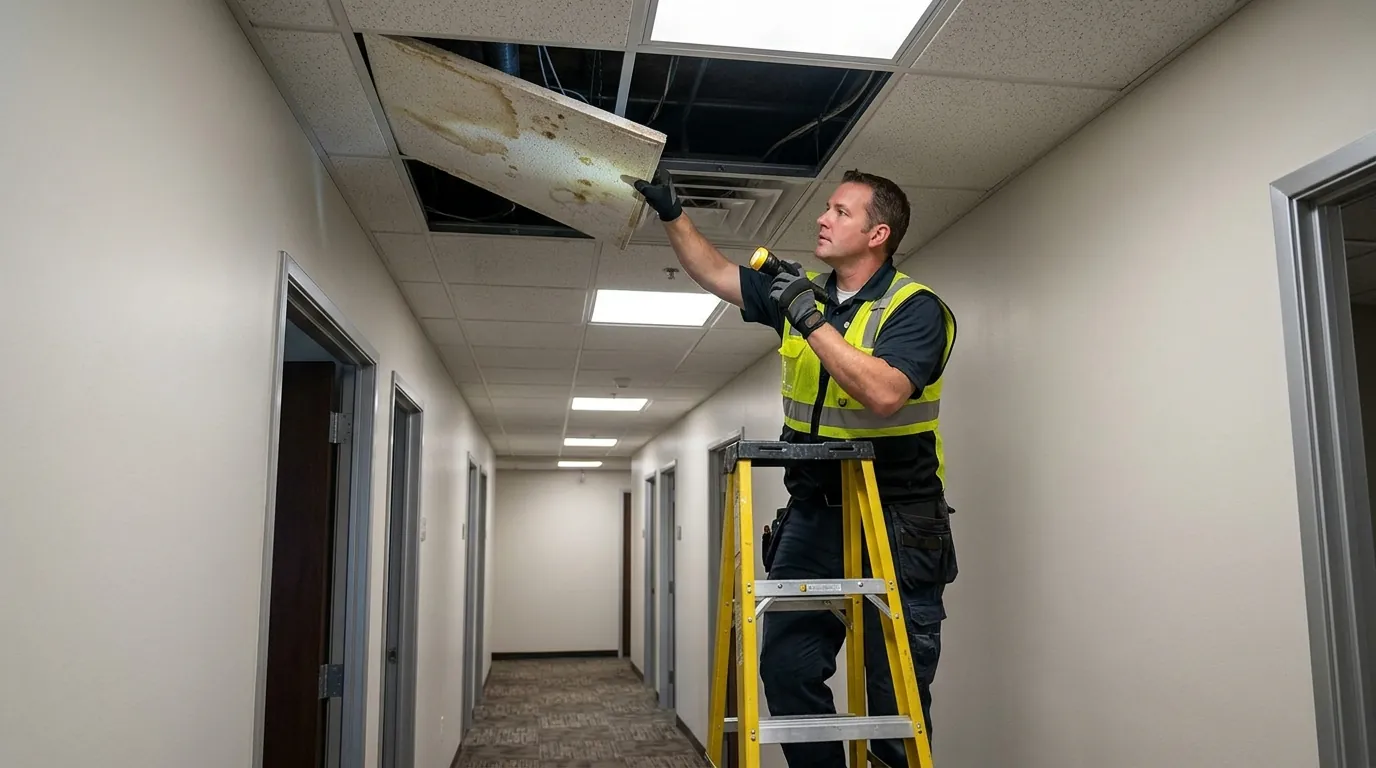
We inspect occupied space, ceilings above drop tiles, mechanical rooms and the exterior wall where water gets in. If the scope needs removal, commercial remediation is planned in phases around your schedule.
What sets the price of a commercial inspection
Angi puts residential mold inspections at about $303 to $1,045. Commercial work is quoted after a walkthrough because these factors vary widely:
- Floor areaLarge footprints take more readings and more time.
- OccupancyAfter-hours or phased visits change the schedule.
- Ceilings and roofsDrop ceilings and flat roofs add inspection points.
- Mechanical systemsRooftop units and air handlers are inspected separately.
- SamplesAir or surface samples add lab fees per sample.
- Report formatOwner, insurer and tenant versions can differ.
Planning ranges, not a quote. Sources: angi.com.
Offices and retail
In offices and shops the usual finds are stained ceiling tiles, damp carpet along exterior walls and growth on the back of drywall where a rooftop unit or roof drain has leaked. We lift tiles, read the walls at the floor line and check the supply diffusers. For multi-tenant buildings we note which suite each finding sits in, because the landlord and the tenant usually need to know who owns the fix, and the report should settle that before anyone argues about it.
Restaurants and food service
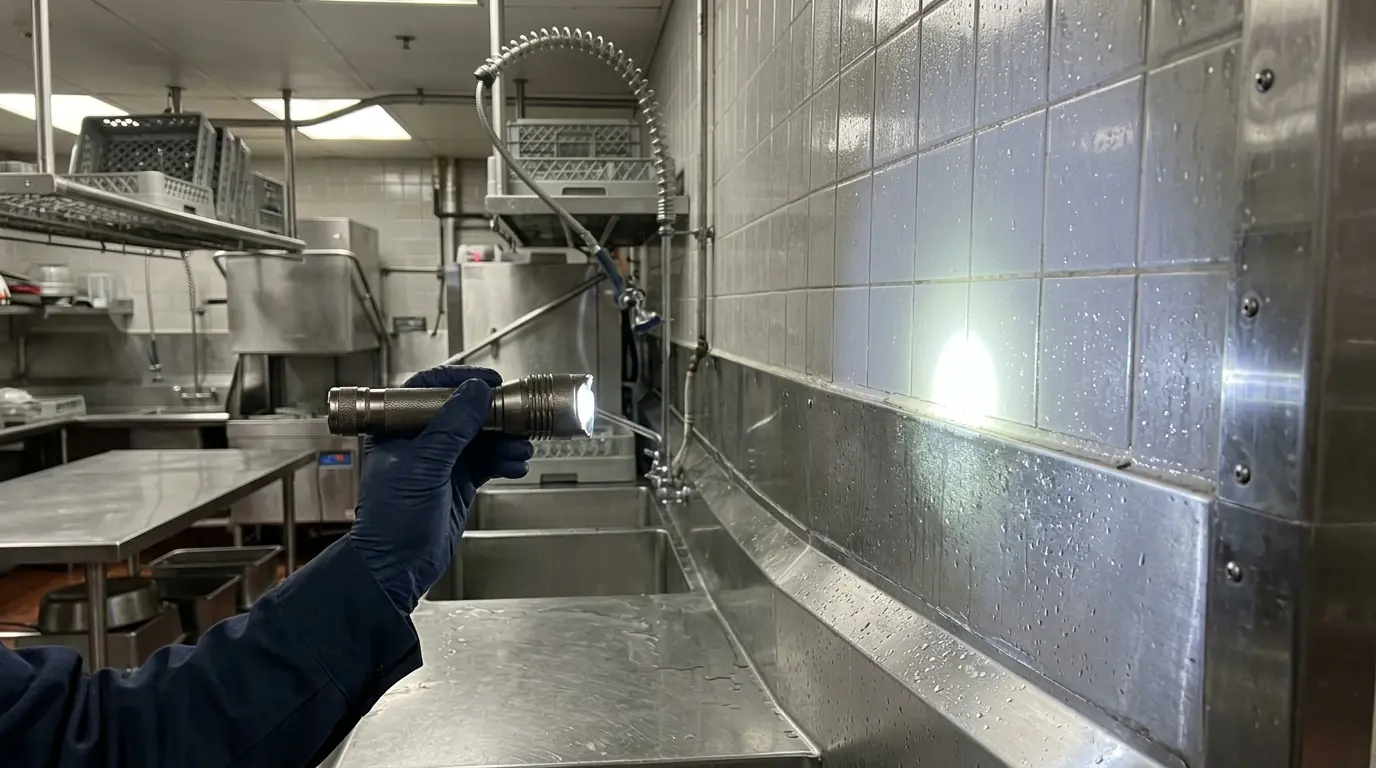
Kitchens run hot and wet all day. We check behind the line, around the dish machine, in walk-in cooler walls and under floor drains, where slow leaks rot the substrate below the tile. Ceiling areas above the hood and around the make-up air unit collect condensation too. We schedule these inspections before service or after close and keep our equipment out of the prep area. Findings are written so a health inspector, an owner and a landlord can all follow them.
Schools and daycare centers
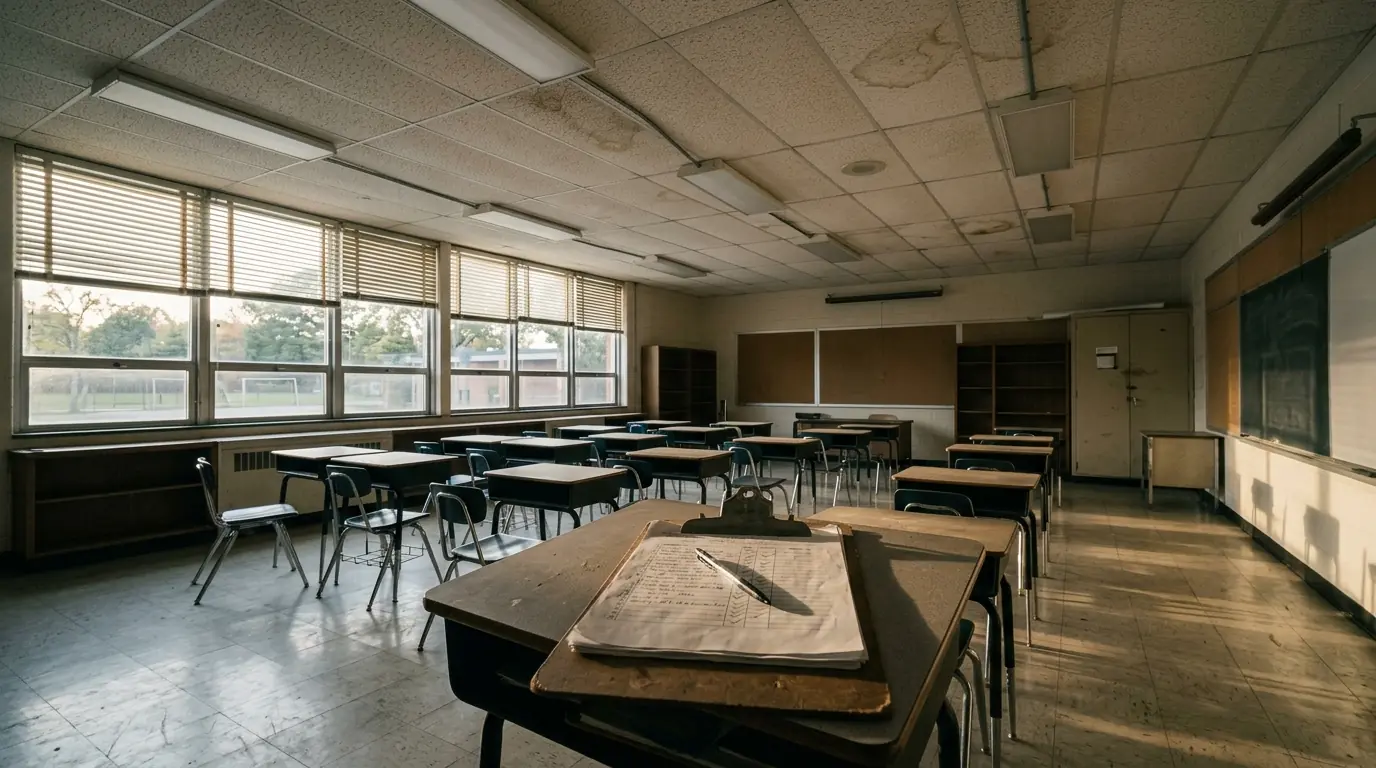
Schools and daycares need answers without alarming parents. We inspect classrooms, gyms and storage rooms after hours, pay close attention to crawl spaces and the ceilings under flat roofs, and write findings in plain language an administrator can share. Where air samples are needed, we compare indoor results with an outdoor control so the numbers mean something to the people reading them. We can also meet with staff or a parent group to walk through what the results do and do not show.
Warehouses and flex space
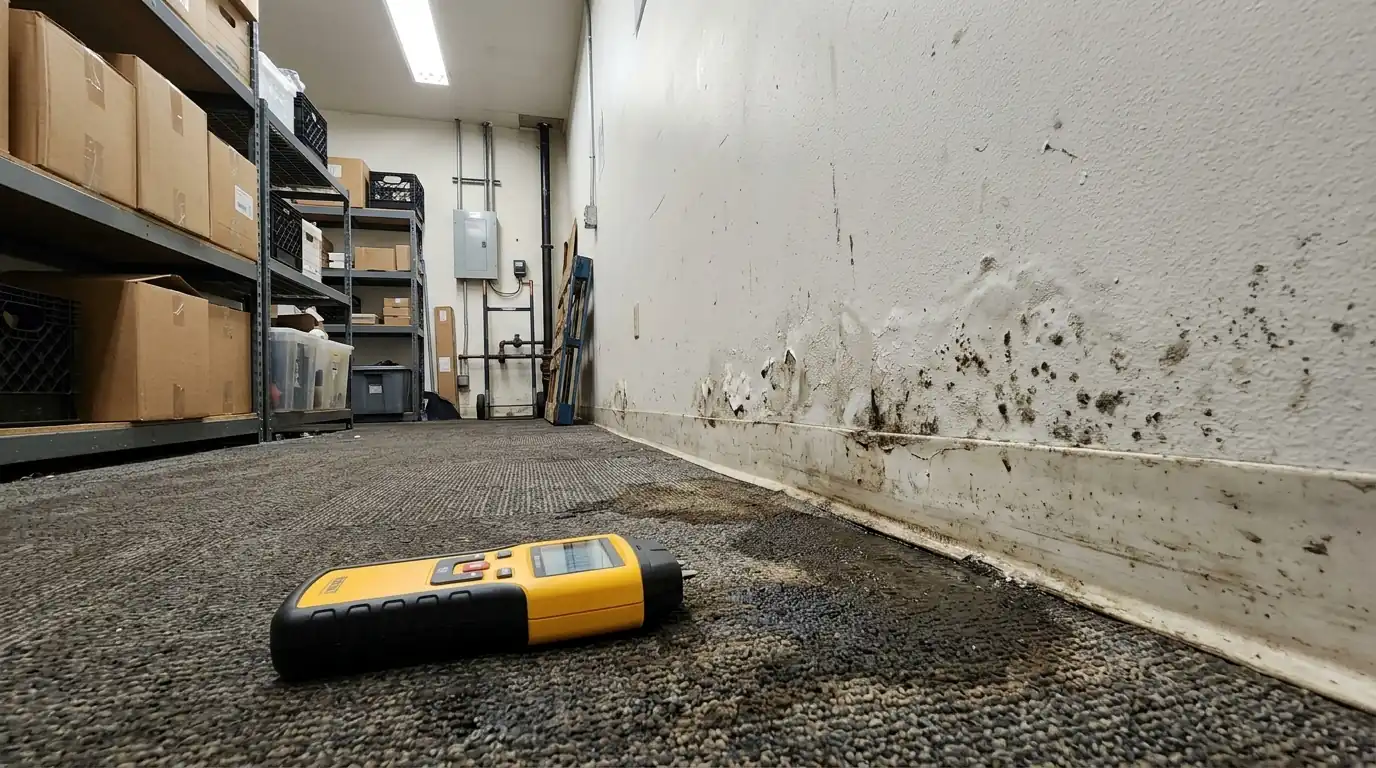
Warehouses rarely have a mold problem everywhere. They have one wall, one dock door or one roof drain that has leaked for years behind stored goods. We walk the perimeter, check the roof drains and the base of the walls, and look at stored cardboard and pallets, which grow mold quickly once wet. The report tells you which stock is affected and which is not, so you are not discarding more than you need to, and your insurer gets a clear list if a claim follows.
How we run a commercial inspection
Walkthrough call
We learn the building, hours and complaints.
Plan the visit
Before opening, after close or by floor.
Exterior and roof
Drains, flashing and wall base first.
Occupied space
Ceilings, walls at the floor line, diffusers.
Mechanical rooms
Units, coils, drain pans and duct access.
Samples if needed
Indoor results compared to an outdoor control.
Phased report
Findings ranked so work can be scheduled.
What the commercial report covers
- Findings mapped by floor, suite or room
- Photos and moisture readings for each area
- Lab results with outdoor comparison, when sampled
- The likely source for each finding
- Urgency ranking for phased work
- Notes on stored goods and contents affected
- A removal scope any contractor can price
Ground floors near the Passaic
Ironbound residents describe streets near the Passaic River where water pools against buildings after hard rain, and the storefronts and restaurants on those blocks share the same exposure. For Ironbound commercial spaces we pay extra attention to the base of front walls, basement storage rooms and any floor drain that has backed up, because a wet storeroom under a busy business can grow mold for months before anyone upstairs notices it.
How long it takes and when we can come
A small office or restaurant usually takes one visit before or after business hours. Larger buildings are done floor by floor over several visits so staff can keep working.
Lab results, when samples are taken, come back after the visit, and the written report follows them.
Commercial inspection questions
Yes. We work before opening, after closing or one floor at a time.
Yes. We note which suite each finding is in so responsibility is clear.
Yes, air handlers, coils and drain pans are part of it. A deeper HVAC inspection can be added.
Yes. We write it in plain language and can prepare a short summary version.
We can, phased around your hours, or you can hand the scope to another contractor.