Updated September 2026
A dehumidifier installation in Newark, NJ means sizing a basement, crawl space or whole house unit to the space, placing it where air moves, and draining it to a floor drain or condensate pump so it runs unattended. HomeGuide puts installed basement units at about $1,000 to $3,000, and whole house ducted units at $1,500 to $3,500.
Why a portable unit is usually not enough
Basement mold usually returns for one of two reasons: water getting in, or damp air condensing on cool surfaces. A dehumidifier solves the second. Small portable units from a hardware store fill up, shut off and sit full, which is why so many basements still smell after one is bought.
We measure the space and the humidity, pick a unit with the right capacity, and set it up to drain on its own. Where water is also coming in, we say so, because no dehumidifier keeps up with a leak.
What changes the installed price
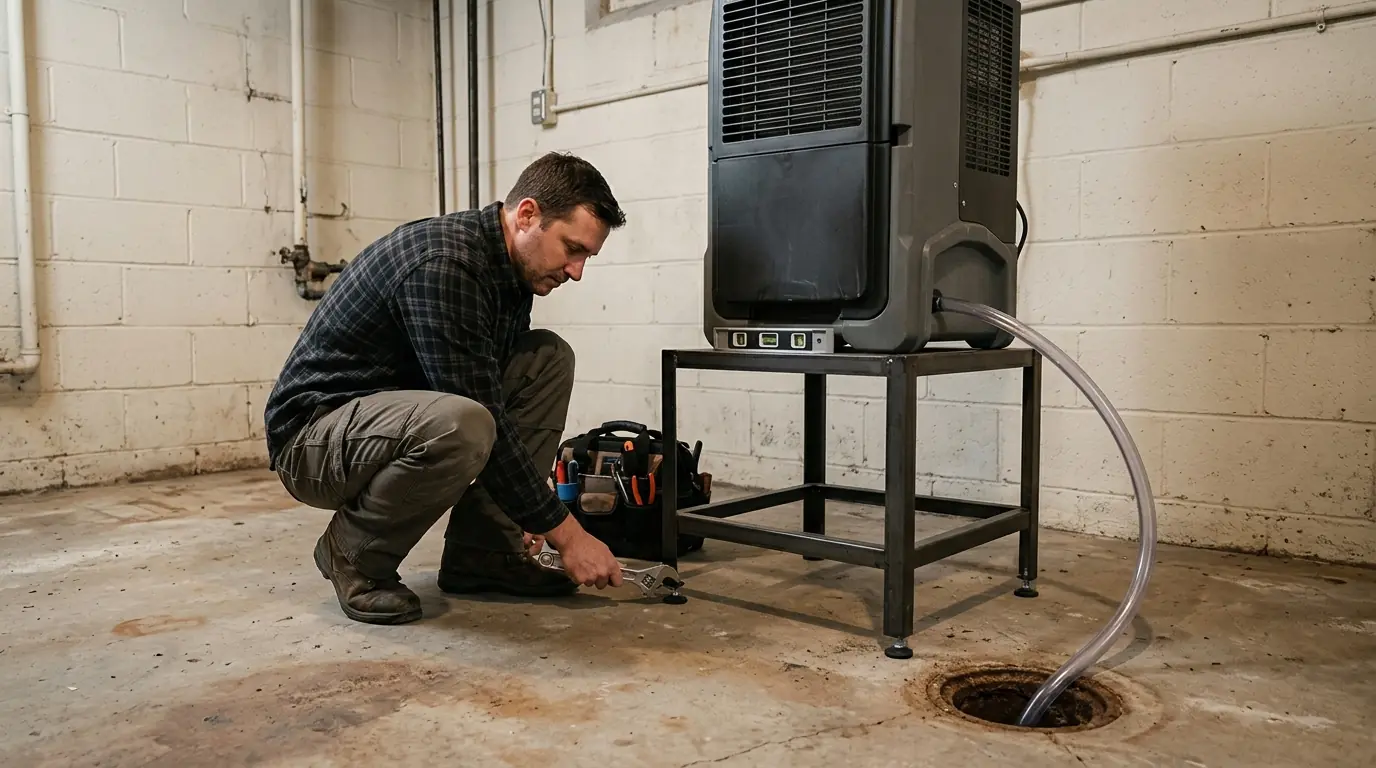
HomeGuide puts installed basement and crawl space units at about $1,000 to $3,000 and whole house units at $1,500 to $3,500. What moves your price:
- Unit type and capacityLarger spaces need higher capacity units.
- DrainageA floor drain is simpler than a pump and line.
- ElectricalA dedicated outlet may be needed near the unit.
- Duct workWhole house units connect to supply and return.
- AccessCrawl spaces and tight mechanical rooms take longer.
- Sealing firstOpen crawls need liner and vent work to succeed.
Planning ranges, not a quote. Sources: homeguide.com, homeguide.com.
Which type fits your house
The right type depends on where the damp is and how the house is heated and cooled.
| Basement unit | Whole house ducted | Crawl space unit | |
|---|---|---|---|
| Suits | Damp basements | Clammy upstairs, forced air homes | Sealed crawl spaces |
| Installed range | $1,000 to $3,000 | $1,500 to $3,500 | $1,000 to $3,000 |
| Drains to | Floor drain or pump | Condensate line | Daylight or pump |
| Needs first | Leaks fixed | Air handler checked | Liner and vents sealed |
Basement units with condensate drain
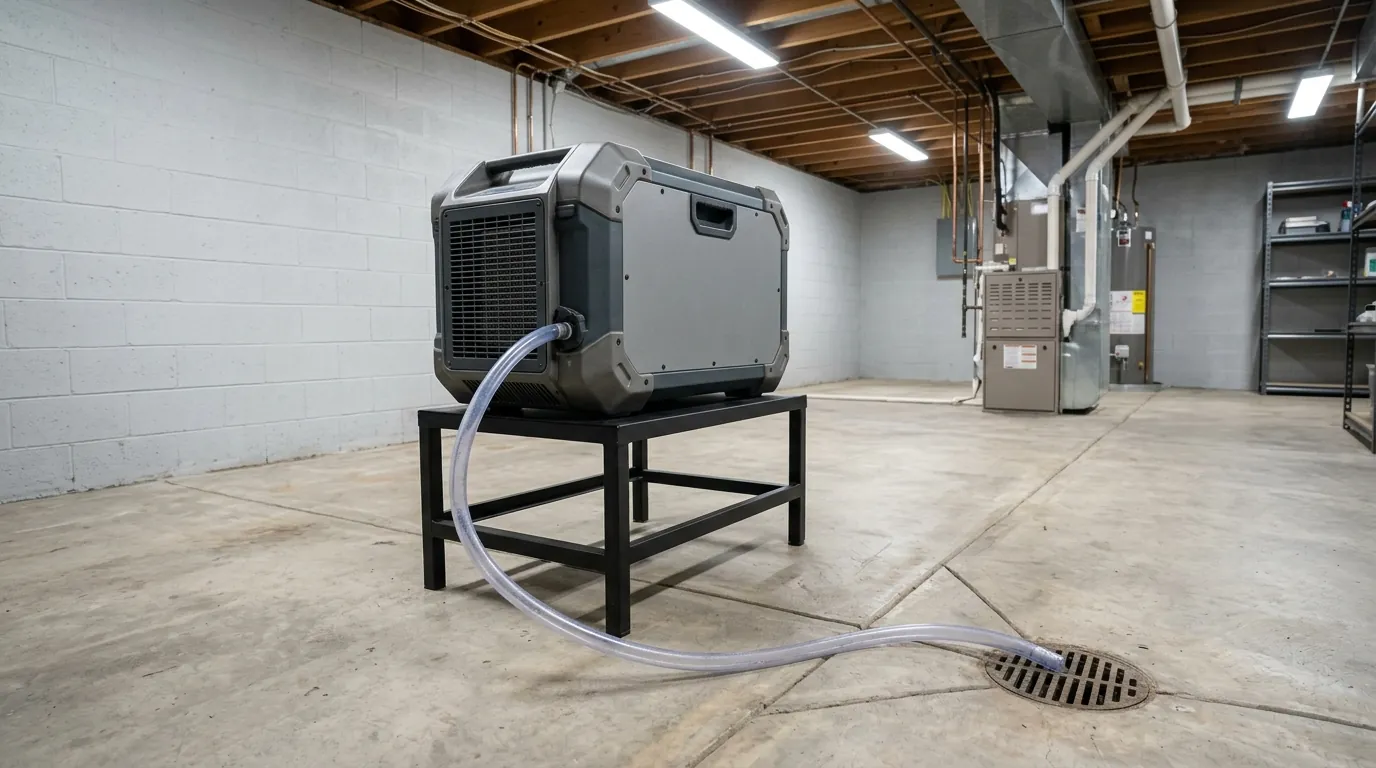
For most basements, a large capacity standalone unit on a stand does the job. We place it where air circulates, away from the corner that stays coldest, and run its condensate to a floor drain or a small pump that lifts it to a laundry sink or discharge line. The unit's humidistat gets set to a target that keeps materials dry without wasting power. We show you the filter and how often it needs cleaning, which is the one maintenance task these machines depend on.
Whole house ducted units
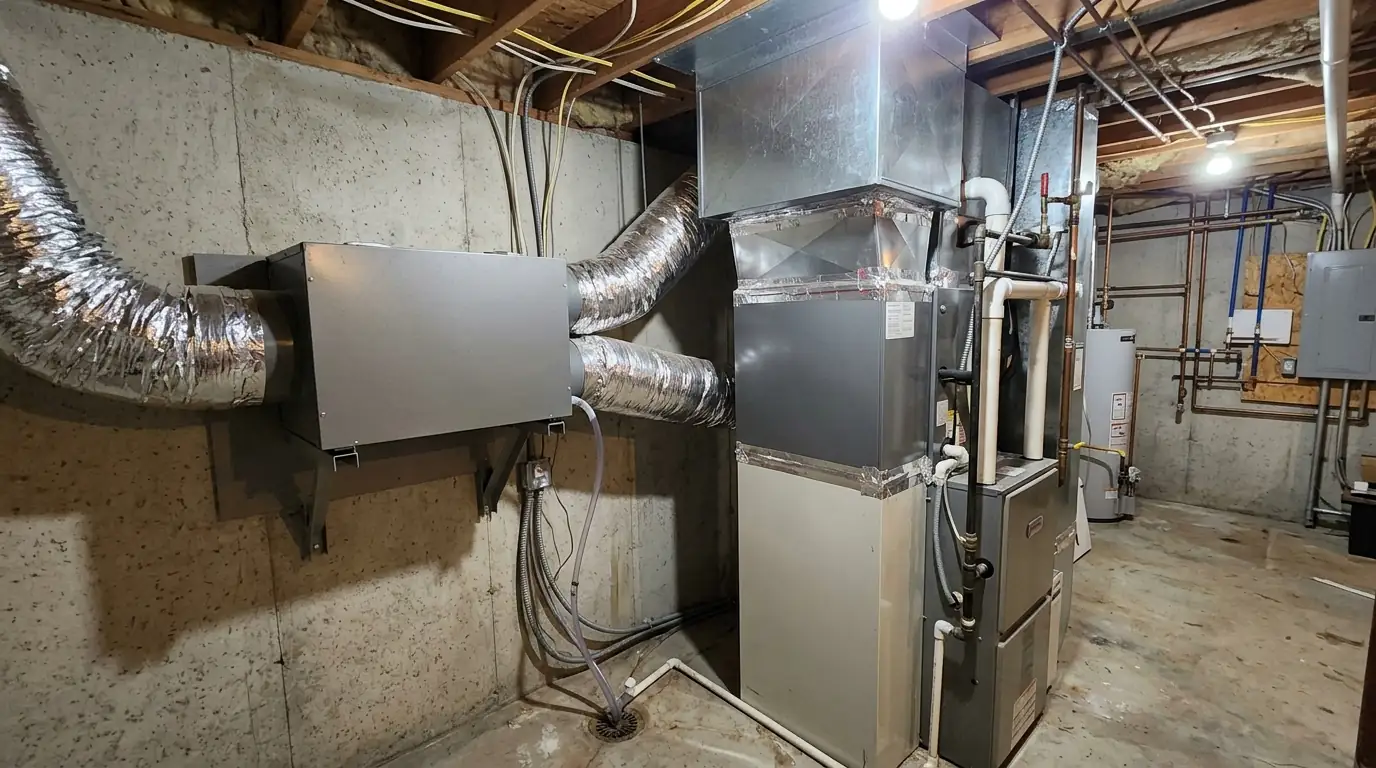
A whole house dehumidifier ties into the forced air system and pulls moisture from the entire house, not one room. It suits homes where the upstairs feels clammy in summer or where the AC cools the air without drying it enough. We install it beside the air handler, connect it to the return and supply, and give it a condensate drain. Because it is part of the duct system, it also needs a look at the air handler first, so we note anything an HVAC inspection should follow up.
Crawl space units
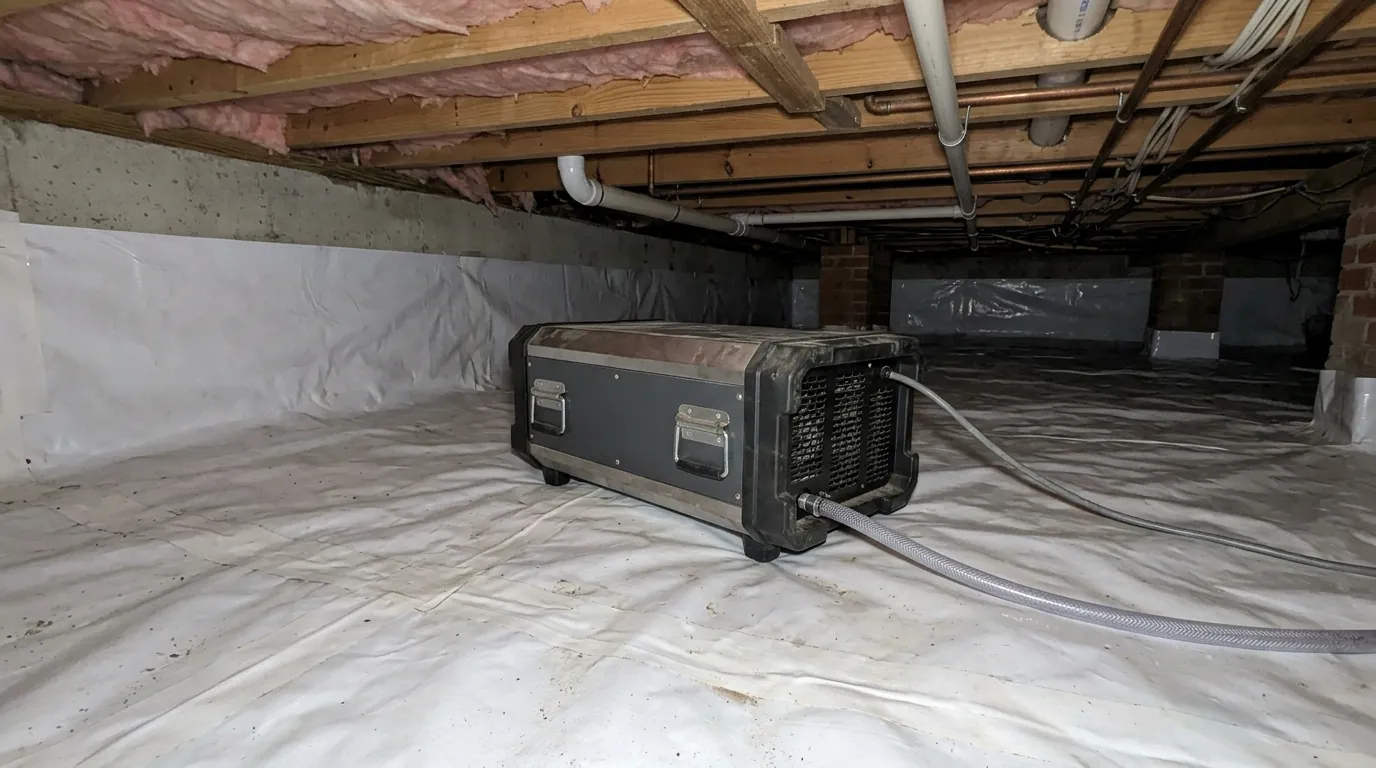
Crawl spaces need compact units built for tight, low spaces, and they only work properly when the space is sealed. An open crawl with vents and a dirt floor pulls in humid outside air faster than any unit can remove it. We install the unit on a level pad, drain it to daylight or a pump, and recommend crawl space encapsulation where the liner and vents are the real problem. Controls can sit in the house so you can check the reading without crawling in.
How the installation runs
Measure the space
Square footage, ceiling height and humidity.
Find the water
Leaks are fixed before the unit goes in.
Pick the unit
Capacity matched to the space.
Place it
Where air moves, on a level stand or pad.
Drain it
Floor drain, pump or condensate line.
Set the target
Humidistat set and tested.
Show you upkeep
Filter cleaning and what the display means.
Summer humidity in Newark basements
NWS normals for Newark put early July highs near 86 to 87 F with overnight lows around 68 to 69 F, and that warm, humid air is what condenses on cool Newark basement walls and cold water pipes all summer. It is why a basement can smell musty in August without a single leak. In Newark homes we set basement units to run through the summer and check whether the air handler is drying the house or only cooling it.
Dehumidifiers and air handlers we install beside or work on include Santa Fe, AlorAir, Aprilaire and Honeywell units, alongside furnaces and air handlers from Carrier, Trane and Lennox.
Aprilaire, Santa Fe, AlorAir, Honeywell, Carrier, Trane, Lennox, Rheem, Goodman, Mitsubishi Electric, Daikin, Broan-NuTone, Panasonic
Dehumidifier questions
Low enough that materials stay dry; many homeowners aim to keep basements below about 50 percent in summer.
If it is sized for the space and drains to a drain, maybe. Units that fill and shut off do not control a basement.
It stops new growth from damp air. Existing mold still needs cleaning, and leaks still need fixing.
Into a floor drain, a condensate pump or the HVAC condensate line, so nobody has to empty a bucket.
Only when the upstairs is damp too. For a damp basement alone, a basement unit is usually enough.