Updated September 2026
Drywall mold removal in Newark, NJ means sealing the room section with plastic and negative air, cutting out affected drywall and insulation past the visible growth, HEPA cleaning the studs and cavity, and drying it before new board goes up. HomeGuide puts mold remediation at about $15 to $30 per square foot of affected area.
Why moldy drywall comes out rather than gets cleaned
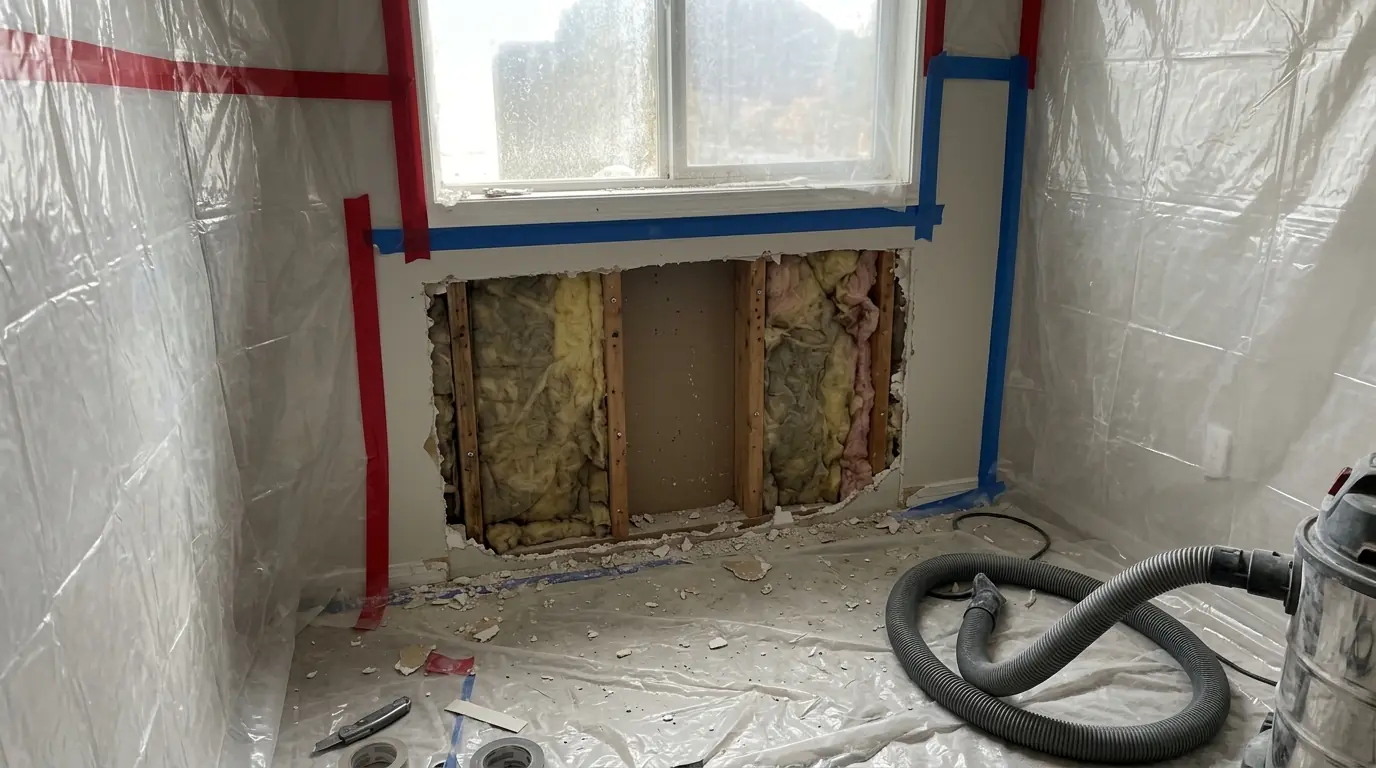
Drywall is gypsum wrapped in paper, and the paper is exactly what mold eats. Once growth is in the paper or the back face, surface cleaning leaves it behind. So the board comes out, a little past what you can see, and the cavity behind it is cleaned and dried.
The cutting is done inside containment so dust and spores do not move into the rest of the house. We cut at clean lines so the patch is easy to close.
What decides the cost of drywall removal
HomeGuide puts mold remediation at about $15 to $30 per square foot of affected area. These change your number:
- Wall area affectedMore square feet, more cutting and disposal.
- InsulationWet insulation in the cavity adds removal.
- ContainmentLarge or occupied rooms need more setup.
- FinishesTile, cabinets and trim slow the cut-out.
- CauseA leak or window needs fixing before closing up.
- ClearancePost-removal testing adds a lab fee.
Planning ranges, not a quote. Sources: homeguide.com.
Cut out, clean or leave it?
The material decides it, not the size of the spot.
| What we do | Why | |
|---|---|---|
| Growth on painted surface only | Clean and monitor | Paint over sound board can be cleaned |
| Growth in paper or back face | Cut out and replace | Mold stays in the paper |
| Board soft or crumbling | Cut out and replace | The core has failed |
| Wet but no growth yet | Dry fast, then decide | Drying may save it |
Exterior wall cavities
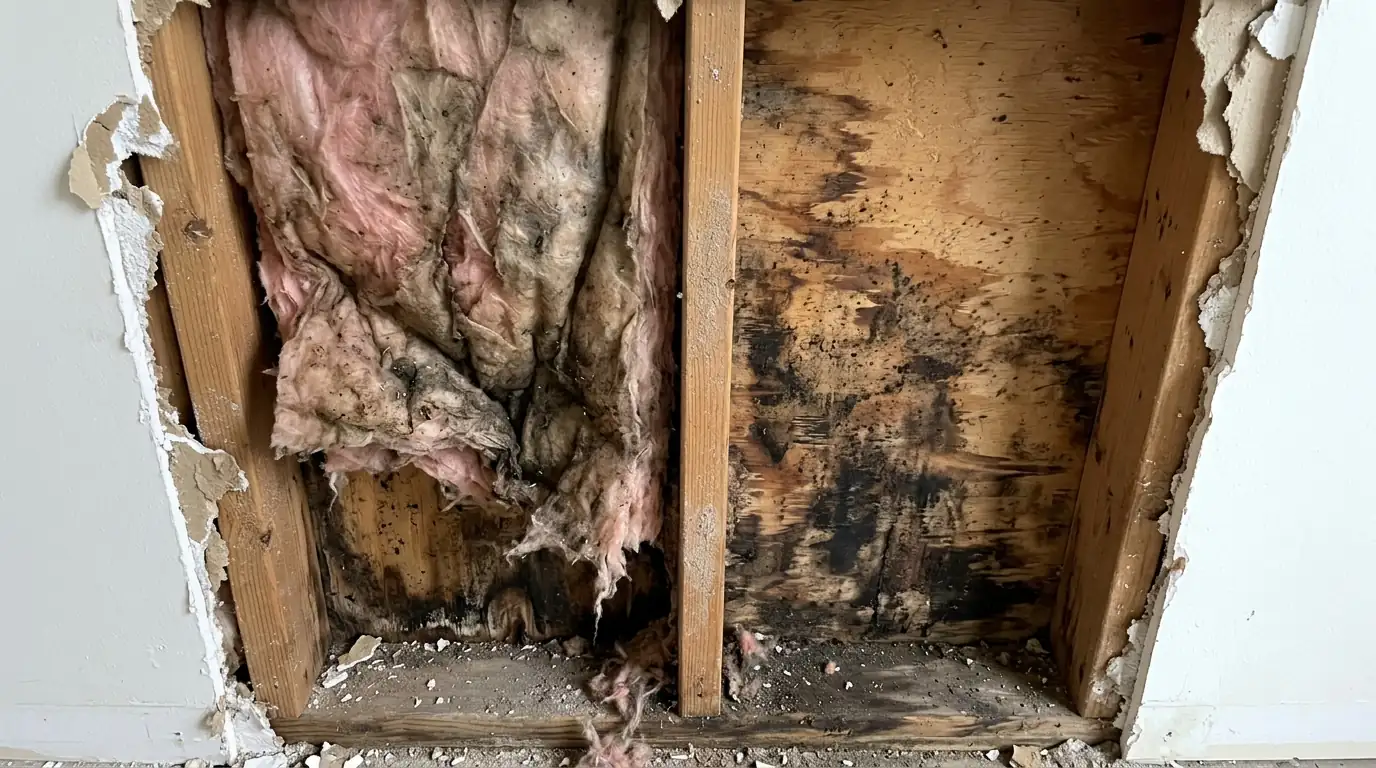
Exterior walls stay colder, and in older homes they often have little or no insulation, so condensation and small leaks keep the back of the drywall damp. We open the wall along the affected section, remove wet insulation, clean the studs and the back of the sheathing, and check for a leak from outside. If the cause is condensation, the report says so, because new board on the same cold, uninsulated wall will grow mold again within a few winters.
Under windows
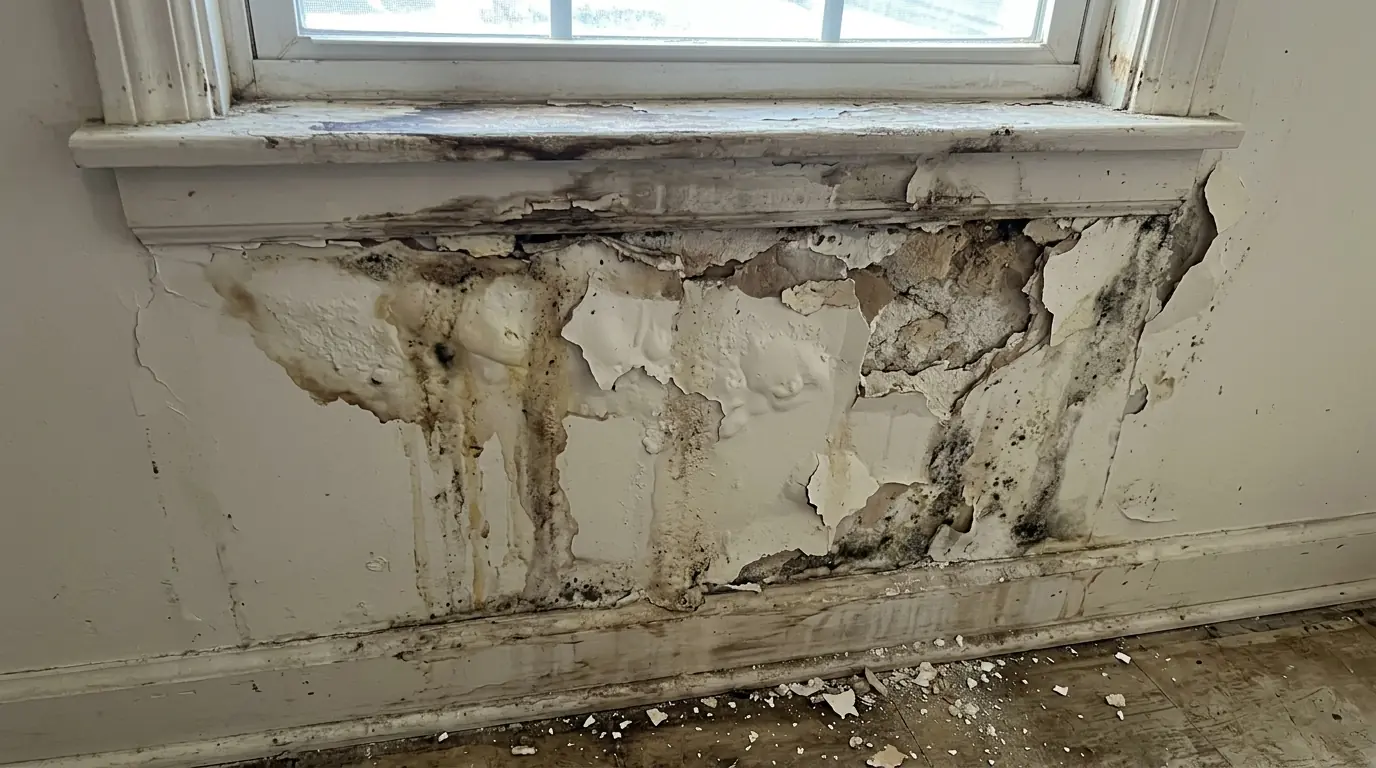
The wall under a window is one of the most common places we cut. Failed caulk, a missing sill pan or condensation running off the glass sends water straight down into the cavity. We remove the board below the sill, dry and clean the framing, and check the window from outside. Replacing the drywall without fixing the window just resets the clock, so we note exactly where the water gets in and what the fix should be, whether that is new caulk, flashing or a sill pan.
Plumbing walls
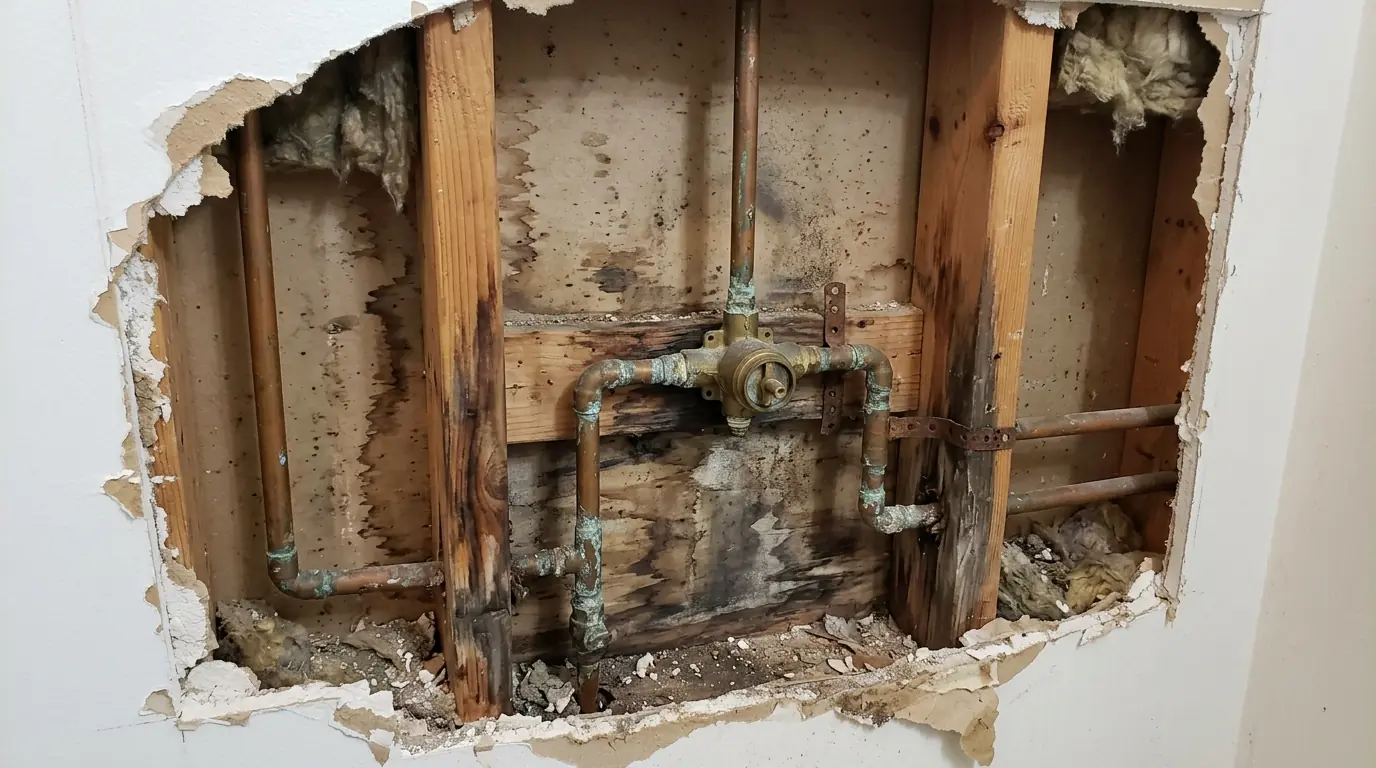
Walls behind showers, sinks and toilets hide slow leaks from supply lines, drains and valve bodies. By the time the paint bubbles, the back of the board is usually covered. We open the wall wide enough to see the plumbing, remove the wet board and insulation, clean the cavity and leave the pipe exposed for the plumber to repair. Closing it comes after the leak is fixed and the framing reads dry on the meter, not on a set number of days.
Along the baseboard line
A dark band along the bottom of the wall usually means water on the floor, from a flood, a washer overflow or a wet carpet that sat too long. The board wicks water upward, and mold grows on the back first. We pull the baseboard, cut the drywall at a straight line above the highest wet reading, clean the bottom plate and dry it. On basements that flood, we suggest leaving a small gap at the floor when the wall is rebuilt.
How a contained cut-out runs
Find the extent
Meters and a borescope first.
Contain
Plastic, zipper door and negative air.
Cut out
Past visible growth, to clean lines.
Remove insulation
Wet or contaminated batts bagged.
Clean the cavity
HEPA vacuum and wipe the framing.
Dry
Until the studs read normal.
Close or hand off
Ready for new board after the fix.
What Ida taught about garden-level walls
When the Elizabeth River overflowed during Ida, garden-level apartments along it took 8 to 10 feet of water and about 600 Elizabeth residents were displaced. Buildings like those show why floodwater changes a drywall job: every wall the water touched has to be opened to above the waterline, not just where stains show. After a flood in any garden-level unit we cover, we measure the waterline first and cut to a straight line above it.
Signs the growth is inside the wall
Paint bubbling or peeling
Moisture is pushing out from behind.
Drywall soft to the touch
The gypsum core has been wet.
A stain that returns after painting
The source is still active.
Musty smell near one wall
Growth is on the back face.
Baseboard swollen or stained
Water has been at the floor line.
Drywall mold questions
Paint hides it for a while. If the growth is in the paper, it keeps going underneath.
Past the visible growth and the highest wet reading, cut to clean lines so the patch is easy to close.
We remove, clean and dry. New board goes up after the source is fixed, by us or your contractor.
Containment and negative air keep it inside the work area.
After cleaning, an encapsulant can be applied where it helps. It never replaces removal.