Updated September 2026
A pre-listing mold inspection in Newark, NJ reads the basement, attic, bathrooms and kitchen with meters and a thermal camera before the house is listed, and records findings with photos and readings. Sellers use it to fix problems early, attach a scope and cost range to a disclosure, or show buyers a clean report. HomeGuide puts an inspection at about $300 to $650.
Why sellers inspect first
When a buyer's inspector finds moisture or mold, the seller usually learns about it with a deadline attached. Repairs get rushed, estimates get padded and the price gets renegotiated under pressure. Inspecting first moves that decision back to you.
The report is written the same way as our buyer reports: findings, readings and photos, not marketing. That matters, because a buyer's inspector will check it against the house, and a report that holds up builds trust in the rest of the listing.
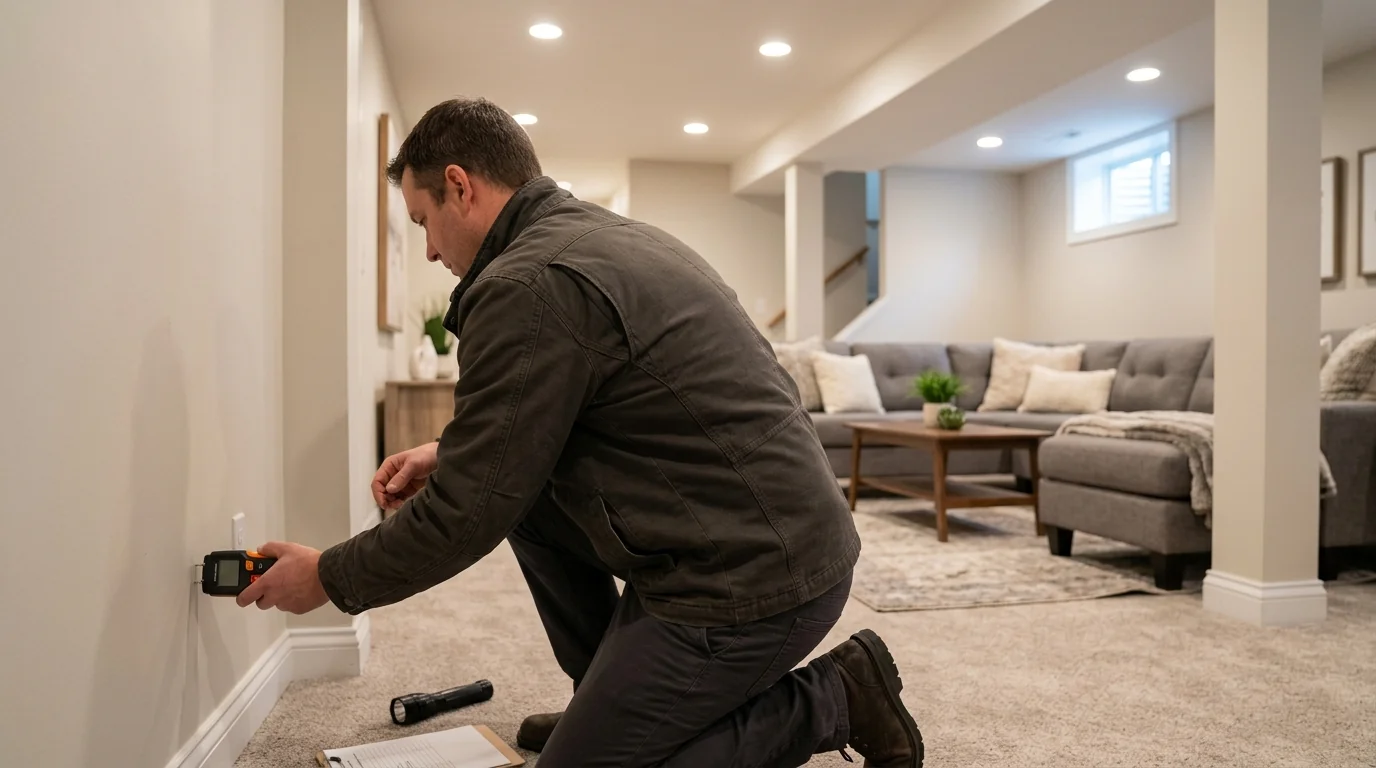
What a pre-listing inspection costs
HomeGuide puts a mold inspection at about $300 to $650 for an average home. For sellers, these change the price:
- House sizeMore rooms and levels, more readings.
- Finished basementWalls and cavities take longer to check.
- Multi-familyEach unit and the shared spaces are read.
- SamplesAdded only where a result would help the sale.
- Follow-up visitReadings after repairs, if you want them.
- Report detailDisclosure-ready documentation.
Planning ranges, not a quote. Sources: homeguide.com.
Before the listing photos
The right time is before the house is staged and photographed, while there is still time to fix what we find. Small problems, like a bath fan that vents into the attic or a slow leak under a sink, are cheap to fix now and expensive to argue about later. If something bigger turns up, you can get a scope and price in hand before a buyer's inspector writes it up as an unknown, which is what drives the largest price reductions.
Houses that flooded before
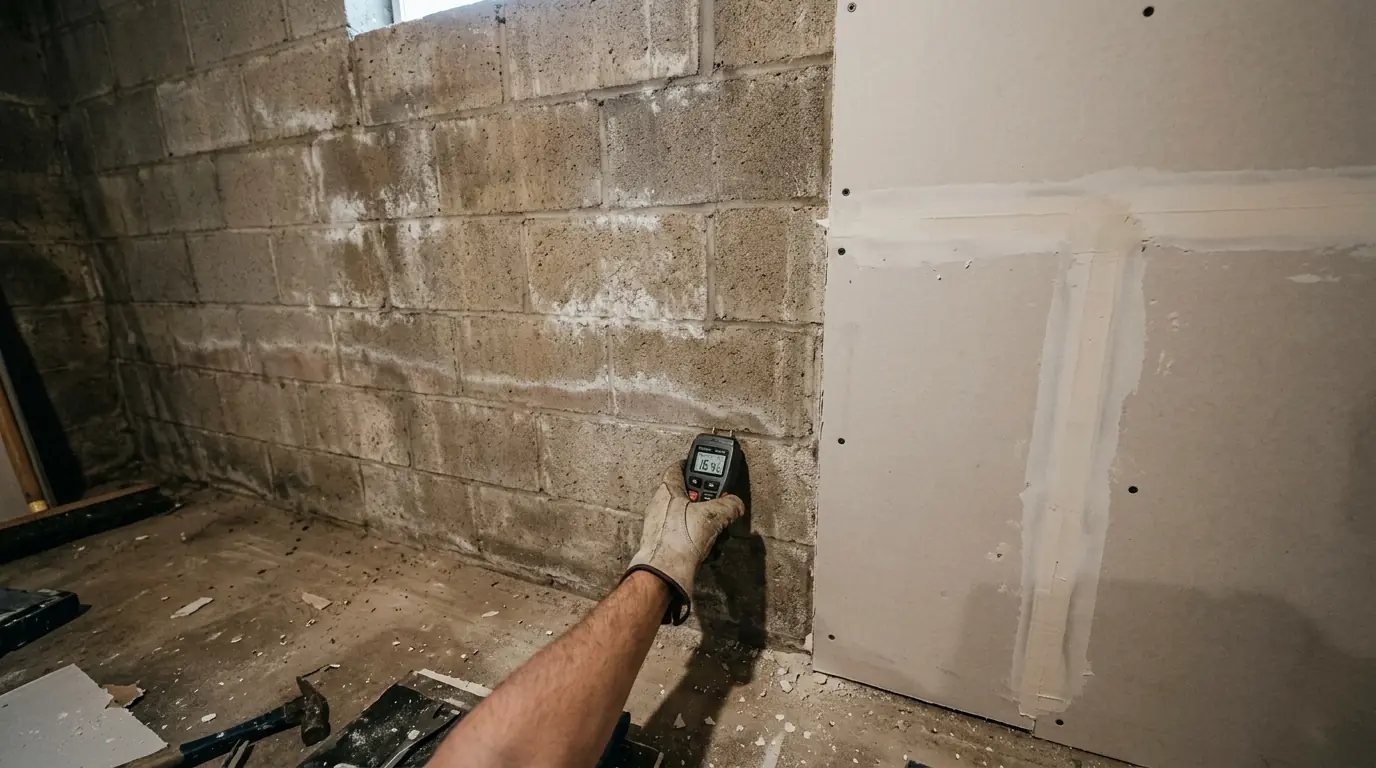
If the basement has taken water, buyers will ask, and their inspector will look for the signs: old waterlines, rust at the base of the furnace, new drywall that stops a few feet up the wall. A pre-listing inspection reads those walls and cavities first. If the old flood was dried properly, the readings and photos show it, which is the strongest answer to a nervous buyer. If it was not, you learn that on your schedule instead of theirs.
Disclosure paperwork
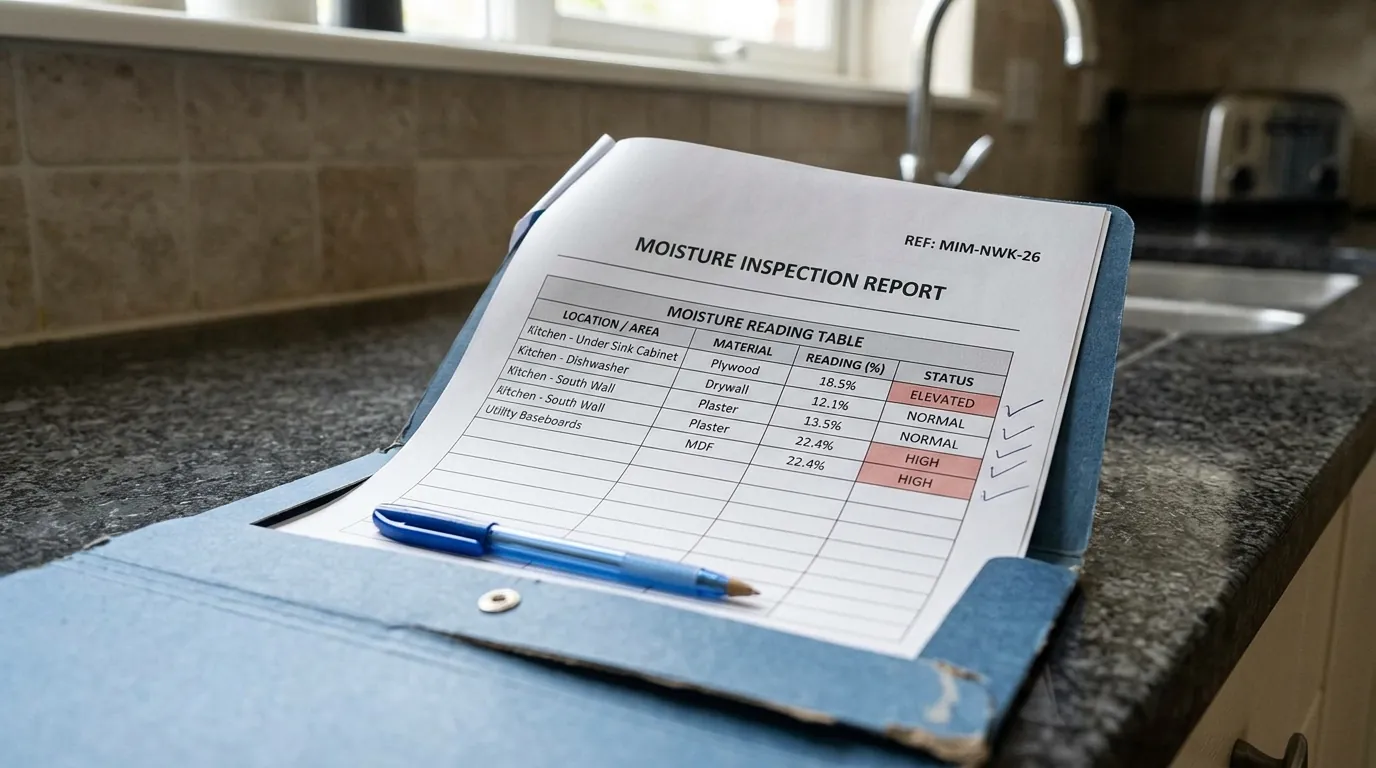
Sellers often want documentation they can attach to a disclosure or hand to a buyer's agent. The report lists each finding with its location, readings and photos, what was fixed and when, and anything left for the buyer to consider with a scope attached. We do not tell you what you are legally required to disclose; that is a question for your agent or attorney. We give you accurate facts to disclose from, which is what keeps a sale moving.
How a pre-listing inspection runs
Call with your listing date
We plan backward from it.
Walk the house
Basement to attic, outside grading too.
Read and scan
Meters, thermal camera, borescope.
Check past water
Old waterlines and repairs.
Share findings
By phone the same day.
Write the report
Photos, readings and options.
Recheck if needed
After repairs, before listing.
What the pre-listing report covers
- Basement walls, floor and any finished areas
- Attic sheathing, ventilation and bath fan terminations
- Bathrooms, kitchen sink base and laundry area
- HVAC air handler and drain pan
- Signs of past flooding and how it was handled
- Photos and readings for every finding
- Fix now, disclose with a scope, or leave, per finding
Selling a home that has taken water
Ida dropped 8 to 11 inches of rain across a corridor of northern and central New Jersey in 2021, and in December 2023 the Passaic River crested over 10 feet at Paterson, with water in basements there and in Wayne and Fairfield. Buyers across North Jersey know those storms and ask about them. For a New Jersey seller, readings that show a basement dried properly after a past flood answer that question before it becomes a negotiation.
When to book it
Book it a few weeks before you plan to list. That leaves time for any fixes, a follow-up reading and clearance testing if removal was needed.
The visit itself usually takes a few hours for a typical house, and findings are shared by phone the same day, with the written report after.
Seller questions
A clear report usually does the opposite. Unknowns worry buyers more than documented, fixed problems.
That is a question for your agent or attorney. We give you accurate findings to work from.
Yes. Removal, drying and moisture fixes can be scheduled around your listing date.
A few weeks before listing, so there is time for repairs and a recheck.
Same method, different timing and purpose. The report is written so a buyer's inspector can check it.