Updated September 2026
Furniture and contents mold cleaning in Newark, NJ sorts belongings by material: hard, sealed items such as finished wood and metal are HEPA vacuumed and wiped, while porous items like mattresses, cardboard and heavily contaminated upholstery are usually discarded. Everything is documented with photos so an insurer or a landlord can see what was cleaned and what was not saveable.
How we decide what can be saved
Mold on belongings usually follows mold in the room: a basement that flooded, a closet on a damp wall, a storage unit or a crawl space. Cleaning the building without dealing with the contents just brings spores back into the cleaned space.
The rule is simple. Hard, non-porous surfaces clean well. Porous materials that soaked up water or grew mold inside usually do not. Items in between, like finished wood and some fabrics, depend on how heavy the growth is.
What decides the cost of contents cleaning
Contents cleaning is priced by the volume and type of items rather than square footage, so we quote after seeing them. What decides the total:
- Volume of itemsMore pieces, more sorting and cleaning.
- Material mixHard goods clean faster than soft goods.
- Contamination typeSewage raises the standard for everything.
- DocumentationItemized lists for claims take time.
- StorageItems kept out while the room is remediated.
- DisposalHauling and bagging discarded items.
Clean or discard, by material
These are the usual outcomes. Heavy contamination or sewage changes the answer toward discarding.
| Usually cleaned | Usually discarded | |
|---|---|---|
| Hard goods | Metal, glass, sealed plastic, finished wood | Particleboard that swelled |
| Soft goods | Washable clothing and linens | Mattresses, pillows, soaked upholstery |
| Paper | Special items set aside for you | Cardboard and paper with growth |
| Electronics | Case surfaces wiped | Units soaked in floodwater |
Wood furniture
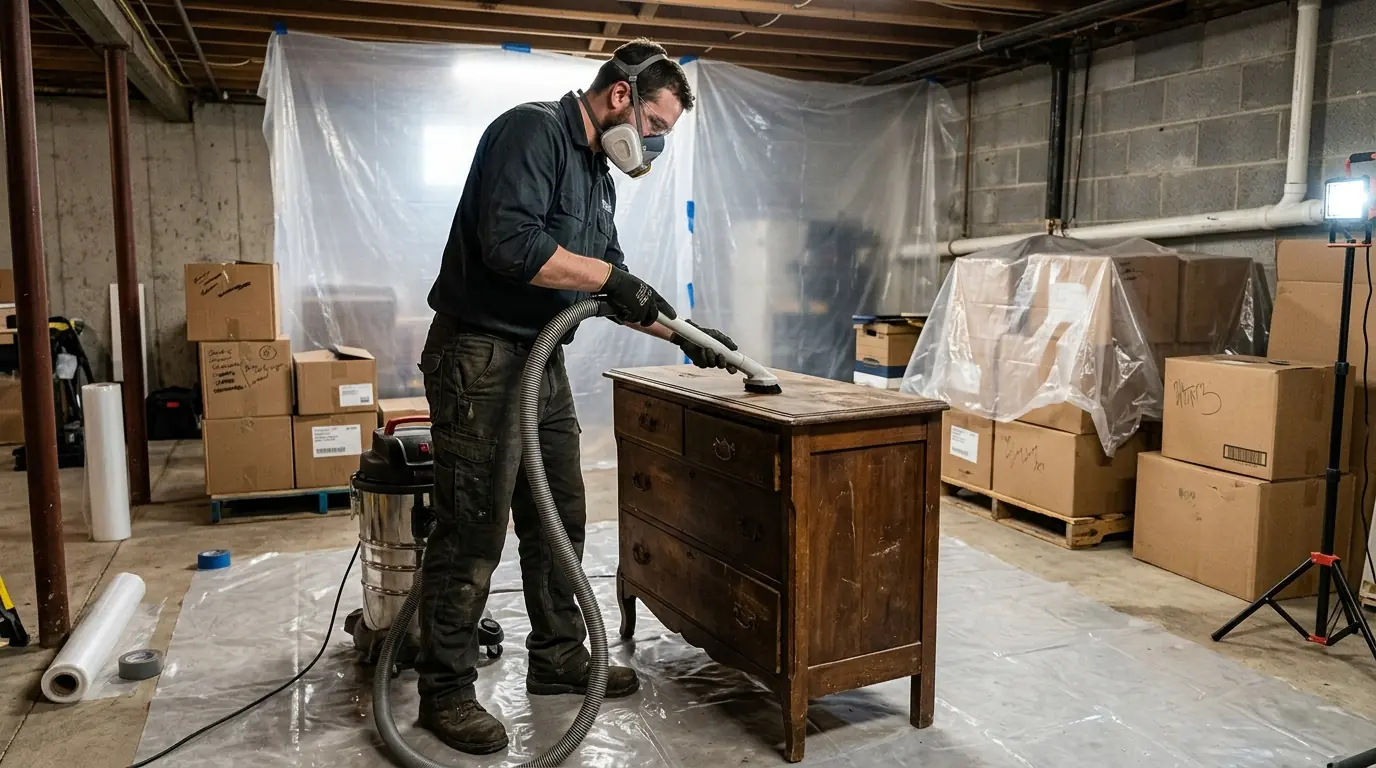
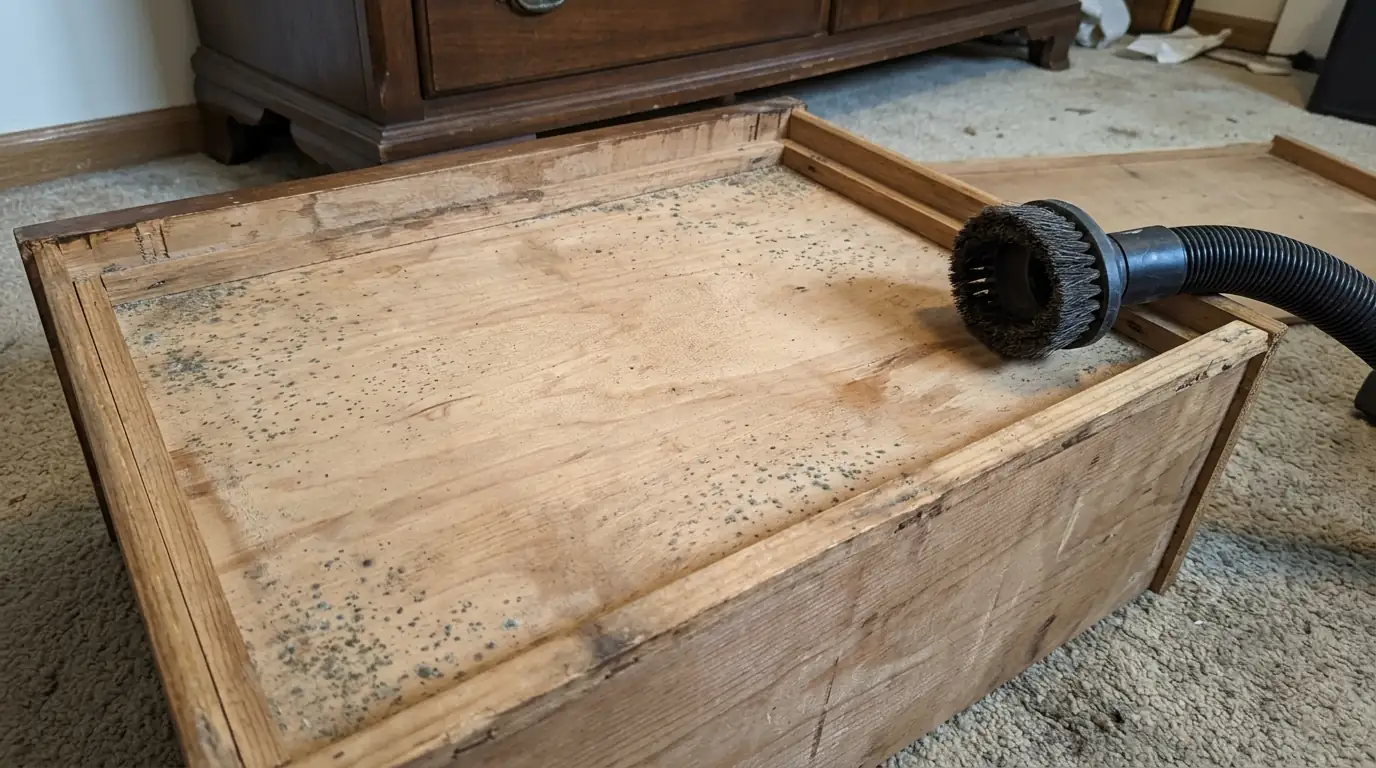
Solid and finished wood furniture usually cleans well. We HEPA vacuum all surfaces, including the backs and undersides where growth hides, wipe them down and let them dry fully before they go back into a clean room. Unfinished wood, particleboard and pieces that were soaked in floodwater are a different story: growth gets into the material, and particleboard swells and falls apart. We mark those for your decision rather than discarding them ourselves, because some pieces matter beyond their value.
Upholstery and mattresses
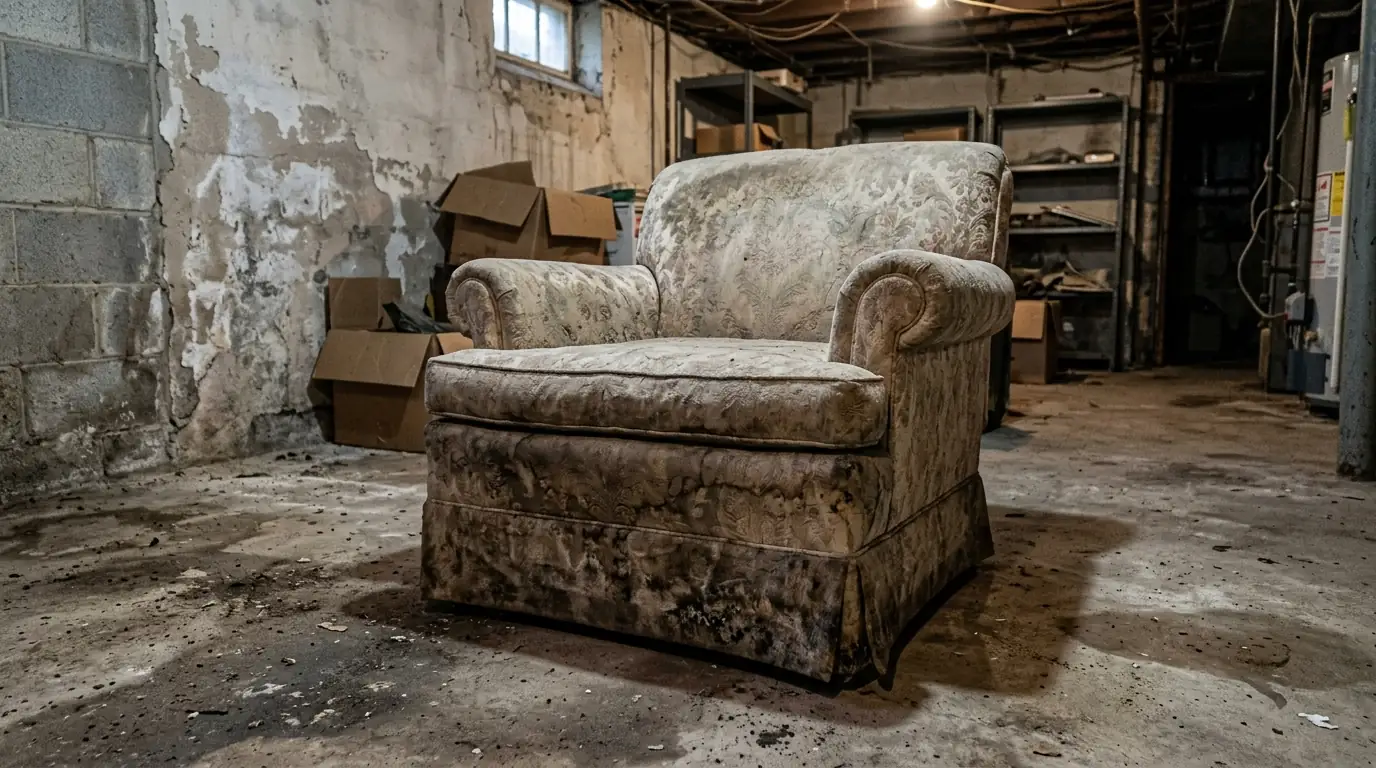
Upholstered furniture and mattresses soak up moisture and spores deep into the foam and fabric. Light surface growth on a sofa that stayed dry can sometimes be HEPA vacuumed and professionally cleaned. Anything that was wet from floodwater, sewage or a long leak, or that smells musty after cleaning, is usually not worth saving. We photograph and list each piece with the reason, which is what an insurance adjuster looks for when reviewing a contents claim after water damage in a home.
Boxes and stored items
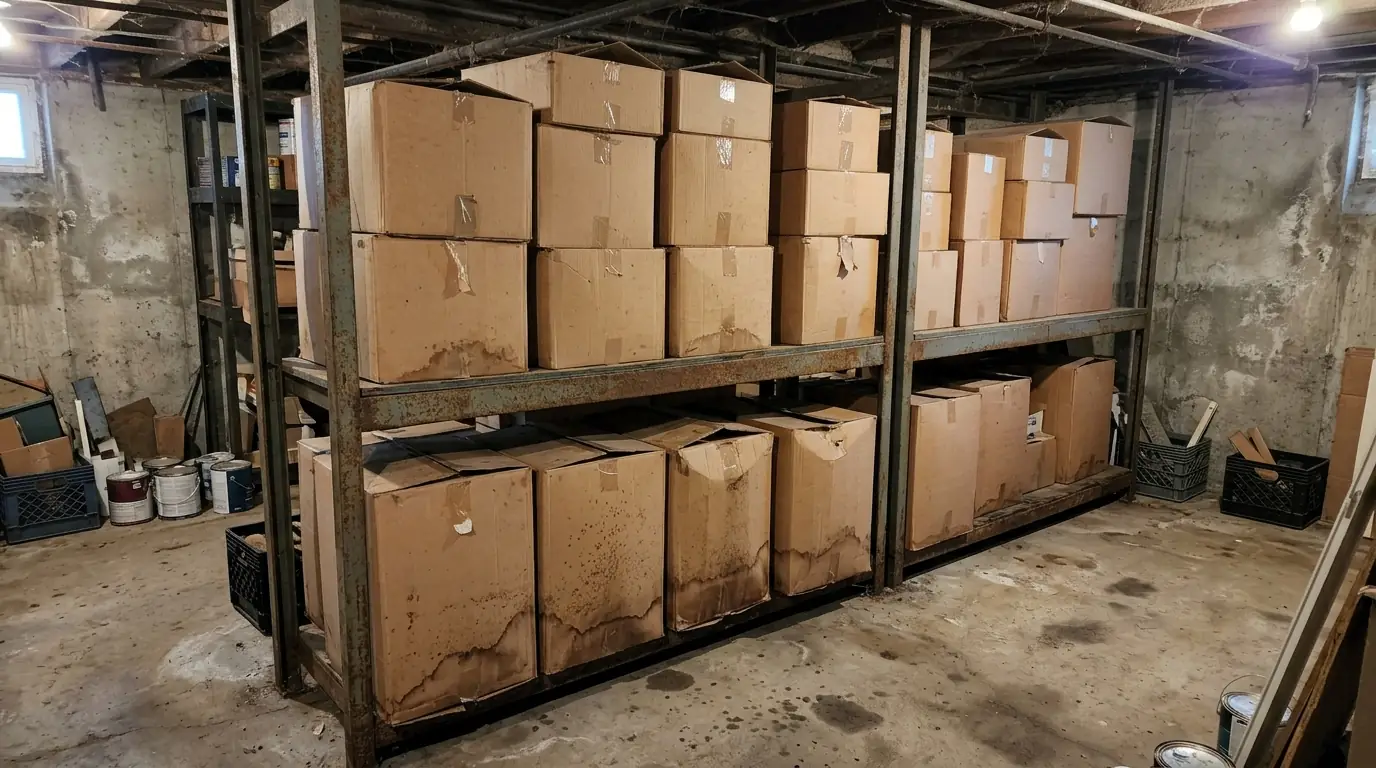
Cardboard boxes in basements and storage areas grow mold quickly, and so do the paper, photos and fabrics inside them. We open, sort and repack: hard items like dishes, tools and plastic toys are cleaned; clothing and linens can often be laundered; paper and cardboard with growth are usually discarded unless they have special value. Irreplaceable documents and photos are set aside for you to decide on, since specialist drying and freezing can sometimes save them if it starts early enough.
How contents cleaning runs
Walk through with you
What matters, what does not.
Stage outside the work area
Items moved to a clean zone.
Sort by material
Hard, soft, paper, electronics.
Clean what stays
HEPA vacuum and wipe.
Set aside special items
Photos and documents for your decision.
List what goes
Photos and reasons for every discarded item.
Return to a clean room
After the room itself is cleared.
Belongings after the Rahway River flood
After Ida, residents along the Rahway River in Cranford spent days hauling waterlogged belongings to the curb and scraping away mud and sewage. That is the scene we try to make more selective. After a basement flood in Cranford or anywhere in the river's path, we sort contents by material first, so hard goods that can be cleaned are kept and only the porous items that took floodwater are discarded.
Signs your belongings picked up mold
A musty smell on clothes
Spores and odor from a damp closet or basement.
Spots on leather or wood
Surface growth, usually cleanable.
Stained box bottoms
Water wicked up from the floor.
Books and papers smell
Growth inside the pages.
Sneezing near stored items
A sign the area needs checking.
Contents cleaning questions
Most washable clothing can be laundered. Heavily contaminated items from sewage are usually discarded.
No. We list and photograph everything and you decide on anything that matters to you.
Sometimes, with specialist drying. We set them aside so you can decide.
It depends on your policy. Our photos and item list are what a contents claim needs.
After the room is cleaned and cleared, so they are not recontaminated.