How condensation forms in an attic
In winter, the roof deck is close to the outdoor temperature. NWS normals for Newark put early December overnight lows at 33 to 35 F, and the underside of the sheathing gets that cold too. Warm, moist air rising from the house carries water vapor with it. When it reaches that cold surface, the water condenses, the same way a cold glass sweats in summer.
One cold night does little. Weeks of it keep the wood damp, and damp wood is what mold needs. EPA's homeowner guide lists condensation as one of the main moisture sources indoors, and attics are where it does the most damage out of sight.
Where the moisture comes from
The biggest single source is usually a bath fan that vents into the attic instead of outside. Every shower sends warm, wet air straight to the roof deck. Kitchen and dryer ducts that end in the attic do the same.
The next source is air leaking up from the house through gaps: around recessed lights, plumbing stacks, chimney chases, wiring holes and the tops of interior walls. Those gaps carry a surprising amount of moisture. Finally, blocked soffit vents stop the attic from flushing that moisture out, often because insulation was pushed against the roof deck at the eaves.
How to spot it
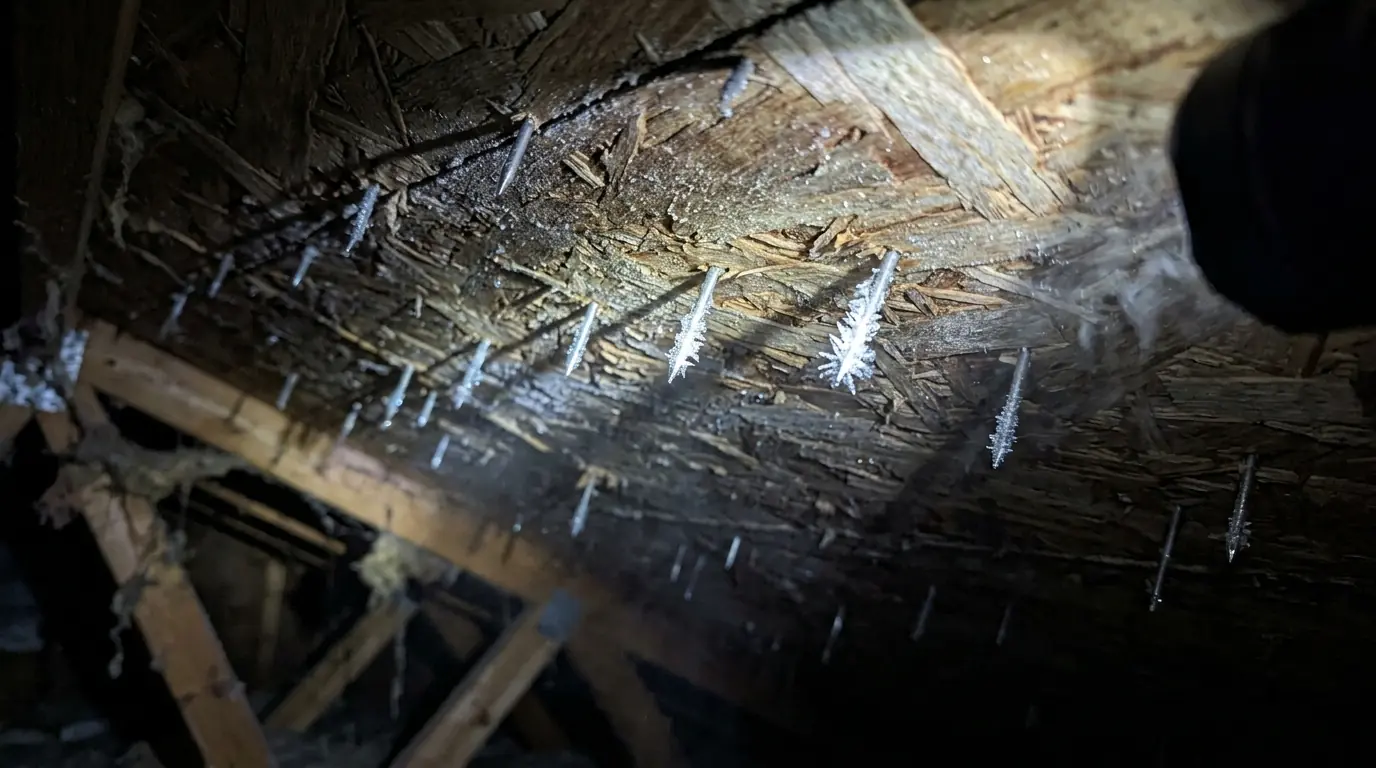
On a cold morning, look at the nail tips poking through the roof deck. Frost on them means moisture is reaching the deck. In spring and fall, look for rust streaks below the nail tips and small water stains on the framing, a sign that frost has been melting and dripping.
Dark gray or black spotting on the sheathing, usually worst on the north side and near the ridge, is the growth itself. A musty smell at the attic hatch is another clue. You can check most of this with a flashlight from the hatch without climbing in.
What fixes it for good
Cleaning the sheathing and rafters removes the growth, but it comes back unless the airflow is fixed. The fixes are usually straightforward: route every bath and kitchen fan to a roof or wall cap, install baffles so soffit vents can breathe, and seal the gaps that let house air into the attic.
We do attic mold removal and ventilation correction together whenever we can, because the insulation is already pulled back. HomeGuide puts partial attic mold removal at about $1,500 to $6,000, and fixing the cause at the same time avoids paying for the same cleanup twice.
A quick winter check you can do
Pick a cold morning after a few freezing nights. Open the attic hatch, shine a flashlight on the underside of the roof and look at the nail tips and the sheathing near the bathroom. Then check where your bath fan duct ends: it should run to the outside, not stop in the insulation.
If you see frost, rust streaks or spotting, take a photo and call. Catching it early usually means cleaning a section, not the whole attic.
Sources
Tamara edits the Mold Tips articles for Mold Inspection Margate, working from what our inspectors see in Newark-area homes and from public sources linked at the end of each article.