Where the name comes from
Black mold is a popular name, not a scientific one. Most of the time people use it to mean Stachybotrys chartarum, a dark, slow-growing mold that tends to show up on materials like drywall paper and ceiling tile that have stayed wet for a long time.
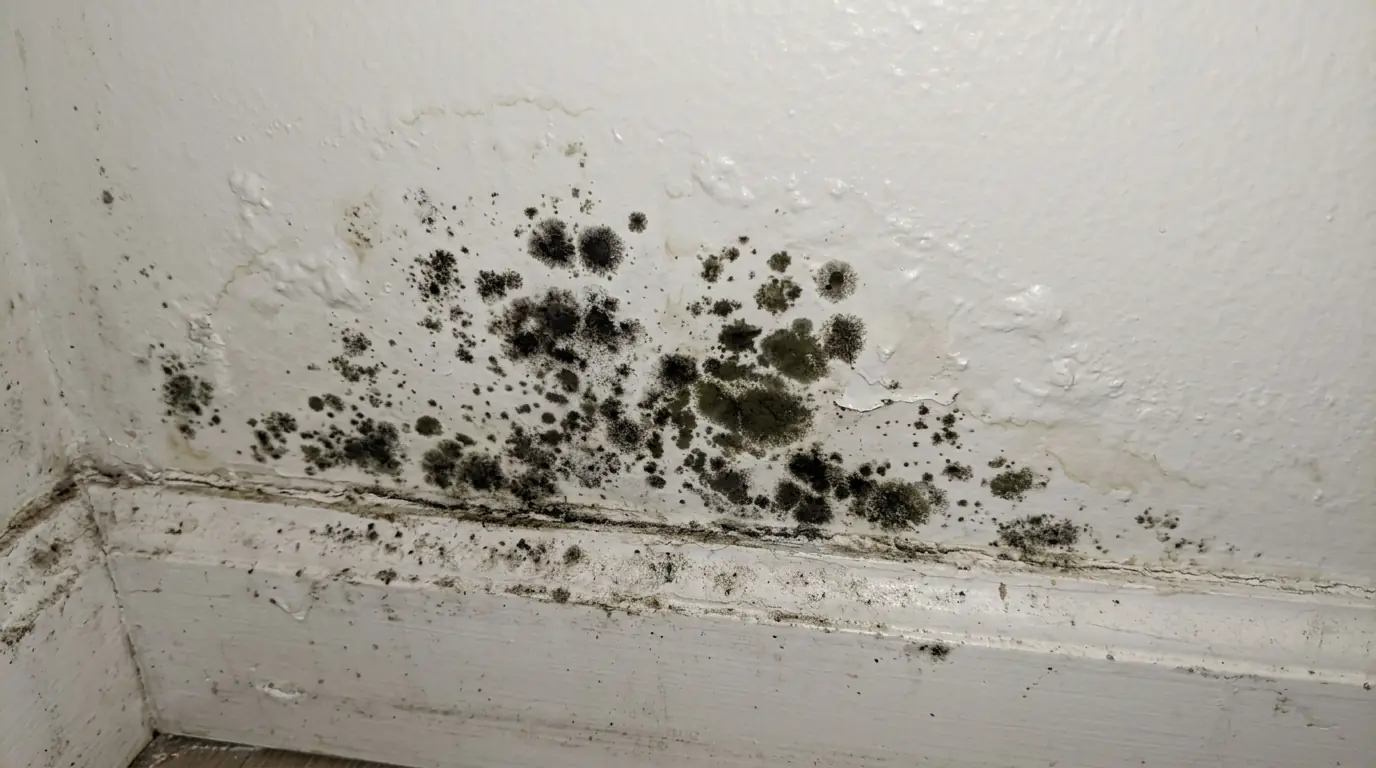
But plenty of other molds look black or dark green on a wall, including very common ones that grow on bathroom ceilings and window sills in any house. So when someone says they have black mold, what they usually know is that they have dark growth, not which species it is.
Why color cannot identify it
Mold color changes with the species, the material it is growing on, its age and how wet it is. Stachybotrys can look slimy and dark when wet and sooty when dry; other molds can look almost identical. Even experienced inspectors do not name a species by eye.
A tape lift, swab or small piece of material sent to a lab settles it. Direct microscopic examination names the genus within days. That is the only way to answer the question honestly, and it is why we do not tell anyone they have black mold from a photo.
When identifying it is worth it
Identification helps when someone needs documentation: a tenant and landlord disagreeing about a unit, a buyer deciding on a house, an insurer asking how long a leak ran. Finding Stachybotrys or another long-term water mold tells us the material stayed wet for a while, which can matter in all three.
It also helps when growth appears on drywall with no obvious leak, since a long-term water mold points to a slow, hidden source worth tracing. Angi puts a typical mold test at about $250 to $500, so it makes sense when the answer changes a decision, and rarely otherwise. Our black mold testing page covers the sample types.
Why the fix does not change
Whatever the species, the approach to growth on porous materials is the same: contain the area, remove what is contaminated, clean and dry the rest, and fix the moisture source. EPA's homeowner guide says it plainly: clean up the mold promptly and fix the water problem.
For larger areas, the NEHA and CDC key messages suggest considering a qualified professional when mold covers more than 10 square feet. That guidance is about the size of the job and the risk of spreading spores, not the color of the growth. Heavier growth gets tighter containment either way, as part of any mold remediation.
What to do if you find dark growth
Do not scrub or sand it dry, which puts spores into the air. Keep the door closed if it is in a small room, and avoid disturbing it until you know how big the area is and where the water is coming from.
Take a photo with something for scale, note when you first saw it and whether anything was leaking nearby, and call. Small spots on hard surfaces can often be cleaned; growth in drywall, insulation or carpet usually means removal. Either way, the first job is finding the water.
Sources
Tamara edits the Mold Tips articles for Mold Inspection Margate, working from what our inspectors see in Newark-area homes and from public sources linked at the end of each article.