What the smell actually is
The musty smell people notice is a mix of gases released by mold and bacteria as they grow on damp material. It is a by-product of growth, which is why it matters: if you can smell it, something is wet enough to feed it. EPA's homeowner guide puts it plainly, the key to mold control is moisture control, and a smell is often the first sign of a moisture problem that has not shown itself any other way.
The smell alone does not tell you how much growth there is or what kind. A small patch behind a baseboard can smell as strong as a large one. That is why the goal of tracing it is to find the wet material, not to judge the size of the problem by nose.
Start with where and when
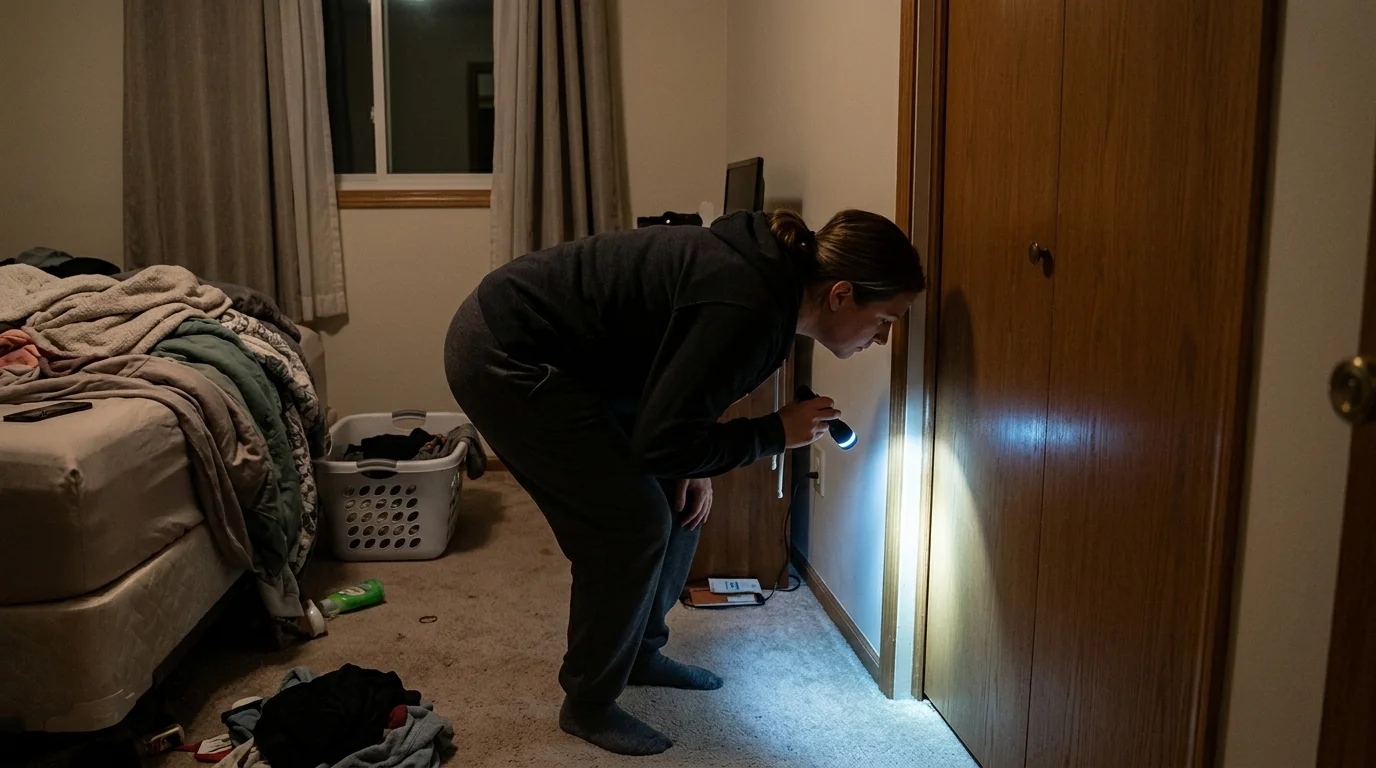
Walk the house slowly with doors closed and note the room where the smell is strongest. Then note when: first thing in the morning, after a shower, after rain, or when the heat or air conditioning starts. Those two details narrow things fast.
A smell that peaks after rain points to water getting in through the foundation, a window well or the roof. One that appears when the AC starts points to the air handler, coil or drain pan. A smell that is strongest in one closet on an outside wall suggests condensation behind stored clothes. A bathroom smell that lingers long after showers usually means the fan is not moving the steam out, or water is getting behind the tile.
The usual suspects, room by room
In basements, look at carpet laid over concrete, paneling on outside walls, cardboard boxes on the floor and the area around a floor drain. In kitchens, open the sink base and smell the back panel, and look under the dishwasher edge. In bathrooms, check the vanity base, the floor around the toilet and the ceiling around the fan.
Upstairs, check closets on outside walls and the attic hatch. In apartments, a smell that comes through a shared wall or ceiling may start in the unit next door or above, which is why we trace the water across units rather than stopping at the room with the smell. For a whole-house pattern, the HVAC system is often the carrier, spreading a smell from one damp spot into every room.
Simple checks you can do
Lift a corner of carpet in the room with the strongest smell and feel the pad. Look at the bottom of drywall for staining or swollen baseboards. Run a dehumidifier in the basement for a few days and see whether the smell fades; if it does, humidity is a big part of the story. The NEHA and CDC key messages recommend keeping indoor humidity between 30 and 50 percent, and a basement that sits well above that range will often smell no matter how clean it is.
Avoid covering the smell with sprays or candles while you look. They make it harder to tell where it is strongest, and they do nothing about the growth.
When to bring in an inspector
Call for an inspection when the smell survives cleaning and airing out, when it is strongest near a wall, floor or ceiling you cannot see behind, or when it comes back every time the AC or heat runs. A musty odor investigation uses moisture meters, a thermal camera and a borescope to find the damp material without tearing into walls at random.
Sampling can help when nothing is visible, but it is not the first step. Finding the wet spot usually tells you more than a lab count, and it is the wet spot that has to be fixed either way.
Sources
Tamara edits the Mold Tips articles for Mold Inspection Margate, working from what our inspectors see in Newark-area homes and from public sources linked at the end of each article.