How a combined sewer works
In a combined sewer, rainwater from streets and roofs flows into the same pipes that carry sewage from homes. About 11 square miles of Newark are served this way, according to the city's water and sewer department, with 12 outfalls where overflow can discharge in heavy storms. Most of Jersey City is on a combined system too, and its wastewater is piped to Newark for treatment by the Passaic Valley Sewerage Commission, which serves about 1.4 million residents in 48 towns.
On a normal day, the system handles the flow. In a hard storm, rainwater fills the pipes quickly. When they are full, water looks for the lowest way out, and a basement floor drain can be it.
Why it happens in some houses and not others
The houses most likely to see backups are the ones with a floor drain or basement fixture that sits low relative to the sewer in the street, and no device to stop water flowing backward. Older homes often have exactly that: a floor drain tied straight into the main line, installed long before anyone thought about storm surcharges.
Clogs in your own lateral can cause backups too, but those tend to happen whenever you run a lot of water, not only in storms. If your backups line up with heavy rain, the sewer side is the likely cause.
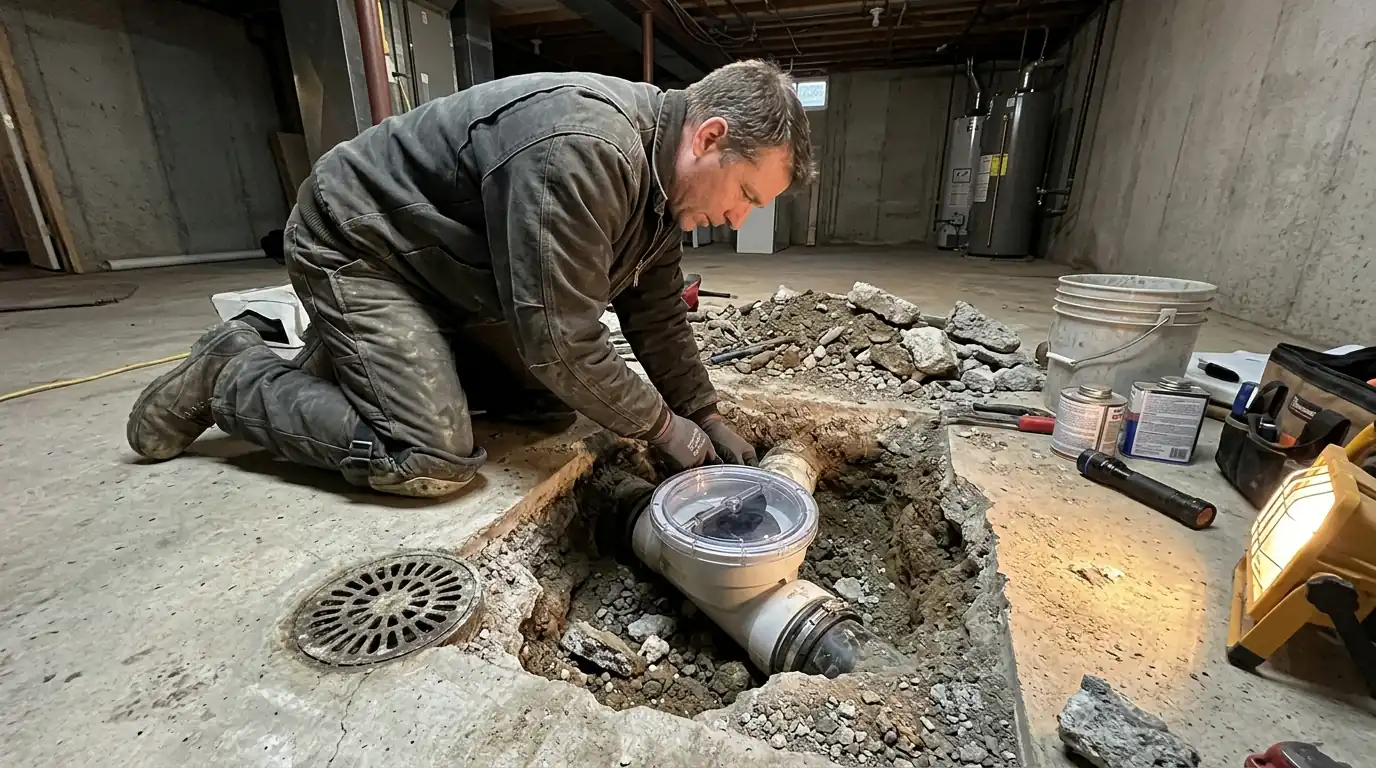
What a backwater valve does
A backwater valve is a one-way valve installed on the building's sewer line or on the floor drain. Water and waste leave the house normally. When the sewer fills and water tries to flow back toward the house, a flap closes and holds it out.
It is installed by a plumber, usually with a small access box in the basement floor so it can be checked and cleaned. It also changes how you use water during a storm: while the valve is closed, water from inside the house cannot leave either, so it makes sense to hold off on laundry and long showers during a downpour. Your plumber can tell you what your town requires.
If it backs up anyway
Treat any backup through a drain as sewage. Keep people and pets out of it, stop using sinks, toilets, the shower and the washer, and turn off power to the area if water is near outlets. Photograph everything before it moves.
The cleanup is a Category 3 job: extraction, removal of porous materials the water touched, disinfection and drying with readings. HomeGuide puts professional sewage cleanup at about $7 to $15 or more per square foot. Our sewage backup cleanup page walks through what that involves, and why bleach and a fan are not enough.
Planning ahead
If your basement has backed up before, it is worth asking a plumber about a backwater valve or a standpipe on the floor drain before the next storm season. Keep stored items off the floor and out of cardboard, and do not finish a basement that has a history of backups until the drain is protected.
After a backup, ask about antimicrobial treatment of the cleaned framing and a clearance check before any walls go back up. Those two steps keep a one-time backup from turning into a mold problem later.
Sources
Tamara edits the Mold Tips articles for Mold Inspection Margate, working from what our inspectors see in Newark-area homes and from public sources linked at the end of each article.