Two questions, two services
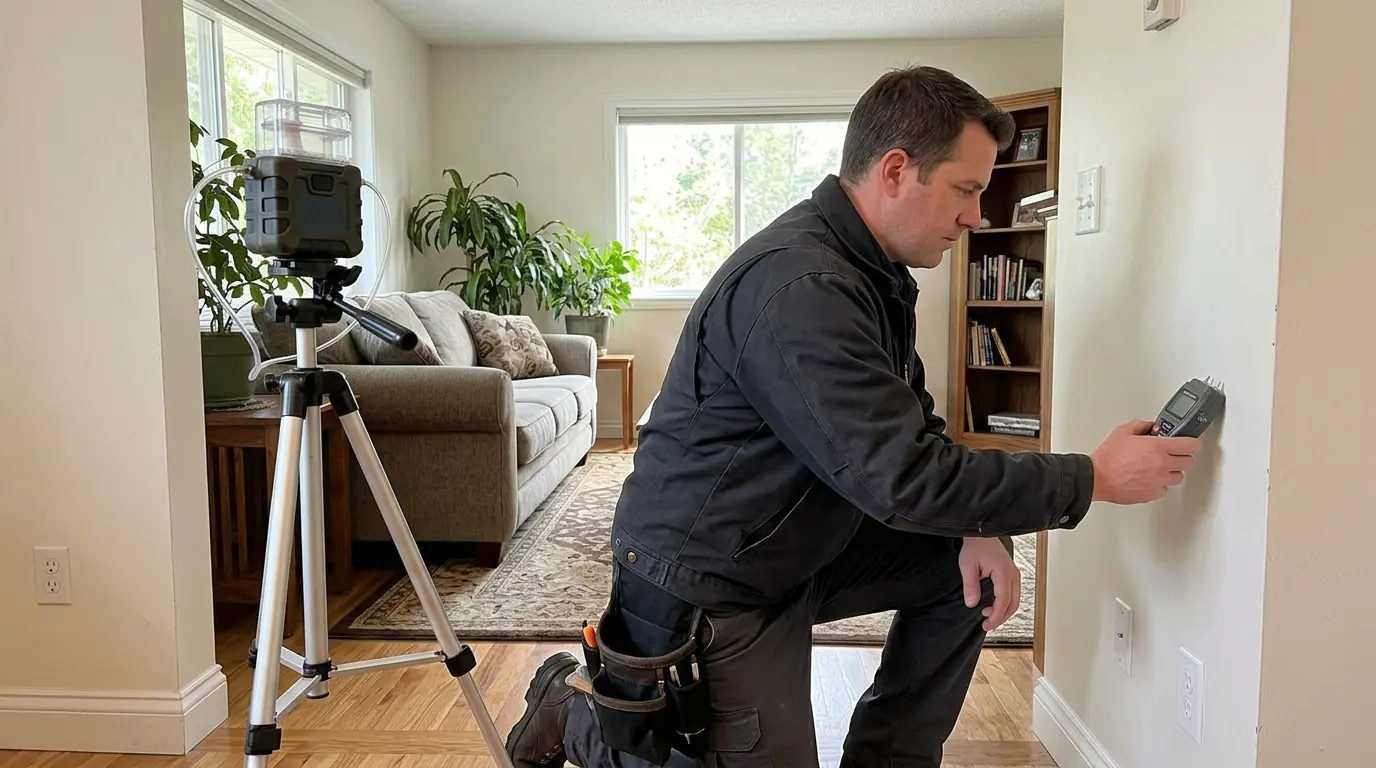
A mold inspection is a search. An inspector walks the house with moisture meters and a thermal camera, looks into cavities with a borescope and traces the water to its source. The result is a list of where growth is or is likely to be, and what is causing it.
Mold testing is a measurement. Air, surface, bulk or dust samples go to a lab, which identifies what is present and counts it. The result is a set of numbers and names. Both are useful, but they answer different questions, and the most common mistake is paying for numbers when the real question is where.
When an inspection is the right first step
Start with an inspection when you smell mold but cannot find it, when you see spots but do not know why they are there, when a room keeps getting damp, or when you want to know how far a leak has spread. Those are all location problems.
EPA's homeowner guide makes the point that controlling moisture is the key to controlling mold. An inspection is built around that: it finds the water, which is the part that has to be fixed no matter what a lab might say about the growth.
When testing earns its cost
Testing makes sense when a number or a name will change a decision. That includes a musty smell with nothing visible anywhere, where air samples compared with outdoor air can show whether there is an indoor source; a dispute between a tenant and landlord or a buyer and seller, where lab results are documentation; checking whether a dark growth is a long-term water mold; and clearance after removal, to confirm the work area is clean before it is closed up.
If you can see growth and the cause is obvious, testing rarely changes the fix. The NEHA and CDC key messages focus on moisture control and safe cleanup, not on sampling, for exactly that reason.
What each one costs
HomeGuide puts a mold inspection at about $300 to $650 for an average home, and individual mold tests at about $50 to $350 per sample. A combined visit, inspection plus a few targeted samples, is often the most useful choice when the source is hidden.
Home test kits are cheap but limited. A dish left open in any house will grow mold, because spores are always present indoors and out. It tells you nothing about whether you have a problem, and it cannot be used as documentation.
How we decide on a call
When someone calls asking for a test, we ask what they are trying to find out. If the answer is where the mold is or why it keeps coming back, we suggest an inspection first and add samples only where they would change the plan. If the answer is proof for a landlord, a buyer or an insurer, samples come into it from the start.
Either way, every air sample we take is compared with an outdoor sample from the same day, because indoor numbers mean little without that comparison.
Sources
Tamara edits the Mold Tips articles for Mold Inspection Margate, working from what our inspectors see in Newark-area homes and from public sources linked at the end of each article.