Hour one: make it safe
Do not walk into standing water if outlets, cords or appliances are in it. Turn off power to the basement at the panel if you can reach it safely; if the panel is in the flooded area, call the utility or an electrician. Keep children and pets upstairs.
Then find out where the water is coming from. A burst pipe or appliance line means closing the main water valve. Water coming up a floor drain during a storm means the sewer is backing up, and you should stop using sinks, toilets and the washer until it stops. Water coming through walls or window wells means the ground outside is saturated, and it will usually slow once the rain does.
Hours two to six: document and start removing water
Before anything moves, photograph and video the water level, the walls, the floor and everything stored down there. Insurers ask for this, and it is hard to recreate later.
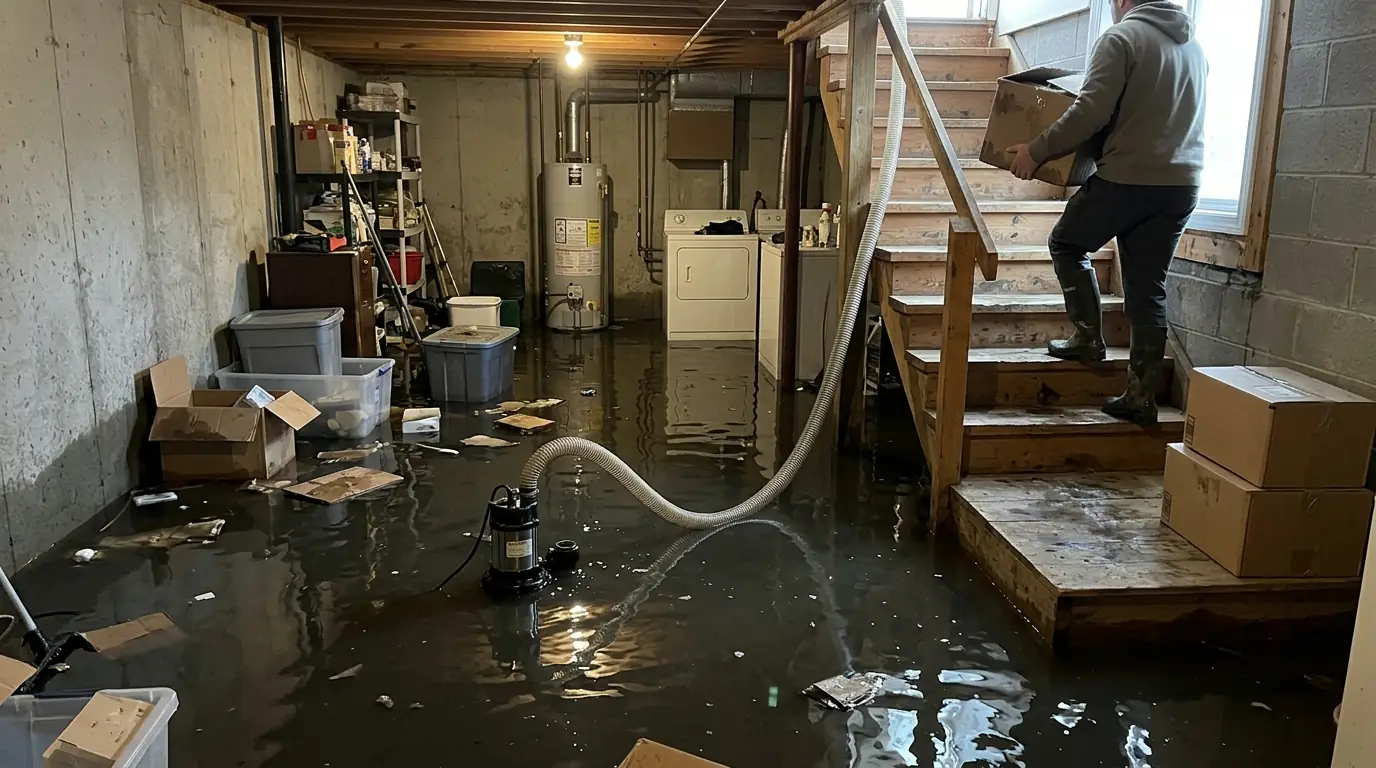
If the water is clean, from a supply pipe, and shallow, a wet vacuum or pump can start taking it out. If it came from outside or a drain, treat it as contaminated: wear boots and gloves, and leave extraction to a crew with the right gear. The NEHA and CDC key messages note that materials touched by water that may contain fecal contamination should be discarded, which is a very different job from drying a clean-water leak.
The first day: what to save and what to let go
Move anything that can be saved out of the water and upstairs to dry: furniture with solid legs, plastic bins, tools and anything in sealed containers. Carpet, pad, cardboard boxes, mattresses and upholstered pieces that soaked in floodwater are almost never worth keeping.
Pull wet carpet and pad as soon as it is safe to, because they hold water against the floor. Take stored items off the floor. If paneling or drywall is wet at the bottom, do not rush to cut it yourself; a moisture reading tells you how far the water wicked up, which is usually higher than the visible line.
Days one and two: get the air moving and the humidity down
EPA's guidance is to dry water-damaged areas and items within 24 to 48 hours to prevent mold growth. That means air movers, dehumidifiers and open cavities where water is trapped, running continuously, not a single fan pointed at a wall.
Open windows only if the outside air is drier than the basement; on a humid New Jersey summer day, open windows can add moisture instead of removing it. Keep the dehumidifier emptying to a drain or pump so it does not stop when the bucket fills. A water damage assessment in these first days maps what is wet and what can dry in place.
Why storms like Ida changed how we plan
When Ida came through on September 1, 2021, Newark recorded 8.41 inches of rain, its wettest day on record, and many basements took water at the same time. After a storm like that, crews and equipment are stretched, and basements that wait several days for drying are the ones that grow mold.
If you have a basement that has flooded before, it is worth planning now: know where your main water valve and electrical panel are, keep stored items off the floor, and have a number to call so drying starts inside that 48-hour window rather than after it.
Sources
Tamara edits the Mold Tips articles for Mold Inspection Margate, working from what our inspectors see in Newark-area homes and from public sources linked at the end of each article.