Why records matter in rentals
In Newark, about 77 percent of dwellings are rentals, so a large share of the mold we see sits between a tenant and an owner. The growth itself is usually straightforward to fix. What takes time is agreeing on what caused it, how long it has been there and who handles which part.
A good record answers those questions before they become an argument. It also helps whoever does the repair, because the timeline often points to the water source.
What tenants should record
Take photos as soon as you notice growth, with the date visible or recorded, the room named and something for scale, like a coin or a tape measure. Photograph the surroundings too: the ceiling above, the window, the fan, the wall on the other side if you can.
Write down when you first noticed it, when you reported it and how. Report in writing, by email or through the building's system, so there is a dated record. Note anything that makes it worse, such as rain, showers or a neighbor's leak. Keep cleaning small surface spots on hard surfaces as EPA suggests, but photograph them first, and do not paint over them.
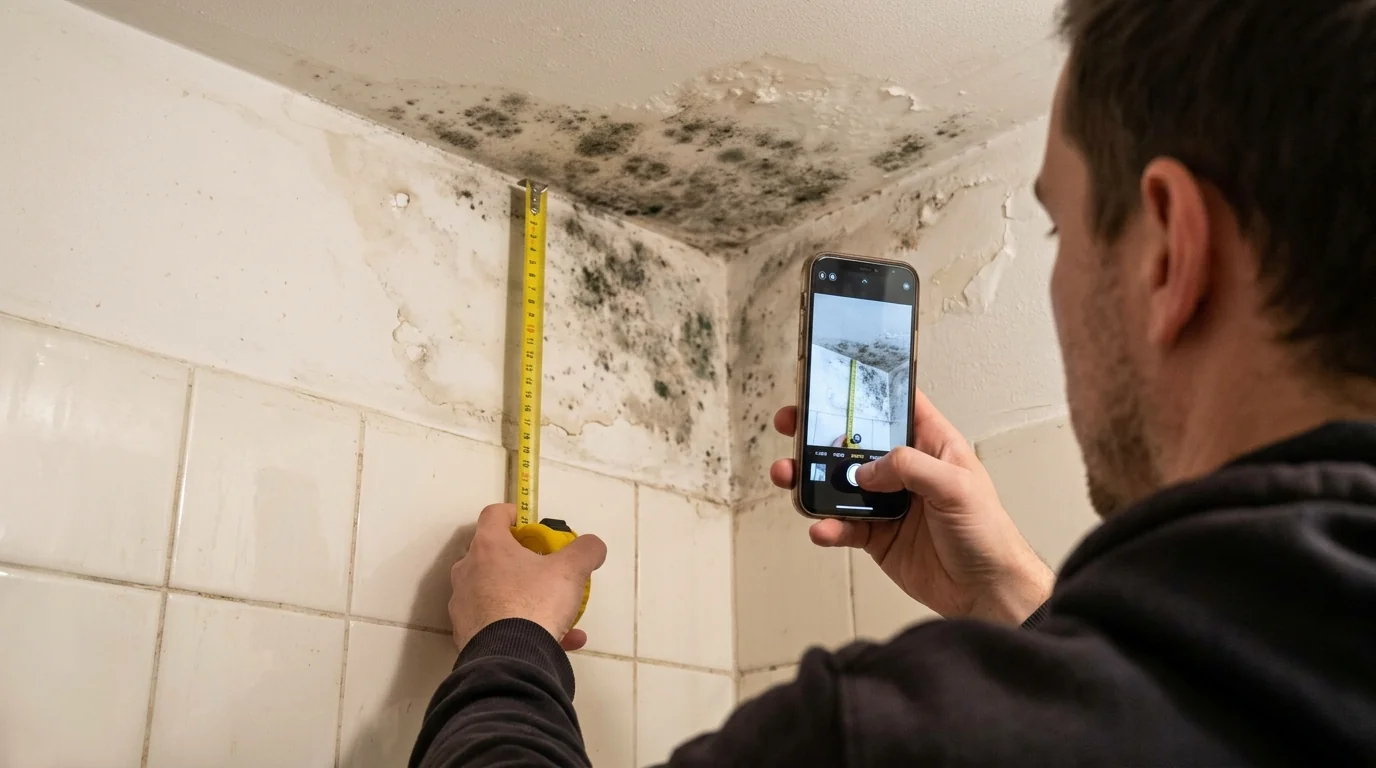
What landlords should record
Landlords benefit from the same record from the other side. Inspect units between tenants and photograph their condition, especially bathrooms, kitchens, window sills and closets on outside walls. Keep records of repairs: roof work, plumbing fixes, fan replacements.
When a tenant reports mold, respond in writing with a date, and record what was found and what was done. If the source is in another unit or a common area, note that too. These records are what an insurer, an association or a housing inspector will ask to see.
Where a neutral inspection helps
An apartment inspection documents conditions without taking sides: where the growth is, what the moisture readings show and where the water is likely coming from, with photos tied to locations. Tenants and landlords can both book it, and both can use the same report.
When the source is in the unit above or a shared wall, the inspector needs access to trace it. Arranging that access early saves a second visit and a lot of back and forth.
What may change in New Jersey
In January 2026, Assembly Bill A1607, the Mold Safe Housing Act, was introduced in New Jersey. If it becomes law, it would require rental units to be inspected for mold at a change of occupancy. Until then, the rules that apply come from the lease, local housing codes and general habitability standards.
We are not lawyers and this is not legal advice. What we can say is that a dated, photographed record and a neutral report help in every version of that process, whatever the rules end up being.
Sources
Tamara edits the Mold Tips articles for Mold Inspection Margate, working from what our inspectors see in Newark-area homes and from public sources linked at the end of each article.