Why shore houses are different
Margate City covers about 1.4 square miles on Absecon Island, and NWS thresholds for the Atlantic City tide gauge show flooding beginning in Margate at 6.4 feet and along the back bays of Atlantic City and Ventnor at 6.2 feet. Homes here sit close to tidal water, and the ground and air under and around them stay damp much of the year.
Sandy damaged oceanfront properties on southern Absecon Island and caused major back-bay flooding in Brigantine. Storms like that add flood risk, but even a quiet off-season brings humid spells, and a house closed up with no air moving collects that moisture on its coolest, most porous surfaces.
Before you close it
Clean out the refrigerator and prop its door open. Strip beds and store linens in sealed bins rather than closets. Leave closet and cabinet doors open so air can move, and pull furniture a few inches off outside walls.
Check for small leaks before you leave: under sinks, around toilets, at the water heater and at window sills. Fix or report anything dripping. Clean gutters and make sure downspouts carry water away from the foundation, because the off-season storms will test them.
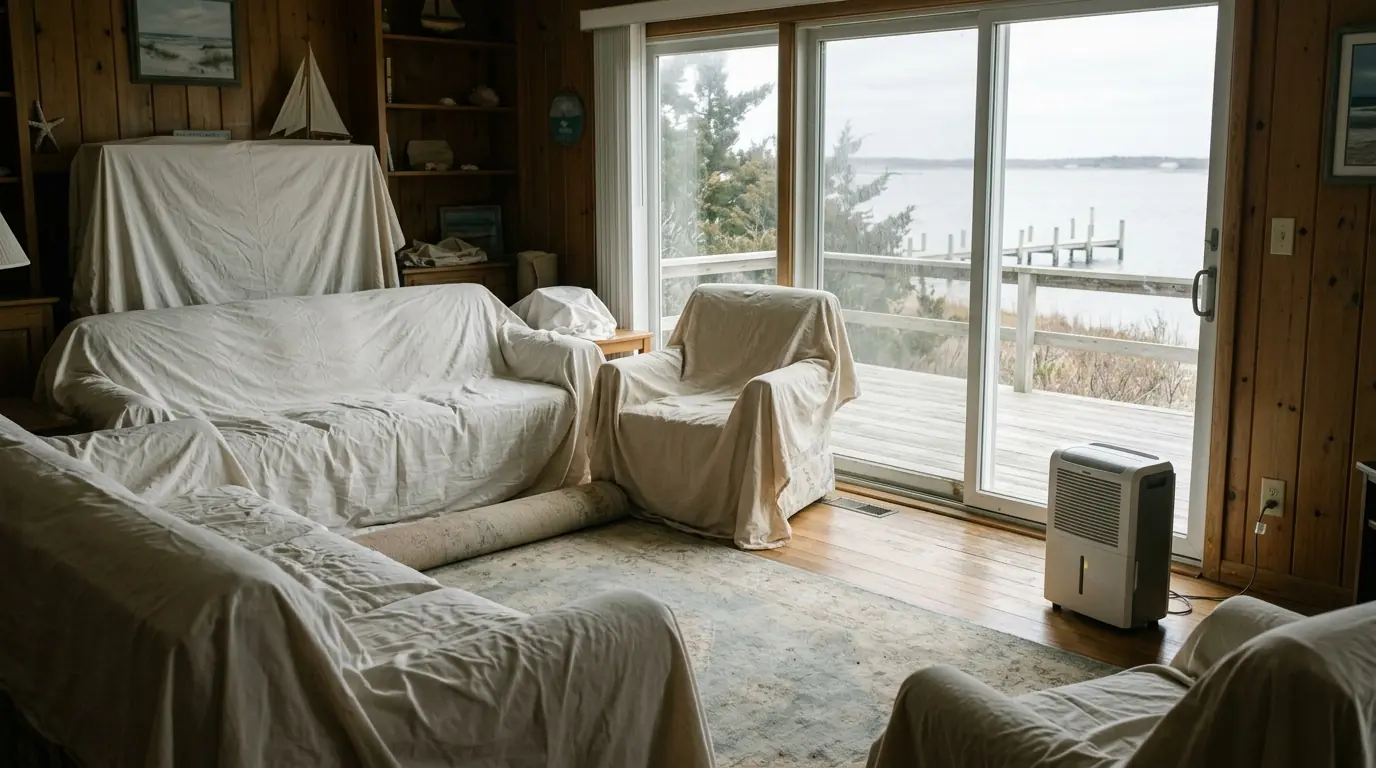
Keeping the air dry while you are away
A house that sits between 30 and 50 percent humidity, the range the NEHA and CDC key messages recommend, rarely grows mold. The simplest way to hold it there is a dehumidifier that drains to a floor drain or condensate pump, so it keeps running instead of stopping when a bucket fills. A properly installed unit can be set and left.
Some owners add a remote humidity sensor so they can check readings from home. If the house has a crawl space with bare soil or open vents, that space is often the biggest moisture source, and sealing it with encapsulation changes how the whole house behaves when it is closed.
After a storm
If a coastal storm or high tide brings water near the house, arrange for someone to check the crawl space and the lowest floor as soon as it is safe. Floodwater under a house that nobody is watching can sit for weeks, and that is where the heaviest growth we find comes from.
Water from a storm tide is treated as contaminated. Wet insulation under the floor, soaked carpet and anything stored low should come out, and the space should be dried with readings before it is closed up again. Our flood cleanup crews handle this for shore homes from our Margate City office.
Opening the house again
Walk the house before unpacking. Start underneath: the crawl space, piers and sill plates. Then check mattresses, closets on outside walls, the underside of furniture and the area around the water heater. A musty smell on opening is a sign to look further before anyone sleeps there.
Air the house out on a dry day, run the dehumidifier and the AC, and watch the humidity for a few days. If the smell does not clear or you find spotting on soft furnishings, book an inspection before the season fills the house with guests.
Sources
Tamara edits the Mold Tips articles for Mold Inspection Margate, working from what our inspectors see in Newark-area homes and from public sources linked at the end of each article.