Why flood history matters in North Jersey
In recent years, large parts of North Jersey have flooded more than once. When Ida came through on September 1, 2021, it dropped 8 to 11 inches of rain across a corridor of northern and central New Jersey, and Newark recorded 8.41 inches, its wettest day on record. In December 2023, the Passaic River crested over 10 feet at Paterson, with water in basements and streets.
Many homes that flooded were cleaned up properly. Others were pumped out, painted and re-carpeted quickly. From the inside of the finished room, the two can look the same, which is exactly why a buyer needs more than a walkthrough.
What to ask the seller
Ask plainly whether the basement or ground floor has ever had water in it, when, how deep, and who did the cleanup. Ask whether any drywall, insulation or flooring was removed, and whether there is paperwork: an invoice, drying records, photos or an insurance claim.
A seller who can show a professional cleanup with drying records is giving you useful evidence. Vague answers, or a very recent basement finish with no paperwork, are a reason to look harder before the contingency period runs out.
Signs to look for on a showing
In the basement, look for a faint waterline on block walls or the bottom of framing, rust on the base of the water heater or furnace, silt in corners and around the floor drain, and new drywall or paneling that stops a few feet up the wall. New carpet over concrete and a strong air freshener smell are not proof of anything, but they deserve a closer look.
Outside, look at grading, downspouts that dump next to the foundation and window wells without covers. Inside, open the sink base and closets on outside walls, and look at ceilings under bathrooms.
What an inspection can show
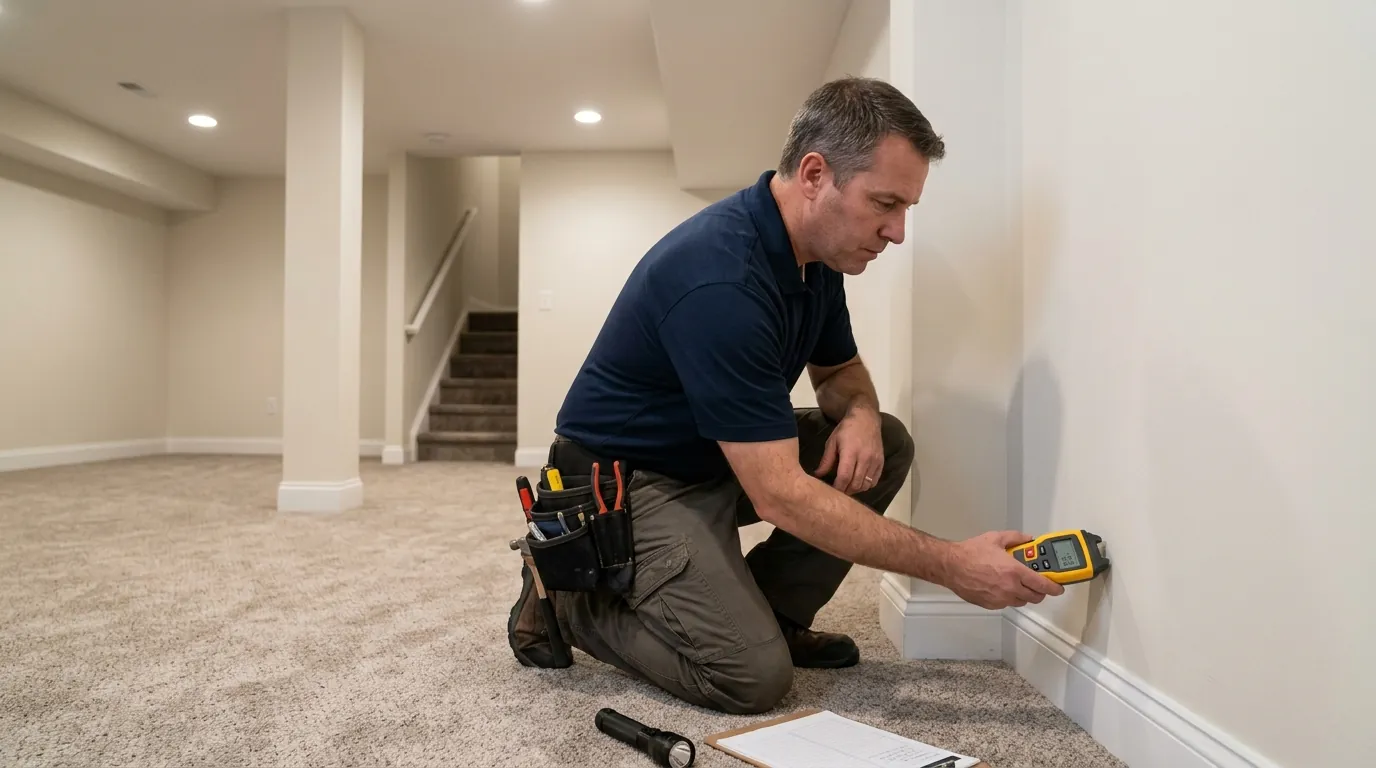
A home buyer mold inspection reads the finished walls with moisture meters, scans them with a thermal camera and looks inside cavities with a borescope through small openings. That shows whether the framing and insulation behind a newly finished wall are dry and clean, or still damp from an old flood.
EPA's homeowner guide stresses that water-damaged materials need drying within 24 to 48 hours to prevent mold. When a basement was closed up before that happened, the growth is usually still there. HomeGuide puts an inspection at about $300 to $650, a small fraction of what opening a finished basement costs after closing.
Timing it inside the contingency
Book the mold inspection as early in the contingency period as you can, ideally alongside the general home inspection. If readings point to hidden moisture, you want time for a second look, samples if needed, and a repair estimate before the deadline.
If you want a longer-term picture of the house's mold history, dust testing can add to the inspection, though it does not replace finding the source. The goal is not a perfect house; it is knowing what you are buying and what it will cost to fix.
Sources
Tamara edits the Mold Tips articles for Mold Inspection Margate, working from what our inspectors see in Newark-area homes and from public sources linked at the end of each article.