Why basements get damp without leaks
Basements sit against cool soil. In summer, warm, humid air from outside and from the rest of the house drifts down, touches the cool foundation walls, floor and cold water pipes, and gives up its moisture. Concrete and block also pass ground moisture through slowly, even when they are not leaking.
NWS normals for Newark put early July highs near 86 to 87 F with overnight lows around 68 to 69 F. That warm, humid air meeting a cool basement is why so many New Jersey basements smell musty by August, with no water on the floor at all.
The numbers to aim for
The NEHA and CDC key messages recommend keeping indoor humidity between 30 and 50 percent, and EPA's homeowner guide gives the same range as ideal while advising that humidity stay below 60 percent. Those targets apply to basements as much as to living space.
What matters most is how long humidity stays high. A day or two of damp weather does little. Weeks of basement air sitting in the high 60s or 70s percent, which is common in a summer basement with no dehumidifier, gives mold everything it needs on carpet, paneling, stored cardboard and the backs of finished walls.
How to measure it properly
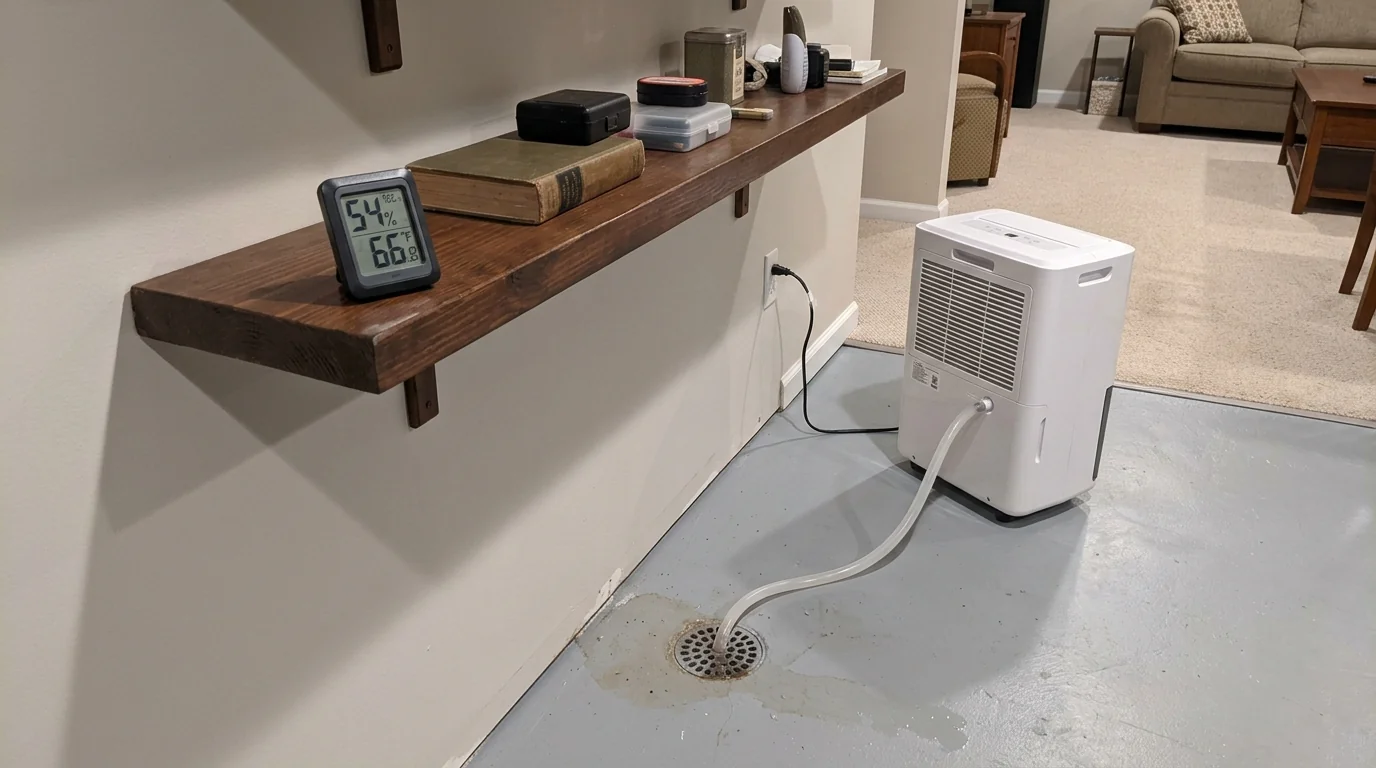
Buy a basic digital hygrometer and put it in the basement, away from the dehumidifier and not against an outside wall. Check it at different times of day for a week or two, especially after rain and on humid afternoons. Many dehumidifiers have a built-in reading, but it measures the air right at the machine, which is usually drier than the far corner of the room.
Watch for condensation too. Cold water pipes that drip in summer, a sweating toilet tank or damp spots on the floor under a rug all mean the surface is below the dew point of the air. That is a sign to lower humidity, insulate the pipe, or both.
What actually holds humidity down
A dehumidifier sized for the space, drained to a floor drain or condensate pump so it runs continuously, is the core of it. A portable unit that shuts off when its bucket fills will spend half the summer doing nothing. HomeGuide puts a crawl space or basement dehumidifier at about $1,000 to $3,000 installed, and a properly placed unit usually pays for itself in avoided cleanup.
Support it with the basics: gutters and downspouts that carry water away from the foundation, grading that slopes away from the house, a dryer vented outside, and stored items kept off the floor in plastic bins rather than cardboard. See our dehumidifier installation page for how we size and place units.
The window question
It feels natural to open basement windows to air things out. On a hot, humid New Jersey day, it usually does the opposite: the outside air carries more moisture than the basement air, and it condenses on the cool walls once it gets inside.
Open windows when the outdoor air is cooler and drier, on a crisp fall day for example, and keep them closed with the dehumidifier running through humid spells. If the basement still smells musty after a few weeks at the right humidity, something is holding moisture, and a musty odor investigation will find it.
Sources
Tamara edits the Mold Tips articles for Mold Inspection Margate, working from what our inspectors see in Newark-area homes and from public sources linked at the end of each article.